
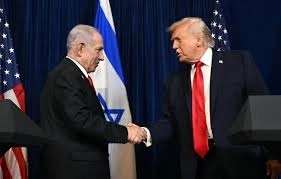
In a high‑stakes diplomatic summit held at his Mar‑a‑Lago residence on December 29, U.S. President Donald Trump hosted Israeli Prime Minister Benjamin Netanyahu in an effort to advance the stalled Gaza peace plan and address rising regional security threats. The meeting, set against the backdrop of a fragile ceasefire and wider Middle East instability, underscored the United States’ pivotal role in shaping the post‑war security landscape.
The summit — Trump’s fifth engagement with Netanyahu in 2025 — focused on transitioning from the initial ceasefire toward the more complex second phase of the Gaza peace plan, which hinges on Hamas disarmament, the establishment of a Palestinian transitional authority, and reinforced regional security cooperation.
Trump Reaffirms Hard‑Line Stance on Hamas and Iran
In remarks alongside the Israeli leader, President Trump issued a stark warning to the Palestinian militant group Hamas, asserting that it would face dire consequences if it fails to disarm “within a very short period.” Trump described the militant organization as the primary impediment to implementing the next phase of the peace plan and stressed that international actors may step in should Hamas refuse to relinquish its weapons.
Trump also reiterated his administration’s tough posture toward Iran, accusing Tehran of attempting to rebuild its nuclear and missile programs and threatening further U.S. action if such efforts continue. The president emphasized that the United States might endorse Israeli military measures against Iran’s strategic capabilities should diplomatic pressure fail to curb Tehran’s ambitions.
Diplomatic Alignment and Diverging Priorities
The Trump‑Netanyahu summit highlighted a pronounced unity on several key issues, including support for Israel’s security and the push for disarmament in Gaza. However, both leaders acknowledged unresolved differences, particularly regarding policies in the West Bank, a flashpoint that has strained broader efforts toward lasting peace. Trump indicated that while he and Netanyahu did not see eye to eye on all aspects of West Bank governance, dialogue would continue to bridge those gaps.
This balancing act reflects broader regional security tensions, with the U.S. pressing for measured solutions while Israel prioritizes hardline security imperatives. Analysts note that U.S. pressure on West Bank policies may signal Washington’s intent to temper unilateral actions that could undermine a future two‑state framework.
Ceasefire Implementation and Reconstruction Challenges
The meeting also underscored ongoing difficulties in implementing the ceasefire that ended a prolonged period of intensive conflict in the Gaza Strip. While the initial agreement succeeded in halting active hostilities and facilitating partial hostage and prisoner exchanges, full demilitarization has yet to be realized.
Trump emphasized the need for robust international support to stabilize Gaza, including the deployment of multinational peacekeeping forces and the establishment of an independent governing authority capable of managing reconstruction and civil order. Despite these ambitions, negotiations remain complex as parties differ on timelines, authority structures, and disarmament procedures.
Geopolitical Significance and Future Outlook
The Florida summit carries significant implications for Middle East security, U.S.–Israel relations, and the broader peace process. By personally hosting Netanyahu at Mar‑a‑Lago, Trump reiterated America’s strategic commitment to a negotiated solution in Gaza while signaling readiness to confront broader threats from Iran and other regional adversaries.
As 2026 approaches, observers say the success of the Trump‑Netanyahu diplomatic push will depend on tangible progress in disarmament talks with Hamas, clearer benchmarks for the peace plan’s second phase, and sustained international engagement — elements that will shape the prospects for lasting peace and stability in one of the world’s most volatile regions.

