
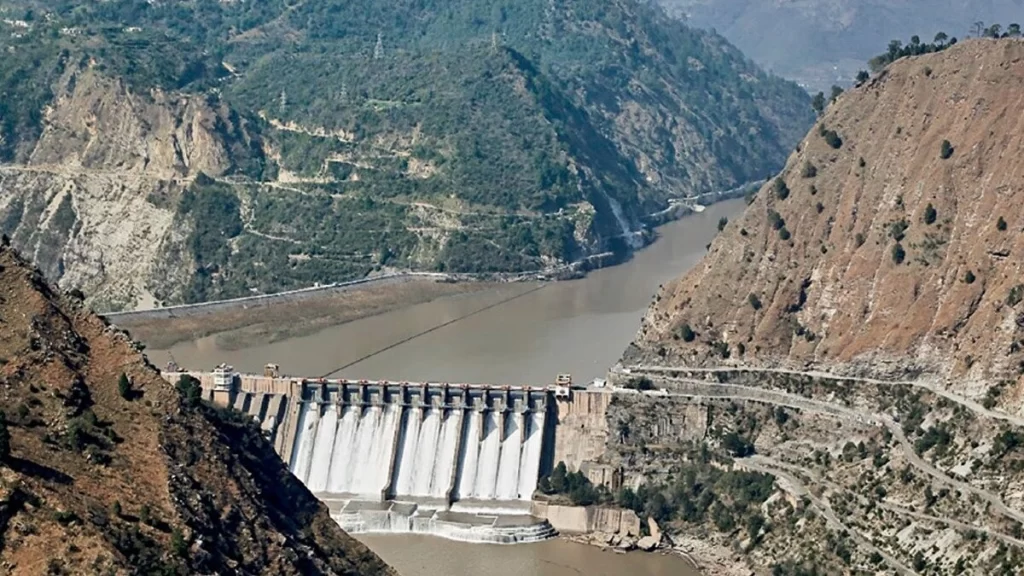
In a significant development for India’s hydropower and energy sector, the Expert Appraisal Committee (EAC) under the Ministry of Environment, Forest and Climate Change has formally recommended environmental clearance for the 260-megawatt (MW) Dulhasti Stage-II hydropower project in Jammu & Kashmir. The decision comes in the backdrop of India placing the Indus Waters Treaty (IWT) with Pakistan in abeyance effective April 23, 2025, following a major terror attack in Pahalgam.
The Dulhasti Stage-II project, strategically located on the Chenab River, aims to bolster India’s renewable energy capacity while addressing growing electricity demand in the northern region. With a projected capacity of 260 MW, the project is expected to enhance energy security, support regional industrial growth, and contribute to the national goal of increasing clean energy generation.
Key Details of the Project:
- Project Name: Dulhasti Stage-II Hydropower Project
- Capacity: 260 MW
- Location: Chenab River, Jammu & Kashmir
- Approval Status: Environmental clearance recommended by EAC
- Strategic Significance: Energy security, renewable energy expansion
The EAC’s approval follows comprehensive environmental assessments evaluating potential impacts on local ecosystems, river flow, and surrounding communities. Officials emphasized that stringent mitigation measures will be implemented to minimize ecological disruption and ensure sustainable operation.
The timing of the clearance has generated geopolitical attention due to the suspension of the Indus Waters Treaty, a decades-old agreement governing water sharing between India and Pakistan. By placing the treaty in abeyance, India signaled a strategic recalibration of its water resource management policies in response to cross-border security challenges. Experts suggest that the Dulhasti Stage-II project may become a focal point in regional water and energy diplomacy, given its location on a key transboundary river.
Implications and Future Outlook:
- Strengthening India’s renewable energy infrastructure.
- Enhancing electricity supply for northern states and industrial hubs.
- Potentially redefining India-Pakistan water resource negotiations.
- Emphasizing sustainable hydropower practices with environmental safeguards.
Government sources indicate that construction is set to commence following final clearances and regulatory approvals. The project is expected to generate employment opportunities locally and drive ancillary economic development in the region.
With India actively pursuing renewable energy projects and hydropower playing a central role in the nation’s energy transition, the Dulhasti Stage-II project underscores the intersection of environmental governance, strategic resource management, and national security priorities. Analysts note that successful implementation could serve as a model for balancing ecological considerations with infrastructural development in sensitive river basins.

