
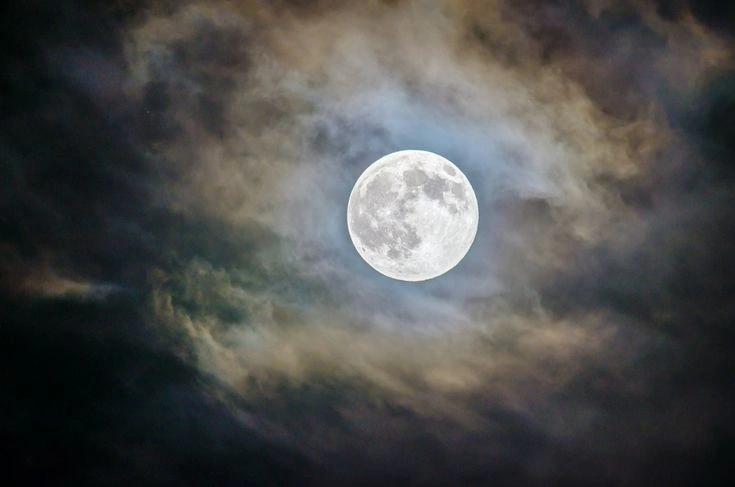
Skywatchers across India and around the globe are preparing for a luminous celestial event tonight as the first supermoon of 2026 — known as the “Wolf Moon” — graces the night sky. The rare phenomenon will create an unforgettable visual treat for astronomy enthusiasts, outdoor observers, and casual stargazers alike as the Moon appears unusually large and bright near the eastern horizon around moonrise (approximately 5:45 PM IST).
The Wolf Moon marks the first full moon of the year, and this year’s iteration is especially striking because it coincides with the Moon’s closest approach to Earth in its elliptical orbit — a configuration astronomers refer to as a supermoon. Supermoons occur when the Moon’s full phase aligns with perigee, the point in its orbit nearest the Earth, making the lunar disk appear up to 14 % larger and significantly brighter than usual.
Why the ‘Wolf Moon’ Captivates Skywatchers
The term “Wolf Moon” is rooted in tradition, deriving from Native American and early colonial names for January’s full moon — a period when wolves were frequently heard howling in the cold winter nights.
Several key astronomical factors make tonight’s event exceptional:
- Proximity and brightness: Because the full moon coincides with perigee and the Earth’s perihelion (its closest point to the Sun), the combination results in an especially bright and glowing Moon visible shortly after moonrise.
- Optimal viewing window: The best display will be around moonrise at sunset, when the Moon’s large appearance is enhanced by atmospheric effects, casting an orange or reddish hue near the horizon.
- Global visibility: The Wolf Supermoon will be visible across continents, with many countries catching the sight simultaneously as darkness falls.
Celestial Companions and Meteor Action
For stargazers in India, the Wolf Supermoon is just one highlight of an active night sky. The bright planet Jupiter will shine close to the Moon, while the Orion constellation — one of the most prominent patterns in the winter sky — will loom in the backdrop, offering added allure. Around the same time, the Quadrantid meteor shower — known for occasional bright fireballs — peaks between January 2 and 3, delivering potential shooting stars to complement the lunar spectacle.
Skywatching Tips Tonight:
- Best viewing time: Around sunset to early night, especially near moonrise.
- Location: Choose open areas with minimal light pollution for clearer, uninterrupted views.
- Photography: Use a tripod and zoom lenses (or smartphone optical zoom) for dramatic moonrise shots.
- Naked-eye visibility: The event is bright enough to enjoy without telescopes or binoculars.
Astrophotography and Public Engagement
Amateur astrophotographers and astronomy clubs across India are organizing gatherings to capture the Wolf Moon’s peak brilliance. Experts suggest focusing on the rising Moon near the eastern skyline to exploit the moon illusion effect, where the lunar disk appears even larger against horizon landmarks.
About the Wolf Supermoon Phenomenon
Supermoon events are relatively infrequent astronomical occurrences that spark global interest every year. They occur when a full moon aligns with the Moon’s perigee, bringing the lunar surface closer to Earth and enhancing visual magnitude. While the Moon’s actual size doesn’t dramatically change to the naked eye, its brightness and apparent scale are noticeably enhanced in supermoon phases.

