
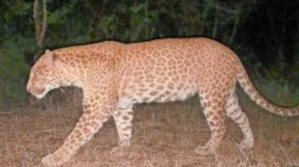
In a landmark moment for Indian wildlife conservation, Karnataka has documented its first-ever sighting of the ultra-rare “Sandalwood Leopard” in the Vijayanagara district. Recorded in January 2026, the discovery marks only the second confirmed instance of this rare leopard color morph in India, with the sole previous sighting reported from the Ranakpur region of Rajasthan in November 2021. The event has drawn national attention, underscoring both India’s rich biodiversity and the growing importance of habitat preservation in semi-arid forest landscapes.
A Rare Natural Phenomenon
The Sandalwood Leopard is not a separate species but an exceptionally rare color morph of the Indian leopard. Wildlife experts describe its coat as having a distinctive pale-golden to sandalwood hue, setting it apart from the more common rosette-patterned leopards. Such variations are believed to occur due to rare genetic mutations, making confirmed sightings extraordinarily uncommon.
Forest officials in Karnataka stated that the animal was captured on camera traps during routine wildlife monitoring in the forested pockets of Vijayanagara, a region better known for its archaeological heritage than for rare wildlife phenomena. The images were later verified by senior wildlife biologists, confirming the authenticity of the sighting.
Why the Sighting Matters
Conservationists emphasize that this sighting is significant not only for its rarity but also for what it reveals about the ecological health of the region. Leopards are apex predators, and their presence often indicates a balanced ecosystem with sufficient prey and forest cover.
Key highlights of the discovery include:
- First-ever Sandalwood Leopard sighting in Karnataka
- Second confirmed record in India
- Detected through scientific camera-trap monitoring
- Reinforces Vijayanagara’s ecological importance
Comparison of Confirmed Sightings in India
| Year | Location | State | Significance |
|---|---|---|---|
| 2021 | Ranakpur region | Rajasthan | First confirmed sighting in India |
| 2026 | Vijayanagara district | Karnataka | First sighting in South India |
Conservation and Future Implications
The Karnataka Forest Department has announced heightened wildlife surveillance and habitat protection measures in the area following the discovery. Officials have also urged against sensationalism, stressing that the animal’s safety depends on minimal human disturbance and strict enforcement of conservation laws.
Experts believe that climate adaptation, genetic diversity, and changing forest dynamics could play a role in the emergence or detection of such rare morphs. However, they caution that habitat fragmentation, human-wildlife conflict, and illegal encroachment continue to pose serious threats to leopard populations across India.
A Moment of Pride and Responsibility
The Sandalwood Leopard sighting places Vijayanagara on India’s wildlife map, transforming it from a site of historical grandeur to one of modern ecological significance. As India continues to document rare and extraordinary wildlife events, conservationists argue that such moments must translate into long-term policy support, scientific research, and public awareness.
In a country where biodiversity faces increasing pressure, the appearance of the Sandalwood Leopard serves as both a symbol of nature’s resilience and a reminder of the responsibility to protect it for generations to come.

