
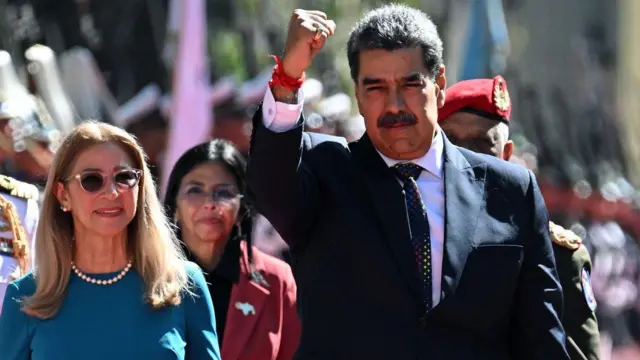
In an unprecedented geopolitical development, former Venezuelan President Nicolás Maduro is currently in U.S. custody in New York, facing federal charges related to narcotics trafficking and alleged narco-terrorism activities. The dramatic apprehension, reportedly carried out by U.S. forces earlier this month, has sent shock waves through global diplomatic circles and intensified the long-running Venezuela political crisis.
The arrest was followed by a major policy announcement from U.S. President Donald Trump, who confirmed a controversial agreement with Venezuela’s interim authorities involving the transfer of 30 to 50 million barrels of sanctioned Venezuelan oil to the United States. The proceeds from the oil sale, according to U.S. officials, will be managed under American oversight for “mutual economic benefit.”
Maduro Appears in Federal Court
Maduro made his first appearance in a Manhattan federal court under heavy security, where he pleaded not guilty to multiple charges, including conspiracy to traffic cocaine into the United States and collaborating with armed groups classified as terrorist organizations. During the hearing, Maduro rejected the legitimacy of the proceedings, asserting that he was unlawfully detained and continues to view himself as Venezuela’s rightful leader.
His wife, Cilia Flores, who was also detained during the operation, entered a not-guilty plea on related charges. The court scheduled the next phase of the legal proceedings for later this year, setting the stage for what legal experts describe as one of the most consequential international criminal cases in recent history.
U.S.–Venezuela Oil Deal Sparks Global Debate
The Venezuela oil agreement announced by President Trump has drawn intense scrutiny from energy analysts and foreign policy experts. Under the arrangement, a large volume of previously sanctioned Venezuelan crude oil will be transferred to the U.S. and sold at prevailing market prices.
Key details of the oil agreement include:
- Volume: Between 30 and 50 million barrels
- Oil status: Previously under international sanctions
- Revenue control: Managed by U.S. authorities
- Purpose: Economic stabilization and energy security
- Timeline: Phased delivery expected to begin immediately
Supporters argue the deal could help stabilize oil markets and provide financial relief for Venezuela’s struggling economy. Critics, however, warn that it risks politicizing energy resources and setting a controversial precedent for sanctions enforcement.
Power Struggle Intensifies in Caracas
In Venezuela, the political fallout has been swift. Delcy Rodríguez, formerly vice president,s, has assumed the role of interim president, citing constitutional succession provisions. Her leadership remains contested by Maduro loyalists, who have condemned the U.S. intervention as a violation of national sovereignty.
Security deployments have reportedly increased across Caracas, with authorities attempting to maintain order amid protests, political uncertainty, and fears of internal instability.
International Reactions and Legal Concerns
The detention of a former head of state has ignited global debate over international law, sovereign immunity, and the legitimacy of cross-border military operations. Several governments and legal scholars have expressed concern that the incident could weaken diplomatic norms and escalate geopolitical tensions.

