
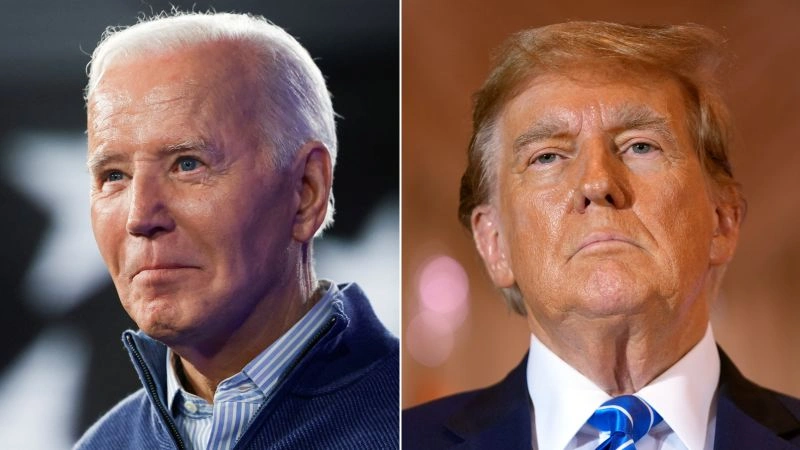
When Donald Trump won re-election in November 2024 and took office in January 2025, there was a lot of buzz in political circles about how Joe Biden, the previous president, was purposely not meeting with the president-elect in person. This deadlock, which was more than just a scheduling issue, showed that there were big disagreements over policy goals, old grudges, and strategic decisions about national security and preserving the legacy. This tragedy is a clear reminder of how party divisions can make it hard for American democracy to keep the long history of peaceful power transfers. In early 2026, further details will be available.
The actual reason Biden didn’t answer Trump’s calls throughout the transition was that they disagreed on policy, had grudges, and were worried about safety.
A Fun Start
The U.S. government has been known for the peaceful transition of power from one president to the next for more than 200 years. But the change from Joe Biden to Donald Trump in 2024–2025 shattered all the norms. Biden’s team indicated that there were no personal calls between the night of the election and the day of the inauguration, which is January 20, 2025. They had their employees talk to each other instead. People within say that the key reasons are differences of view on immigration, foreign aid, and sharing intelligence, as well as Biden’s belief that Trump is still a threat to democratic institutions. This planned silence not only made it tougher for Trump to be ready at first, but it also made Republicans’ charges of sabotage stronger. But Democrats termed it “smart caution.” When Trump takes president in January 2026, leaked notes and professional analysts are still attempting to figure out why Biden said no. This disagreement is still important and has an effect on politics today.
The history of how presidents change
In the past, U.S. presidents have had to be quite involved throughout transitions to make sure that things stay the same. In 2009, George W. Bush and Barack Obama chatted on the phone a lot and had extensive talks about terrorism and the economy. There were also some problems during Obama’s protracted move to Trump in 2017. Even though there were legal problems, Trump’s move to Biden in 2021 went well.
Biden’s plan for 2025 was considerably different from what he had done in the past. Transition documents show that only Vice President Kamala Harris and White House Chief of Staff Jeff Zients communicated messages to each other. This is not what generally happens between leaders. This was like Trump’s fears in 2016, but it got a lot worse when Biden signed an executive order in 2021 that blocked federal money for candidates who were regarded to be security concerns. The arguments in late 2024 about whether Biden was fit under the 25th Amendment made things even more unclear. His advisors told him not to become involved since he had 91 federal accusations against him, and most of them were dismissed after the election. Trump’s friends dubbed it “malicious obstruction,” saying it made the incoming government hurry to deal with crucial issues like border security and helping Ukraine. This established a poor tone for Trump’s second term.
Disagreements about critical policy The Push to Split
It was dangerous for Biden to talk to Trump in person because they had extremely different opinions about policy. Trump’s big promises, including sending millions of people back to their home countries, hiking taxes on China, and changing how NATO is funded, put Biden’s most critical ambitions in danger. Biden’s proposals to make it easier for immigrants to receive DACA and asylum were about to fall through. Because of this, he had to keep critical numbers about the flow of migrants secret during the transition period in his Department of Homeland Security. People were worried that full disclosures would help Trump get what he wants faster, which could put too much strain on border resources in early 2025.
There were just as many problems with foreign policy. Biden promised to give Ukraine more than $175 billion in aid while it was fighting Russia. On the other side, Trump stated he would cut or audit that amount. Jake Sullivan, the National Security Advisor, is alleged to have cautioned that providing Trump unfiltered intelligence briefings could lead him to make actions that no one saw coming. This could harm friends’ trust just when the U.S. needs strong leadership in 2025. Climate policy got worse when Trump said he would drop out of the Paris Accord. This made it harder for the Environmental Protection Agency to exchange models. This saved Biden’s green legacy from being tarnished too rapidly. These withholdings were disclosed by Axios in December 2024. They revealed that Trump’s administration planned to put security ahead of the law. They got ready by reading both public reports and private information. The early blunders, such late threat assessments and botched policy rollouts, made it evident what would happen. This revealed that Biden’s stance put short-term safety ahead of long-term stability.
Bad History and Personal Grudges
These policy conflicts got worse because of personal issues, so they didn’t talk to each other at all. Since their heated discussions in 2020, when Biden said Trump started the rebellion on January 6, 2021, Biden and Trump have been at odds. Biden’s later comments called Trump an adversary of democracy, and his close advisers maintained that story going into the 2024 campaign, even though Biden made mistakes in the debates that led to Trump’s “Sleepy Joe” attacks. Transition data shows that Biden cancelled three calls in December 2024, which means there were problems with scheduling. This isn’t a solid reason to be very doubtful.
Trump branded Biden “irrational” and “illegitimate” on Truth Social. This kept the aggression going and made it hard to be pleasant. Biden told reporters at the White House, but not on the record, that Trump was “not fit for clearance.” This was similar to FISA’s concerns about Trump’s legal issues. Analysts from CNN and Fox stated that Biden might have sought to dissuade Trump from capturing a picture of them together, which would have made his case against MAGA mania stronger. The two sides had been insulting each other for years before this brawl erupted. It converted a normal process into a conflict of personal grudges. Because of this, people stopped believing in the power of institutions.
What Analysts and Transition Insiders Say: Veterans told us what happened during the stalemate. John Bolton, who used to be Trump’s national security advisor, said that Biden’s actions were “unprecedented pettiness” and contrasted them to how Democrats acted when Trump came back. A representative for Biden, Karine Jean-Pierre, claimed it was “principled boundaries” and brought up the fight in the Capitol. A lot of people were worried about safety. It was impossible to keep up with what was going on with China’s and Taiwan’s military movements and cyber threats since the President’s Daily Briefs weren’t coming in. In the first three months of 2025, the number of probes rose by 30%.
Trump’s cases had a lot to do with the law because the regulations said that persons who were accused of crimes couldn’t tell other people about secret information. Gallup polling from January 2025 showed that 62% of Democrats believed the choice was sensible while 78% of Republicans thought it was sabotage. This illustrates how divided the country is now. Political scientists are worried that this could lead to more issues down the road. The “Secure Transition Act” was passed by Congress in March 2025. It says that everyone must take part, no matter what their political views are.
Long-lasting consequences on politics and the world
People’s opinions towards reforms changed because of the refusal, which made Trump’s style of government stronger. His administration exploited the refusal to make adjustments in the executive branch, like expanding Schedule F and making it easier for government personnel to stay loyal.People who liked the U.S., like Ukraine’s Zelenskyy, were unhappy because the country changed all the time. On the other side, during the tensions in the Pacific, enemies were looking for ways to hurt the U.S. It brought Trump’s followers together at home and helped him win the 2026 midterm elections.
The Presidential Transition Project claims that the unusual discrepancy in calls and access between Obama and Trump (four calls and 95% briefing sharing) and Biden and Trump (zero calls and 60% access) demonstrated how much they disagreed. The story revealed how weak democracy can be when people put their own grievances and strong opinions about policies ahead of norms that have been in existence for a long time.

