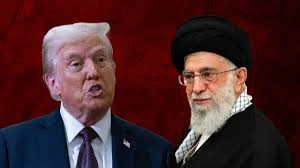
As protests continue for a third week, with more deaths and the likely execution of protesters, President Donald Trump has made it clear to the Iranian regime that “all options” are still on the table. The rising tensions between the U.S.and Iran reflect how aggressive Trump has been during his second term, threatening military action but yet hinting at discussions.
The Islamic Revolutionary Guard Corps (IRGC) and Basij militia, along with other security forces, have started a brutal crackdown. There are reports that Khamenei told people to shoot live rounds at crowds. HRANA and other groups that work for human rights estimate that at least 2,571 people have perished, but others who know say that the number might be as high as 12,000 to 20,000.Mortuary videos from the outskirts of Tehran show people with gunshot wounds and birdshot wounds. One organisation had records of more than 400 bodies, and private hospitals were broken into to get rid of evidence.
State media say that over 200 “terrorist teams” carrying weapons have been fighting, setting fires, and getting arrested in big cities like Tehran, Isfahan, Karaj, Hamadan, and Bandar Abbas. Blackouts on the internet and broken phone lines have made it hard to keep track of, but smuggled video shows thousands of people marching in defiance. protestors have died, as have 48 security officers, and there are stories of protestors killing Guard members.The protests are mostly around the case of 26-year-old Erfan Soltani, who was arrested on January 8 in Fardis, Karaj, and is due to be publicly executed as soon as January 14. This is the first death sentence that has anything to do with the unrest. Soltani’s family only had ten minutes to say farewell, and they were threatened that if they yelled, they would be detained again. There were no formal charges, trials, or access to a lawyer. The authorities used “Moharebeh” (enmity against God) as the final decision.
This fast “field execution” reveals how badly the government wants to stop people from speaking out. Rights groups have spoken out against it, claiming it might lead to summary killings without due process. People all across the world are paying attention to Soltani’s case, but his family is too terrified to say anything. Iranian state television characterises protesters “rioters” who are being stirred up by people from other countries. Pezeshkian, on the other hand, says he will fix the economy even though the U.S. and Israel are said to be getting in the way.
Trump’s Strong Warning and “All Options” Speak
From January 12 to 14, Trump’s statements were at their worst. He said that executions would lead to “very strong action” and a “big price.” This was like what he said on social media, which was “HELP IS ON ITS WAY” for Iranians. He told CBS that Iranian officials wanted to engage. He claimed he would “act accordingly” and put “winning” first.
The White House Press Secretary, Karoline Leavitt, indicated that “all options are on the table,” even airstrikes. She also noted that diplomacy should come first, but she also said that Trump has a habit of making huge decisions. Trump set 25% fines on trade partners that have relations to Iran and hinted at “different forms” of aid, from economic help to help that wasn’t stated. He is more believable because of things he has done in the past, such the death of Soleimani in 2020, the attacks on nuclear installations in 2025, and the capture of proxies.A lot of people search for “Trump Iran warning,” “Iran protests death toll,” and “all options on the table,” which makes the piece go viral.
Considering military, cyber, and economic possibilities
U.S. officials have warned Trump about a number of possible responses, including as long-range missile strikes on IRGC infrastructure and nuclear sites, as well as airstrikes to damage the regime’s abilities. Cyber operations could screw with networks for security communications and propaganda, while psychological operations use the internet and broadcasts to lift the emotions of demonstrators. Full blockades on oil exports, notably to China, are one of the economic measures.This is in addition to the recent 25% taxes that cut off Tehran’s income.
These concepts were made more clear at a White House discussion on national security on January 13. They could include hidden weaponry like sonic weapons or digital tools for demonstrators. Iran insists it would respond to anything, but its proxies are still weak from fighting Israel and the US in the past.Trump’s “maximum pressure” plan is similar to how he left the JCPOA in his first term, imposed harsh penalties, and made direct threats to Khamenei.
The history of problems between the U.S. and Iran
The story that has been going on for decades comes back with Trump’s second term.It all started when the US pulled out of the JCPOA in 2018. The deal was meant to put stricter limits on nuclear weapons and proxy financing. As a result, Iran’s uranium enrichment became close to weapons grade.Soleimani’s death in 2020 and the strikes on nuclear facilities in 2025 made Tehran’s military even weaker. That’s why the government is so weak now. The protests that are happening right now are bigger, more deadly, and cover more ground than the Mahsa Amini revolt in 2022.
Because of years of bad economic management, corruption scandals, and being cut off from global trade, Khamenei’s 45 years of leadership are now facing a significant legitimacy challenge.President Pezeshkian’s promises of reform didn’t go down well because the cuts to subsidies hit water, power, petrol, and internet access the most.
Responses from other governments and diplomatic signals
Iranian officials have claimed they want to negotiate in secret, even as they have made public statements that are defiant. Trump has talked about how the regime’s strong words and secret outreach are not the same. Human rights groups all around the world are demanding for an end to executions.The BBC’s confirmation that Soltani is in immediate danger makes this even more important. Allies of the U.S.in Europe and the Middle East are keeping a close eye on Tehran because its possible collapse may upset the balance of power in the area.
Trump’s growing tariffs are hurting trade all throughout the world, which makes things worse for Iran. The currency of the country has crashed, and inflation is out of control. This has made people lose faith.
Trump warns Iran strongly: “All options are on the table” as protests intensify and threats of execution rise.