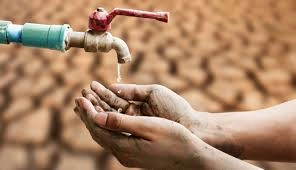
The lack of water is now a global disaster that is impacting people, economies, and ecosystems all across the world. This important resource is running out, which puts the jobs and lives of millions of people in danger. For instance, crops in India are failing while there is a drought in the American Southwest. This article talks about how not having enough water could be hazardous for people and the environment. It shows how crucial it is to get things done right away.
All around the world, water shortages are getting worse because of rapid population increase, urbanisation, and climate change. Groundwater levels in Maharashtra, India, including Pune, have plummeted by as much as 60% in the last ten years. The reason for this is because the monsoons aren’t always the same and rivers are losing too much water. There isn’t enough water in places where more than 2 billion people live. Things are likely to get worse when the temperature rises.
El Niño and other weather events have caused long-lasting droughts that have decreased the levels of reservoirs. The reservoirs in Marathwada, India, have been very low during the last few dry seasons. As cities grow, their old infrastructure can’t meet the needs of the new ones.
People don’t like it when their health or employment isn’t good. People have a lot of troubles when they don’t have enough water. These difficulties could be concerning health or money. Cholera, which kills hundreds of thousands of people every year, most of them are young people, is one disease that can make you sick from drinking dirty water. Every year, women and girls in South Asia spend billions of hours obtaining water. This keeps kids from going to school and makes them destitute.
Farmers in Tamil Nadu and Karnataka are losing thousands of animals because their crops fail and they can’t find enough food for them. Over 500,000 individuals have moved away from rural areas in Maharashtra in the previous five years because they were worried about water. When people in rural areas lose their jobs, the number of suicides goes up a lot.
What happens to the economy when there isn’t enough water?
The economy suffers when there isn’t enough water, just like it does when there is a recession. When crop yields fall down, India’s agriculture sector, which employs 42% of the country’s workers, loses billions of rupees. A 20% drop in rain can slow down GDP growth by 1% to 2%. It is expected that the damage will reach $35 trillion by 2050, which is 6% of the world’s GDP.
The farming economy loses between $200 billion and $300 billion every year when crops fail and animals die. Shutdowns and lower production will cost the industry between $100 and $150 billion. The energy sector lost between $50 and $80 billion because of problems with cooling and hydropower. Tourism costs between $20 and $40 billion because fewer people visit and services are stretched too thin.
Lack of resources is detrimental for the ecosystem.
Ecosystems don’t work as well when there isn’t enough water, which means there are fewer kinds of plants and animals. Dams and overuse have cut the flow of India’s Ganges and more than 600 other rivers in half. This is hazardous for fish and other animals that live in the water. Birds don’t like wetlands that are drying up since they make floods more likely.
When too much water is pumped along the shore, seawater rushes into aquifers near Mumbai and Chennai. Coral reefs lose their colour and marine life is hurt when river flows slow down. Desertification is happening quicker and faster, and bad water management damages billions of tonnes of soil every year.
Case Studies: Scary Water Shortages in Different Areas
The calamities in Chennai in 2019 and 2025 show how quickly cities may be devastated. As things became worse, trucks had to bring in millions of litres of water every day because the reservoirs were just 1% full. We had to collect rainwater, but things aren’t going smoothly.
The Central Valley of California still doesn’t have enough things. Too much pumping is causing the land to sink 30 feet, which is dangerous for highways and homes. The new laws made aquifers 15% bigger, even if farmers didn’t like them. Land buybacks brought back the water flows to Australia’s Murray-Darling Basin. This was wonderful for fish, 40% better.
Because of the “Day Zero” hysteria, people in Cape Town only consumed 50 litres of water a day, and applications slashed demand in half. These instances show how important it is to have a good government to keep problems from arising.
The laws and actions of governments all across the world
By 2026, the Jal Jeevan Mission in India wants to supply piped water to 190 million rural houses. However, 40% of the locations are already behind schedule. Getting people in the area to take part in the Atal Bhujal Yojana has brought back 10 billion cubic meters of groundwater. By keeping an eye on water basins, the EU’s Water Framework Directive cut down on water shortages by 25%. Sending a lot of water to the north will help China with its water problems.
The rules in Tamil Nadu about rain made the water table go up by 30%. Namibia’s desalination meets 20% of its demands, and Singapore recycles 40% of its trash.
New tools that aid when there aren’t enough resources
Israel now has 10 million hectares of land that use drip irrigation. It uses 60% less water and increases crop yields by 90%. Atmospheric generators get water from air that is already wet. This is great for Pune because it can make 5,000 litres of water every day.
Desalination costs $0.50 a cubic metre right now, yet Saudi Arabia gets 30% of its water this way.AI sensors have helped California farmers cut their costs by 20%.Orange County gives water to 850,000 people, and Singapore recycles 40% of it.
How to keep civilisation strong by changing
Farmers in Maharashtra are switching from sugarcane to millets, which keeps their income consistent at 25%. Women’s groups in Rajasthan run tanks, which cuts down on conflicts by 40%. School programs that teach kids about metering cut down on home use by 15%. The drought plants in Phoenix cut the city’s needs by 30%.
Unilever helps 2 million farmers put their watersheds back to life. Every year, Morocco’s fog nets make 10 million litres of water.