
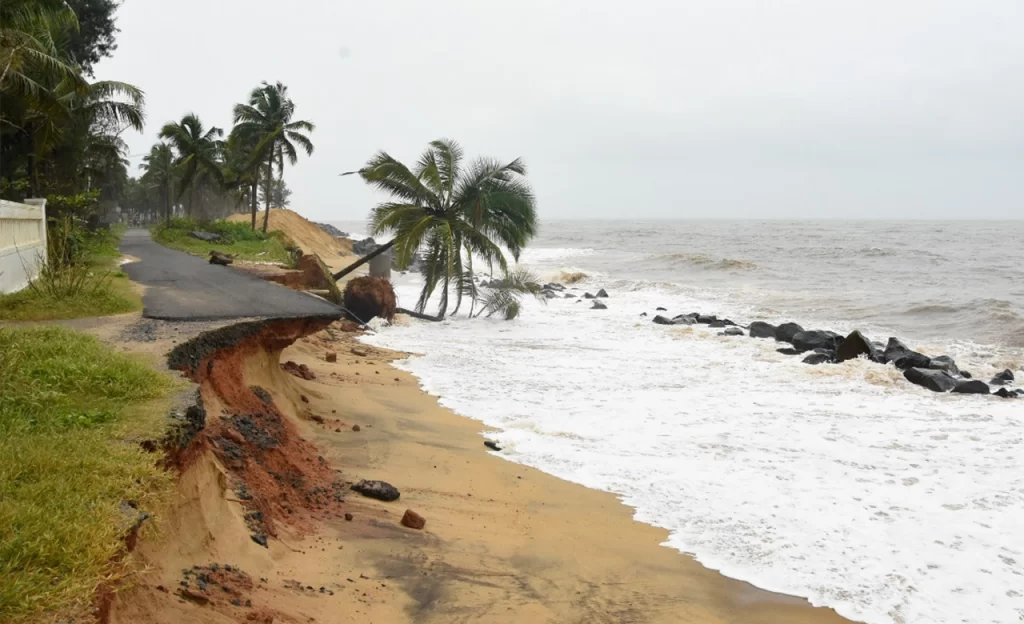
A lot of people don’t know how climate change impacts the people who live near India’s coast. The storms are becoming worse, the water level is rising, and the erosion never stops. These animals are slowly ruining houses and businesses. These “ghost villages” in the Arabian Sea and Bay of Bengal have been flooded, rendered saltier, and moved. People may not realize this. People in Odisha, Andhra Pradesh, and West Bengal are now in danger. This essay goes into greater detail about the creeping tragedy, such how it works, how many people it hurts, and how swiftly we need to act.
More storms and cyclones that are stronger
Cyclones are increasing stronger throughout India’s east and west coasts as the weather becomes warmer. There have been a lot more storms in the Arabian Sea over the past few decades. These storms are getting worse and lasting longer than they used to. The ocean’s surface temperature is higher than usual for the whole world, which is why this is happening. The funnel-shaped shore of Odisha is more affected by strong storms since the water is shallow and the sea is warm.
People in the Bay of Bengal keep getting hurt over and over again. During big cyclones, Udayakani in Odisha’s Puri district flooded, forcing people in nearby villages to leave their homes multiple times. The government is building new dwellings in Ramayapatnam, Ganjam district, even though many of the adjacent villages are still in ruins. A lot of individuals want to live near the water so they can fish. The dams in the Western Ghats keep a lot of water from reaching the western shore, which makes it more likely that you will get wounded.
The jobs that were lost and the salt water that came in. Seawater intrusion harms freshwater sources and soil, making land that is generally ideal for agricultural less productive and harder to cultivate. There is now a lot more salt in the Bharathapuzha basin in Kerala than there was before. This is notably true in the towns of Ponnani, Padinjarekkara, and Purathur. This has had a huge impact on the groundwater, especially when it’s dry. People in Tamil Nadu, like those in Elandarmadevi, had to leave their rice fields because the water kept getting past the fences. Cuddalore may also have problems. Farmers desire bunds that will last a long time, but they are sometimes urged to grow other crops, such casuarina, instead of rice.
These ideas make it hard for people who fish and farm to generate money. Satabhaya used to have fields and ponds, but they are no longer there. More than half of the people who lived in the Sundarbans and on Majuli Island have died since the middle of the 20th century. Thousands of people live in locations along Andhra Pradesh’s coast that are at risk of eroding. More women are doing housekeeping since men are moving to locations like Surat to look for work.
Fish that can live in warm water are changing. Half of the crops are dying because of the saline water in the ground. The dunes and mangroves can’t keep the area secure for much longer, and the beaches are getting worse, which makes it tougher for people to get there. People’s life will be greatly affected by these developments.
These tragedies due to climate change could force tens of millions of Indians to leave their homes by 2050.
Ghost Towns: Real Stories
People from Uppada, like S. Prasad, talked about how they lost everything for 20 years. This affected 20,000 individuals, and many of them moved to nearby colonies. They got some money, but not any new land. Some older people, such Gobind Pradhan, said that salt has made it hard to access drinking water and grow crops. Families like Mohini’s prefer to stay in Ramayapatnam, even if it’s not safe, because they want to be close to the coast.
The glaciers in the Himalayas are melting, which makes the river erosion on Majuli Island worse. If this keeps happening, there might not be an island in a few decades. The Sundarbans have lost two villages: Bagmara and Sagar. These stories indicate that when individuals were truly poor, they lost more than just their stuff. They also lost their temples, their cultural traditions, and their connections to other people.
At first, regulated withdrawal happened in places like Satabhaya in Odisha. When making plans for disasters, states do think about climate change. But the national strategies to deal with places where erosion is significant, notably on the east coast, aren’t working. Experts suggest that planning should be done in small groups, with strong social safety nets, and with more people living in the area.
States that aren’t powerful can have a lot of bad things happen. For example, storms and floods are a problem in West Bengal, salinity and cyclones are a problem in Kerala, storms getting stronger are a problem in Gujarat, a lot of people moving around and ghost towns are a problem in Odisha, and erosion along long stretches of coast is a problem in Andhra Pradesh.

