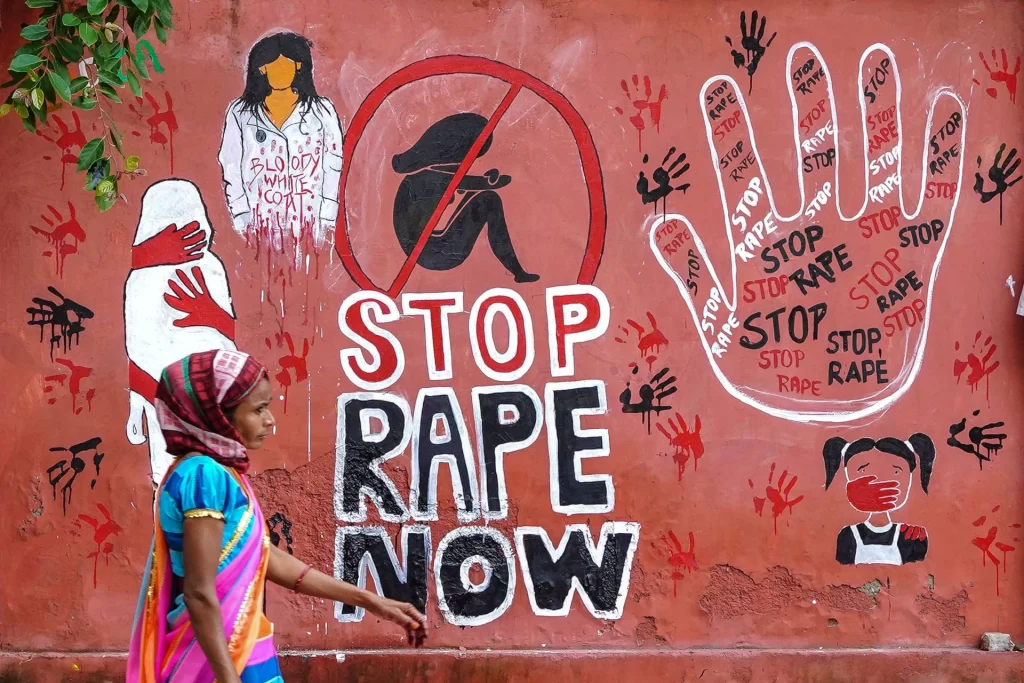
Many of the stories that go viral on social media about India are a mix of genuine and fake information that get millions of shares. A lot of people have been discussing about these kinds of messages lately. People have been asking for stricter vetting because India’s social and political climate is so fragile. This essay looks at a common viral claim on the internet and uses evidence and context to see if it is true.
The assertion under examination is that “India is currently the world’s rape capital, with over 100,000 rapes reported annually, surpassing any other nation.” This terrifying claim has spread swiftly on social media. The awful photographs and information in this article make it seem like India is a dangerous place for women. People all over the world are upset about it, and it has made people in India reflect about their own lives. Influencers reposted this piece, which came from anonymous accounts. It asserts that India’s National Crime Records Bureau (NCRB) has official data that backs up this awful story and calls for action throughout the world.
People in India are terrified of violence against women because of the 2012 Delhi gang rape and other well-known instances that people remember. This argument exploits these fears to back up its thesis. You need to look at the facts, how they are shown, and how they compare to data from other nations to declare that India is clearly the “rape capital.” These kinds of claims could make a tough situation look simpler, but they don’t take into consideration that other countries don’t report as much.
How the claim got started and how quickly it spread
A tweet that got a lot of attention on X (previously Twitter) in January 2026 was sent by numerous well-known accounts that were worried about women’s rights and safety. The NCRB report from 2024 said that there were 92,000 registered rapes that year and that the number would rise to over 100,000 by 2025. When compared to the US, UK, and Sweden, India was at the top of the bar charts.
Fact-checking sites acknowledged it was “partly false” at first, but it spread quickly because of hashtags like #IndiaRapeCapital and #WomenSafetyCrisis. Indian celebrities and activists made their own versions, and international news outlets caught up on the echoes and connected them to ongoing discussions about how bad the police are. People rapidly told the tale because it made them angry about how unfair it was, but we need to look into the facts behind it more closely.
When you look at India’s official crime rates
Every year, the National Crime Records Bureau (NCRB) in India writes reports about crime in the country. These crime statistics for India are the most accurate. According to the Indian Penal Code for 2024, there were 90,214 rapes. This is 4% more than the 86,688 cases that were reported in 2023. This has been rising up all the time since 2019. One explanation is that the #MeToo movement made it easier to report sexual assault, and the Criminal Law Amendment Act of 2013 increased the definitions of sexual assault broader.
There are differences in crucial numbers:
-Witnesses are scared to testify, and it takes courts an average of 4 to 5 years to make a decision. Because of this, just 27 to 30% of rape cases end in convictions.
-93% of the victims know the assailant, and 40% of the time, the attacker is an adolescent. People are still attempting to make it against the law to rape your spouse, but it isn’t yet.
-Rajasthan has the most cases, with 8.7% of all cases. Madhya Pradesh and Uttar Pradesh come next. Most of the time, these problems are triggered by issues in the economy and society.
These numbers are scary, but they only show cases that have been reported. Experts think that only 10% to 95% of incidents are reported. That means there might be ten times as many events as that. The NCRB data shows that the system isn’t operating well because people are ashamed of what they did and cops don’t want to help. But this doesn’t mean that India is the worst country in the world.
Do you compare apples to oranges in all of the countries?
It’s hard to rank countries by “rapes per capita” because the laws, the ways individuals report crimes, and the ways data is collected are all different. The allegation that went viral is based on facts and doesn’t care how many people there are. India has a lot more people than tiny countries. There are 1.4 billion people in India.
For example, the most recent statistics from 2023–2024 that is in line with UNODC shows that there were 100,000 rapes for every 100,000 people:
-63.5 in Sweden, which is a broad term that includes projects.
-72.1 in South Africa (it’s known that a lot of reports are wrong).
-27.3 in the US (FBI Uniform Crime Reports).
-In the UK, it’s 24.1.
-India: 2.9 (NCRB 2024, population-adjusted).
In India, the rate is lower than in many other regions. A 2024 study by UN Women found that Botswana (92.9), Lesotho (82.5), and Australia (28.6) all fare significantly better than it. The claim’s bar chart solely depicts Western countries that do well on purpose. This comparison shows that looking at the totals alone can not be accurate. India’s absolute numbers demonstrate size, not uniqueness. People not reporting anything is a problem everywhere. The World Health Organization (WHO) says that the real numbers are five to ten times higher than what is published.
Things That Make People Believe There Is a Problem
Even though its per capita rates are lower, India gets a lot of media attention and has had a lot of high-profile failures. The instance of ethnic conflict in Manipur in 2023 and the story of the doctor who raped and killed a woman in Kolkata in 2024 attracted a lot of attention around the world. Not as many people paid attention to other unpleasant things that transpired. These stories have gone all over the world thanks to Bollywood movies and activism. This has begun a loop.
This happens for a multitude of reasons, such as:
In rural regions, sexual violence is linked to killing people for honor and getting married too young.
Judicial Backlog: There are still over 1.5 million rape cases that haven’t been solved, which is putting a lot of stress on resources.
The police aren’t doing their jobs well; in 2025, 40% of FIRs were only filed after the media put pressure on them.
But things are getting better: Fast-track courts found 28,522 people guilty in 2024. That’s 12% more than the year before. The Nirbhaya Fund is one thing that helps one-stop centers. It has set aside Rs 7,212 crore. These contradict the notion that this is the “rape capital.”
Some parts are true, but not all of them.
The claim didn’t get around very quickly. The World Bank, the UNODC, and national bureaus all concur that India does not have the most rapes in the world, either in total or per person. It makes the NCRB data look bigger, doesn’t compare it to anything else, and thinks that more reports mean more incidents.
Is this report really going around about India?