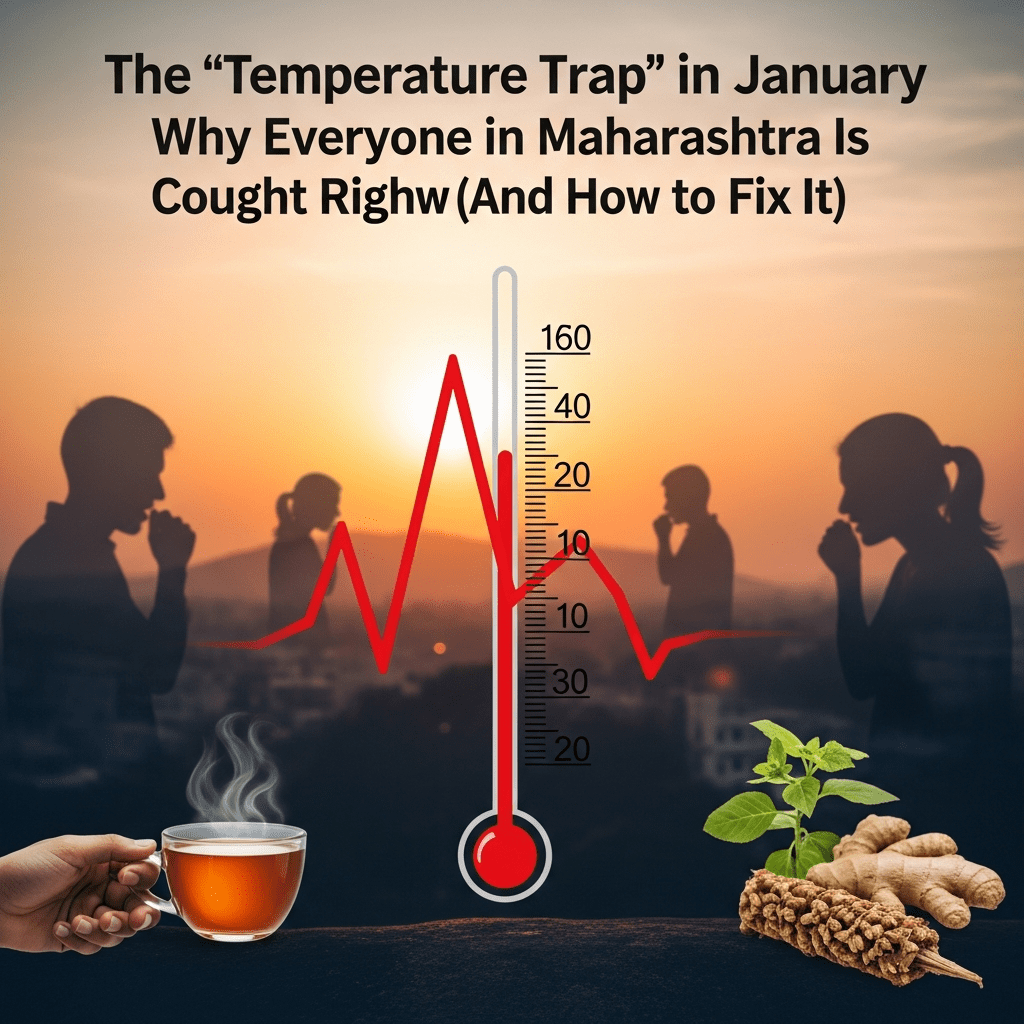
If you live in Pune, Mumbai, or anywhere else in Maharashtra right now, you may have noticed a disturbing trend. You only hear coughing at work, on the way to work, and in your WhatsApp groups. It seems like everyone you know is suddenly getting sick with a cold that won’t go away, a sore throat, or a fever that won’t go away.
You could be thinking, “Is this a new wave?” Is it the dirt? Or is my body’s defense system just giving up?
The answer is the “January Temperature Trap.” That’s what meteorologists and medics are calling it. It’s not simply a jump in viruses; it’s happening because the weather in Maharashtra is so odd and hard to understand in early 2026.
This is a full explanation of why you feel chilly at 7 AM, hot at 2 PM, and cough all night, as well as what you can do about it.
The “15-Degree Gap”: The Silent Killer of the Immune System
People are becoming sick not just because it’s cold, but also because the weather is changing.
The body normally does well in places where the weather doesn’t change greatly. When it’s cold, your body preserves the heat. Your body cools down when it’s hot. But in January 2026, areas like Pune and Nashik are seeing a significant Diurnal Temperature Variation (DTR), which is the difference between the highest and lowest temperatures each day.
The Truth Right Now:
The temperature dips to a cold 12°C to 14°C at 7:00 AM.
The strong afternoon sun makes the temperature rise to 30°C to 32°C at 2:00 PM.
The Biological “Shock”
Your body’s thermoregulation system gets puzzled by this change of 15 to 18 degrees.
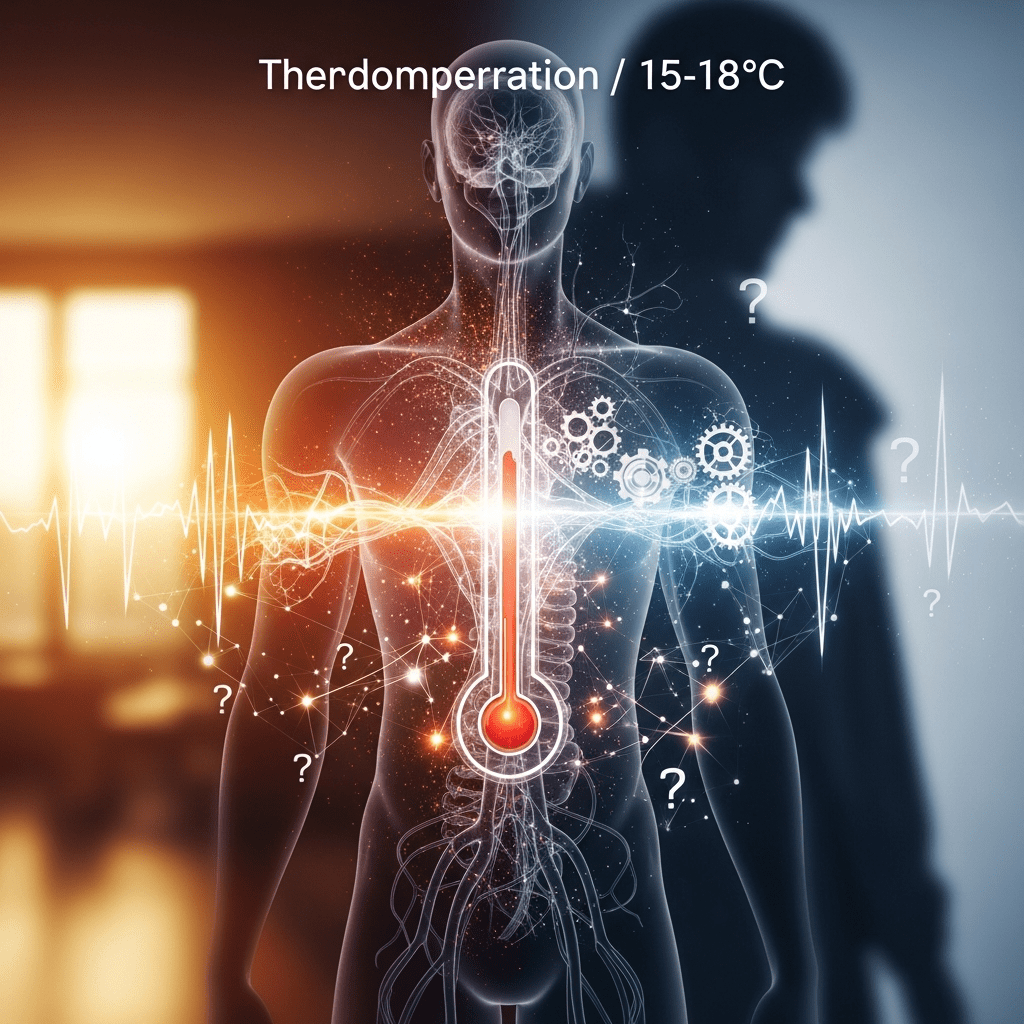
Morning Vasoconstriction: When it’s cold outside, your blood vessels tighten up to keep your body heat. This slows down blood flow to your nose and upper respiratory tract. Fewer white blood cells can get to these areas, which makes your first line of defense against viruses weaker for a short time.
Afternoon Vasodilation: As the day gets hotter, your blood vessels widen (dilate) to let heat out. You start to sweat.
When you wear warm clothes in the afternoon, you sweat. This is called the “sweat-chill” cycle. As the night gets cooler, the wet sweat on your skin cools down quickly, which makes your body temperature drop quickly.
The constant “Yo-Yo” effect puts a lot of stress on your metabolism and immune system, which makes it easier for viruses like the Common Cold (Rhinovirus) and Influenza (H1N1) to attack.
What Your Cough Means: Pollution vs. Virus
The Air Quality Index (AQI) makes this weather phenomenon much harder to understand. In the winter, the air in Maharashtra is heavier, which traps pollutants closer to the ground. This generates a “toxic cocktail” of fog that people commonly think is a virus.
How can you know if you’re sick or just reacting to the bad air? Doctors recommend to pay attention to these crucial differences:
- The “Pollution Cough” or “Smog Throat”
The feeling: a dry, scratchy, or “sandpaper” feeling in the throat.
Mucus: Usually dry and not very thick.
Timing: It gets worse while you’re in traffic or right after you’ve been outside.
No fever. You usually feel tired but don’t have a temperature.
Trigger: Particulate Matter (PM2.5) levels that are excessively high and make the windpipe feel bad.
- The Cold That Spreads: Pain and heaviness all over the body.
Mucus: A clear runny nose that turns thick and yellow.
Timing: It gets worse at night when you lie down.
Yes, a fever. It often comes with chills or a low-grade fever (99°F to 101°F).
Cause: the spread of a virus.
The Danger Zone: a number of people who reside there are going through both right now. The pollution makes the airways rough and fragile, which allows viruses settle in deeper and faster.
The “3-Week Rule” tells you why the cough won’t go away.
A lot of patients at OPDs this week claimed, “Doctor, my cough has lasted for weeks, but my fever is gone.”
This doesn’t mean that the infection is still going on. There is no doubt that it is Post-Viral Bronchial Hyperreactivity (PVBH).
Your immune system eliminates the infection, but the fight leaves behind “wreckage.” Your airways are still swollen and highly sensitive. When you’re like this, even minor things like cold air from an air conditioner, a little dust, or just talking too loudly can make you cough. This “lingering cough” is not a sign of a new illness; it’s just your body’s way of being too defensive. It normally goes away on its own, but you need to be patient and take care of it (the “3-week rule”).
The “Desi” Defense: Home Remedies That Work
You don’t always need strong antibiotics, which don’t work on viruses, by the way. Instead, focus on easing your symptoms and helping your body heal. Here are three helpful strategies that work effectively in India.

- The ability to “smart layer”
Stop wearing a big jacket or heavy thermal. It battles the heat of the day.
The answer is to wear layers. Wear a cotton t-shirt, then a light shirt, and then a jacket.
Why? As the temperature rises to 30°C, you should take off your clothes to avoid sweating. It’s more important to keep your body temperature stable than just “warm.”
- Breathing in steam (the hydrator)
The dry air in the winter draws moisture out of your mucous membranes, which makes them fragile and damaged.
The Solution: Before bed, breathe in steam for 5 to 10 minutes.
Why: Steam puts moisture back into the cilia, which are tiny hairs in your nose that trap bacteria. Keeping your airways wet is the greatest approach to protect yourself from both pollutants and infections. Don’t use strong balms if you have a dry cough. Plain steam is usually the best thing to use for a sore throat.
- Honey and black pepper (the throat coat)
For that bothersome, dry cough that keeps you awake at night.
Mix one tablespoon of organic honey with one teaspoon of crushed black pepper or turmeric to get the answer.
The National Institutes of Health (NIH) cited a study indicating that honey is as effective as Dextromethorphan (a common cough suppressant) in alleviating nighttime coughs. The pepper is a natural anti-inflammatory and expectorant.
When Should You See a Doctor?
Most of these cases will get better on their own, but the “Temperature Trap” can be deadly for persons who are already weak, like kids, the elderly, and people with asthma. Get medical attention right away if you have any of the following:
If your fever is higher than 103°F or lasts longer than three days,
You might wheeze or have trouble breathing.
You feel pain in your chest when you cough.
The sputum is red or pink.
Conclusion: Getting used to the way things are now
The weather report suggests that this trend with a lot of variations will probably calm down by February 1, 2026. For now, your health is a game of getting acclimated to things.
Don’t let the pretty afternoons deceive you. The cold in the morning is still bad for you, and you should be vigilant about the air quality. You can “outsmart” the weather by learning about the “15-Degree Gap” and adjusting your attire and how much water you drink.
Stay warm, drink a lot of water, and send this to that friend who won’t wear a sweater!