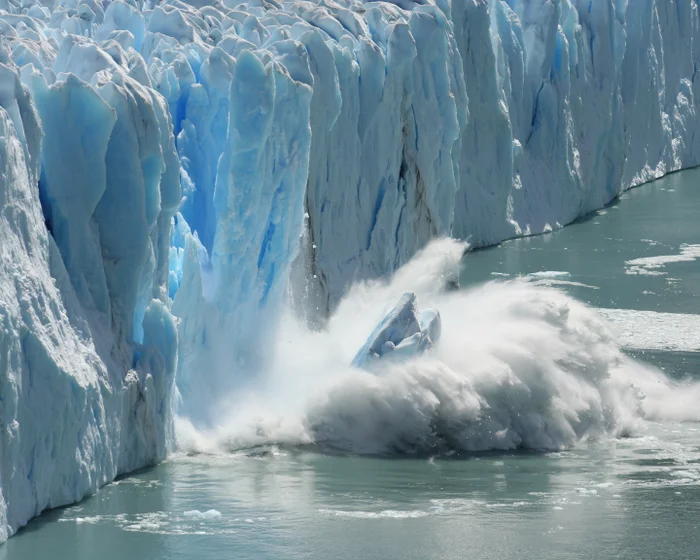
Recent scientific statistics suggest that the world’s oceans are rising at an alarming and faster rate, driven to both melting glaciers and the thermal expansion of heated waters. This phenomenon is one of the most visible and catastrophic repercussions of climate change produced by people. It puts coastal towns, infrastructure, and ecosystems all over the world at risk. As sea levels rise faster than projected, experts are raising the alarm about the need for immediate climate action and ways to adapt to rising sea levels along the shore.# Learning How Sea Level Rise Works There are two main reasons why sea levels are increasing, and both of them have to do with the fact that the world is getting hotter. When ice on land melts, including glaciers, ice sheets in Greenland and Antarctica, and polar ice caps, this is the first method this happens. When these huge ice sheets melt, they add billions of tons of fresh water to the oceans. This makes the oceans bigger and raises sea levels all across the world.
The second way this happens is through thermal expansion, which is when the ocean takes in roughly 90% of the extra heat that greenhouse gasses trap in the atmosphere. Water molecules get bigger and take up more space when they get heated. This makes the ocean bigger, even if it doesn’t get any extra water from melting ice. Researchers believe that thermal expansion is responsible for around half of the rise in sea level that has been noticed in the last several decades. The other half is because the ice is melting.
Recent satellite and tidal gauge data reveal that the average sea level around the world has risen by around eight to nine inches since the late 1800s. Since 1993, that climb has been about three inches. The rate of acceleration is more worrisome than the actual rise. The most recent data shows that sea levels are already rising at a rate of roughly 0.13 inches per year, which is about twice as quickly as they did on average in the 1900s.The Cryosphere Crisis: Ice Is Melting Faster
The Greenland Ice Sheet has lost a lot of ice in the last several years. If all of it melted, it would raise the world’s sea levels by nearly twenty-four feet. Researchers who are watching the ice sheet say that Greenland loses about 280 billion tons of ice each year. Over the past 20 years, this rate has gone up a lot. The summer melt seasons are increasing longer and stronger, and the winter snow isn’t making up for the losses.
Antarctica, the biggest ice storehouse in the planet, is in an even worse predicament. Scientists predict that the Antarctic Ice Sheet has enough ice to raise sea levels by almost 200 feet, but it would take hundreds of years of continual warming for it to entirely melt. There are signs of instability in some portions of the Antarctic ice sheet that are more likely to break, notably the West Antarctic Ice Sheet and some parts of East Antarctica. These signs could make them melt faster. Recent studies have indicated that ice shelves are breaking apart, glaciers are moving back, and warm ocean water is reaching under floating ice shelves, which makes them melt faster from below.
The Himalayas, the Alps, the Andes, and the Rockies all have mountain glaciers and smaller ice caps that are melting faster than they used to. The polar ice sheets have more ice than these glaciers, but they melt quickly when the weather changes. Taking them away not only raises the sea level, but it also puts the freshwater supply of hundreds of millions of people who rely on rivers fed by glaciers for drinking water, food, and energy at risk.# Expansion by Heat: The Secret Reason Why Seas Are Rising Melting ice gets a lot of attention, and it’s a terrific way to show that climate change is happening. Thermal expansion, on the other hand, is difficult to perceive but is just as important in raising sea levels. The world’s oceans have taken in a lot of extra heat from the air. Measurements show that the waters have gotten a lot hotter since the middle of the 20th century.
This heat absorption doesn’t happen at the same rate at all depths of the ocean. The top layers of the ocean warm up the fastest, but heat is slowly moving into deeper layers of the ocean through sophisticated circulation patterns. When water molecules have more energy and move around more quickly, the spaces between them get bigger, which makes the water expand. At the molecular level, this expansion may not seem like much, but when you multiply it by the massive volume of the world’s seas, it adds several inches to the rise in global sea level.
Because thermal expansion is making sea levels rise, it is harder to deal with climate change. The oceans might keep getting warmer and bigger for a long time, maybe even hundreds of years, if we cut greenhouse gas emissions by a lot today. This is because the oceans are so big and heavy. Because of this delay, some sea level rise is already built into the climate system, no matter what steps are taken right immediately to cut emissions.# Vulnerability Hotspots and Differences Between Regions In different places of the world, the sea level is increasing at different rates. Ocean currents, changes in ice sheets that vary gravity, vertical land movement, and patterns of air pressure all have a role in regional variances. Some coastal locations are seeing sea levels rising much faster than the global average. This makes them more likely to be harmed.
For instance, on some parts of the eastern coast of the US, the sea levels are rising three to four times faster than the average for the whole planet. This is happening faster in part because the Atlantic Meridional Overturning Circulation, which includes the Gulf Stream, is slowing down. As this river slows down, water that used to stay away from the coast is now piling up along the eastern seaboard.
Rising seas are a threat to the existence of low-lying island states and coastal communities in the Pacific and Indian Oceans. The Maldives, Tuvalu, Kiribati, and the Marshall Islands are all fearful that a lot of their land may be unusable in the next few decades. Storm-driven surges can reach deeper inland as sea levels rise. This makes flooding from storm surges during hurricanes and typhoons more likely and catastrophic.
Flooding is getting worse, saltwater is flowing into freshwater aquifers, and infrastructure is at jeopardy in many major coastal cities throughout the world. If sea levels rise, Miami, Shanghai, Mumbai, Jakarta, and Lagos could all lose billions of dollars. They are investing a lot of money on things like seawalls, better drainage systems, and efforts to bring back the shore.# Possible Future Scenarios and Tipping Points
Climate scientists use powerful computer models to guess how much the sea level will rise in the future depending on different scenarios for emissions. The Intergovernmental Panel on Climate vary is the most prominent worldwide group that studies climate science. It believes that by 2100, global sea levels might rise by one to four feet, depending on how greenhouse gas emissions vary and how ice sheets act. However, these estimates are rather vague, especially when it comes to how likely it is that the ice sheet would break down rapidly.
Some feedback loops could make the ice melt faster than what current models show. For instance, as ice sheets melt and retreat back, they show darker rock or ocean water. This takes up more solar radiation than reflecting ice, which makes the warming happen even faster. This is known as the ice-albedo feedback. Another thing to worry about is that marine ice sheets aren’t stable. If glaciers that are resting on bedrock below sea level become unstable, they might quickly retreat, which might lead to runaway ice loss.
Some experts believe that the Earth is moving near to or may have already passed crucial tipping points that might cause the sea level to rise by meters during the next few hundred years. If the West Antarctic Ice Sheet broke apart, it could raise sea levels throughout the planet by about 10 feet. But this would most likely take hundreds of years instead of only a few decades.# Effects on the economy and society
There are a lot of costs associated with increasing sea levels, and they come from a lot of different locations. Property values along the coast in areas that are likely to flood are starting to show that danger. Values are starting to plummet in some markets as buyers think about potential risks. Insurance companies are changing the way they figure out risk, which is making costs go up or coverage go down in places with a lot of danger. Ports, airports, power facilities, and water treatment plants that are crucial to the economy and are located near the shore may have to spend a lot of money to be moved or updated.
Scientists warn that the climate catastrophe is becoming worse and causing sea levels to rise faster than ever before all around the planet.