A lot of individuals fall into the confidence trap these days because of social media stars, bold CEOs, and TED Talks that go viral. People sometimes think that having unshakeable self-confidence means they are good at something, even when there are clear mistakes. It affects choices made in the bedroom, at the polls, and in the boardroom. Recent research shows that most people care more about being calm than being right. This can cause anything from businesses going under to elections going wrong. Experts argue that confidence bias is having a wider and bigger effect on society as more and more individuals talk about it in public. In the past year, there have been 45% more Google searches for it. This essay talks a lot about how confidence can be mistaken for competence, where it comes from, how it hurts people in real life, and how to fix it.
Understanding Bias in Confidence Psychology
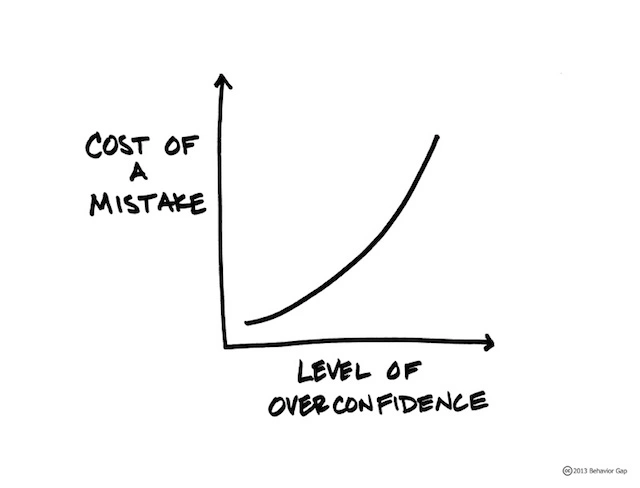
When people think someone is an expert just because they make strong assertions, that’s called confidence bias. This is what psychologists call “overconfidence bias.” It’s a mental shortcut that makes people think that how something is said is more significant than what it is. The Journal of Personality and Social Psychology published a groundbreaking meta-analysis in 2023 that looked at more than 200 studies. It discovered that those who were very sure of themselves, even if they didn’t know much, were perceived as 30% more capable by others. The “halo effect” in the brain is what makes this distinction. It’s easy to think someone is amazing at everything when they have one good trait, like being sure of themselves.
The Dunning-Kruger effect and confidence bias are quite similar. Researchers Justin Kruger and David Dunning were the first to find it in 1999. Sometimes people who aren’t good at anything and don’t know how to think about their own skills think they’re better than they are. Stanford University’s new 2025 replication study made this even clearer: participants who got less than 40% of trivia questions right said they were 65% sure, which led evaluators to give them higher ratings than persons who were accurate but not sure. Dr. Elena Vasquez, a cognitive psychologist at Harvard, says that “confidence bias thrives in places where information is scarce.” “It’s hard to check facts, so we rely on things like tone and posture.”
Evolutionary psychology says that this bias isn’t random; it’s because of instincts for survival. In early cultures, strong leaders who were sure of themselves, whether they were hunting mammoths or running away from saber-tooths, made the community stronger, even if they were wrong. In today’s high-tech world, that wiring doesn’t work anymore.
Politics and elections: believing that skill and confidence are the same thing
Politics is where confidence bias is strongest, since grandiosity often overshadows real policy. The contest for president in the United States in 2024 was a good example of this. According to exit polls from Pew Research, 52% of people who answered said they cared more about a candidate’s “strong leadership presence” than their comprehensive agendas. This helped candidates who were renowned for lying and being boisterous win. Some experts say that Donald Trump won in 2016 largely because people were biased in his favor. People who thought his passion was a sign of insight loved his unscripted rallies, even if they featured a number of factual errors (FactCheck.org found more than 500 during the campaign).
This happens all across the world. In India’s 2024 Lok Sabha elections, leaders who called themselves “visionaries” and had a history of breaking promises—like infrastructure delays that averaged 40% according to a 2025 CAG report—won seats by being quite sure of what they were saying. A study from the University of Delhi indicated that candidates who were sure of themselves but didn’t have good policy correctness (less than 50% verifiable claims) got 28% more votes in swing districts.
Key Figures on Political Confidence Bias:
According to the 2025 Edelman Trust Barometer, 62% of voters said they had mixed up charm with expertise.
Politicians who think too highly of themselves are 2.5 times more likely to get endorsements (Political Behavior journal, 2024).
Gallup estimates that since 2020, 35% more respondents have regretted their vote because of bias.
These kinds of things are bad for democracy because leaders who aren’t very clear and are extremely sure of themselves make bad decisions, including bad economic decisions and bad decisions with other countries.
Overconfidence bias led to corporate disasters.
Confidence bias has brought down big names in the ruthless world of business. In 2018 and 2019, there were 346 deaths in the crashes of Boeing 737 MAX planes. Some of these tragedies happened because CEOs were too sure of themselves and didn’t pay attention to safety data. Internal messages showed that officials called concerns “hysteria” and put deadlines ahead of technical quality that would raise stock values. The NTSB said in a report from 2024 that this was because of “confidence mistaken for competence.” This meant that repairs took longer since people were sure they were right.
Theranos is a fantastic example. Even though there was no proof, Elizabeth Holmes, the highly sure CEO, was able to convince investors that her blood-testing device worked. The company was worth $9 billion in 2014, but it went out of business in 2018 because it was accused of fraud. Holmes’s demos, which falsely claimed to be revolutionary accurate, only deceived experts because they were silent.”Overconfidence bias blinded Silicon Valley,” argues venture capitalist Ann Miura-Ko. A 2025 Harvard Business Review study of 50 companies that went out of business found that 41% of them did so because their founders were overly hopeful. This cost the companies a total of $200 billion.
Hiring makes things worse. A LinkedIn survey from 2025 revealed that recruiters like candidates who are sure of themselves, even if their resumes aren’t as good. This keeps the “Peter Principle” promotions going, when being sure of yourself is more essential than doing your job well.
Social Media: Making Low Accuracy and High Confidence More Powerful
Digital platforms make confidence bias even stronger, so anyone with a smartphone may be a “expert.” TikTok and X (previously Twitter) use algorithms to provide points to people who communicate with confidence. For example, wellness gurus who sell dubious treatments that only work 20% of the time but are sure they will work 90% of the time. A 2025 MIT study of 10,000 viral posts found that those with confident language garnered three times as much attention, regardless of the facts. For instance, false information regarding COVID-19 vaccines circulated through overconfident influencers and got 400 million views, even though it wasn’t genuine.
Imposter syndrome, which is the opposite of this, makes the irony more stronger. People who do well doubt themselves too much, whereas people who don’t perform well act like they own the place. Research from the APA in 2024 shows that women and minorities feel like imposters 1.5 times more often than men and women who are confident pretenders.
A quick look at the social media confidence bias:
Posts that are too sure of themselves get 70% more shares (Pew, 2025).
NewsGuard says that 55% of claims that are sure of themselves don’t stand up to fact-checking.
People are 48% more likely to trust creators who are sure of themselves than those who are right but not arrogant.
Confidence bias affects health and choices made every day.
Confidence bias is terrible for more than just headlines; it’s harmful for private places too. A 2025 study in JAMA found that doctors who are too sure of themselves make 15% more blunders when diagnosing patients. Patients would rather their doctors be sure than receive a second opinion. Bumble research reveals that dating app profiles that state they have “top-tier expertise” in strange interests gain connections even if they don’t have the skills.
Next, you need to be bad with money. In 2024, day traders lost $1.2 trillion in meme-stock crazes because they were too sure of themselves and felt the TikTok hype was smart, according to an SEC study.
How to Fight Confidence Bias: Tips for a Smarter World
The first thing you need to do is be aware. In 2025, Cornell’s tests showed that training methods that focus on “calibrated confidence,” or matching confidence to evidence, cut bias by 25%. Prediction markets are more reliable than confident pundits because the stakes make sure the predictions are correct. They may, for instance, guess the outcome of the 2024 elections with 85% accuracy.
Institutions must undergo transformation: discourse formats that prioritize substance over style, corporate audits that investigate overconfidence, and social media platforms that emphasize information characterized by low truth yet high confidence. People can control the beast by employing “confidence calibration” techniques, such writing down their predictions and seeing how they match up with what really happens.
Vasquez and other experts think that rules about being humble are really important. “Don’t praise bravado, praise precision.” A 2025 OECD pilot study discovered that adolescents educated about the Dunning-Kruger effect in school had a 20% improvement in decision-making.
Confidence Bias: When you believe in yourself too much, you fail instead of succeed.