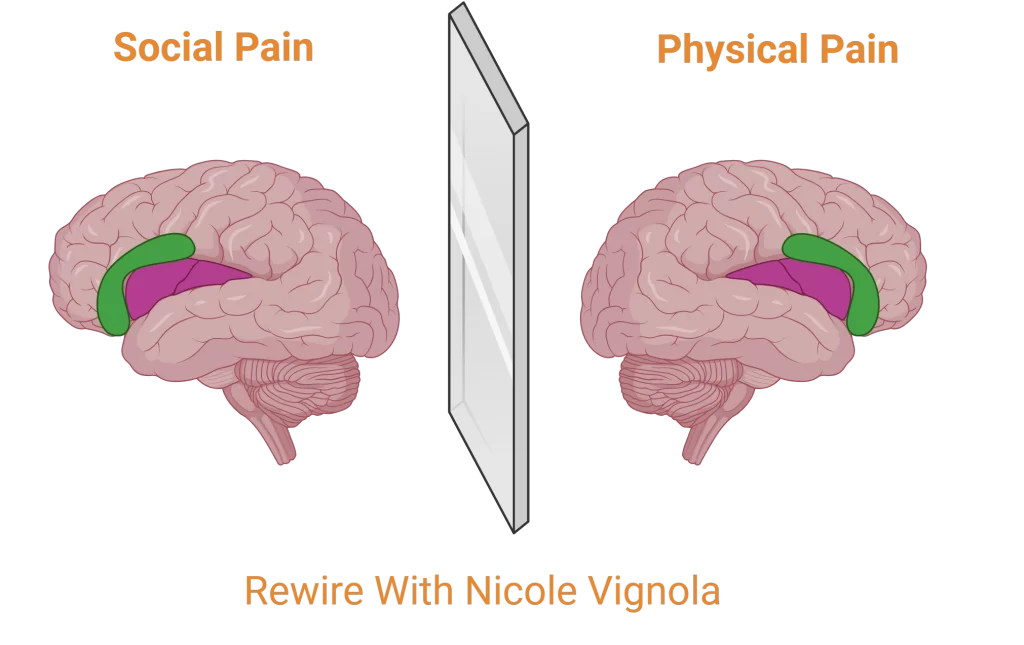
A new study in neuroscience demonstrates that the same areas of the brain that feel physical pain also feel like they don’t belong or are being rejected. This makes us think about how people connect in a new way.People not wanting you hurts for sure. A recent study in neuroscience demonstrates that the brain processes emotional pain from being left out in the same places that are active after a physical injury. This goes against what we used to understand about pain and gives us new information about mental health.
New research demonstrates that the same brain pathways that hurt when you get injured also hurt when someone doesn’t want to be with you.
When most of your interactions are online, it’s easy to feel hurt when someone doesn’t want to be friends with you. What if that heartbreak was like a scratch or a burn on your knee? Studies that use the latest brain imaging technology demonstrate that the same areas of the brain are active when people are socially accepted or rejected as when they are in physical pain. This discovery was initially documented in research conducted in the early 2000s and has subsequently been validated multiple times through the application of modern neuroimaging techniques. The “social pain hypothesis” says that being left out might hurt just as much as getting harmed in a fight. It has an impact on everything, including how people get along at work and bullying on the internet. These findings urge a reevaluation of our approach to emotional traumas during the emergence of loneliness epidemics.
The Analysis of Social Pain
Naomi Eisenberger and her team at the University of California, Los Angeles used functional magnetic resonance imaging (fMRI) to find this out. The study that came out in Science in 2003 was new. They had to play a computer game called Cyberball, in which computer-generated players ignored them on purpose. For a long time, scientists have known that the insula and anterior cingulate cortex (ACC) are parts of the brain that help deal with physical pain. These body parts can sense things that are unhealthy for them, like heat or pressure, and they can also tell you how bad it hurts to be left out.
This couldn’t have happened. Evolutionary psychologists contend that humans, being inherently social creatures, evolved heightened sensitivity to rejection to enhance group survival. Being left out of a group in the past made you more likely to be attacked by predators or starve, therefore social pain acted as a warning system. further recent tests, such EEG and PET, support this even further. For instance, the dorsal ACC becomes more active when you feel both types of pain, which makes it hard to identify the difference between physical and emotional pain.
The numbers convey a clear story. A meta-analysis in 2023 looked at more than 50 research with thousands of patients and found that the same parts of the brain were activated in people of all ages and cultures when they were in pain. For instance, the ACC response of persons who were turned down was 20–30% higher than when they were in neutral conditions. This is how humans react to small electric shocks.
Key Areas of the Brain
The anterior cingulate cortex (ACC) is the portion of the brain that registers pain. It does this by putting together emotional and mental pain signals to show why rejection lasts. The front insula governs how much pain hurts, whether it’s from a sprained ankle or a friend not talking to you. This area gets particularly active when people think about getting turned down for a long time. The upper parts of the prefrontal cortex are in charge of pain, but rejection can often make these controls less effective, leading people to act on impulse, like getting back at someone or pulling away.
These common pathways help us understand phenomena like “broken heart syndrome,” which is when stress makes you feel like you’re having a heart attack. Because their brains are still growing, this overlap makes kids even more at danger. Teen fMRI studies have shown that being hurt on social media can make you feel bad.
The Evolutionary Roots of Shared Pain Pathways
Why could evolution link social rejection to corporeal discomfort? Anthropologists contend that our species’ reliance on tribes for protection, when exclusion resulted in mortality in hunter-gatherer societies, compelled the brain to reconfigure the pain system for social awareness. Fossil evidence and studies on monkeys support this: when chimpanzees are isolated, they produce distress vocalizations and exhibit increased cortisol levels, which activate similar brain regions.
Why Social Rejection Hurts Like Physical Pain: Brain Science Explained