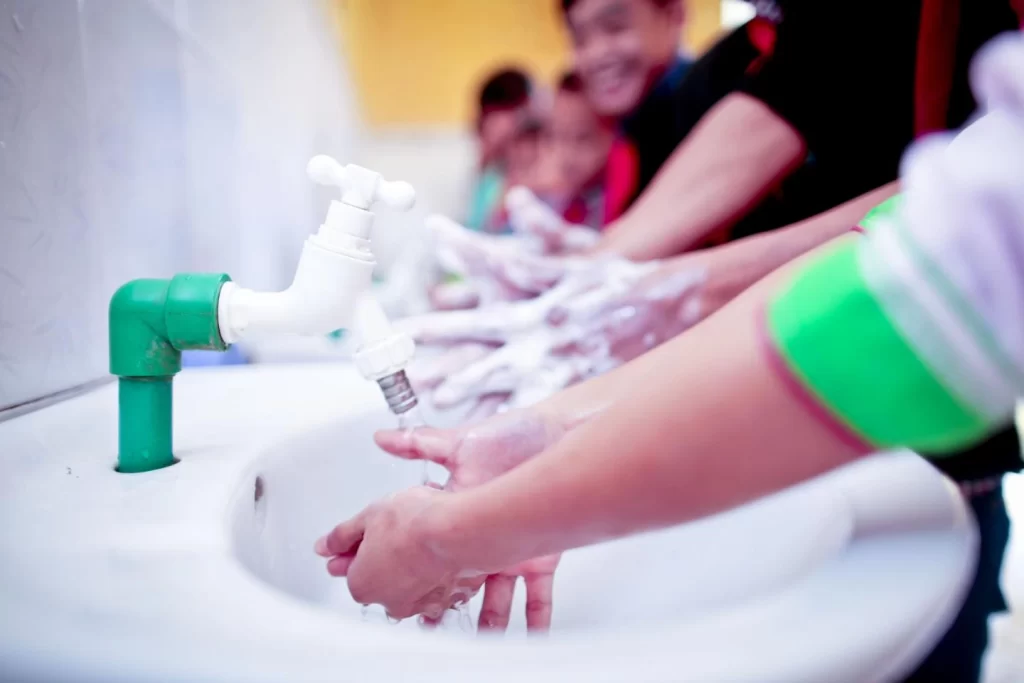
One of the easiest and best strategies to keep yourself from getting diarrhea is to wash your hands with soap. Medical research over the past few decades has revealed that it can lower the number of instances by as much as 40%. This common practice is still a big aspect of public health policy, even if global health problems will persist until 2026. It saves lives even though people are more worried about waterborne infections and antimicrobial resistance.
The Science of How Handwashing Works
Medical research indicates again and over again that washing your hands with soap slows the transmission of bacteria that cause diarrhea. This greatly reduces the number of occurrences of the disease. Groups like the World Health Organization and the Centers for Disease Control and Prevention have found that the surfactants in soap break down the lipid envelopes of viruses and bacteria, like Escherichia coli and rotavirus. These viruses and bacteria kill more than 1.5 million people every year, mostly children under five.
A landmark 2003 study in The Lancet that looked at data from multiple randomized controlled studies in different settings is one example of a thorough meta-analysis that came up with this 40% drop number. In these studies, those that were told to wash their hands found a 32–47% drop in diarrhea incidents. When soap was stressed over water alone, the average drop was 40%. The procedure is easy: washing your hands after using the bathroom, after going to the bathroom, and before cooking stops the major way these diseases spread, which is through fecal-oral transfer.
There are real-world instances that back up these results. In rural Bangladesh, a UNICEF-sponsored program that combined giving out soap with instruction led to a 40% decline in the number of children with diarrhea in just a few months. This illustrates that the program can work in places that don’t have a lot of money.
The World Health Organization’s Report on Diarrheal Diseases
According to WHO’s predictions, which will be updated until 2025, diarrhea is still one of the top killers, killing roughly 443,000 children under five every year. In countries like sub-Saharan Africa and South Asia, where sanitation is bad, bacteria thrive in polluted water and locations with bad hygiene. This makes millions of people malnourished and stops their growth.
Climate change has generated overcrowding, not enough water, and flooding, all of which make contamination more likely. For instance, the monsoon floods in India in 2025 produced a 25% surge in instances of dysentery and cholera. This shows how weak individuals are and how cleaning your hands can help.
Key data demonstrate how enormous the situation is: every year, rotavirus and Shigella kill more than 200,000 kids in sub-Saharan Africa. This number can go down by as much as 42% if people wash their hands. E. coli and Vibrio cholerae kill more than 150,000 people per year in South Asia. This amount can be lowered by 35% to 45%. The average 40% drop over the world indicates how strong the practice is, especially when vaccines and treatments don’t work.
Why soap is better than just water
Water alone doesn’t get rid of all the dirt. The CDC says that adding soap to this makes it 10 to 100 times more effective. Its molecular activity breaks up oils and lipids that trap bacteria, which makes it easier to rinse them away. Medical research shows this is needed to cut down on diarrhea by 40%.
The London School of Hygiene & Tropical Medicine did research in Kenya that revealed that homes that used soap had 41% fewer days of diarrhea than homes that only used water. There are still issues like cost and availability, but cheap soap bars that only cost a few cents to use yield enormous benefits. The Copenhagen Consensus Center claims that for every dollar invested on soap, health costs go down by much to $4.30.
Changes in culture also make a difference. In Pune, India, community efforts have raised the number of people who wash their hands from 20% to 70% in urban slums. This is connected to a 38% drop in visits to the clinic for diarrhea.
Important Historical Events and Current Evidence
This was based on Ignaz Semmelweis’s 1847 observation that washing hands lowered the number of deaths from puerperal fever in half. But recent studies have made it better for treating diarrhea. The Global Handwashing Partnership’s 2024 review of 50 studies reaffirmed the 40% goal. This included data from after COVID-19, when hygiene habits got better around the world.
A study in Nature Medicine found that following the rules for washing your hands during the pandemic from 2020 to 2022 reduced down on both viral and bacterial diarrhea by 35%. Antibiotic-resistant germs and other new threats make soap even more vital because it stops illnesses without making them stronger.
Milestone studies include trials in Pakistan in the 1980s that cut daycare diarrhea by 50%, India’s Swachh Bharat program in the 2010s that included soap and cut rural cases by 37%, and hybrid virtual trials in 2025 that confirmed the program’s effectiveness while also teaching people about digital health.
Public health efforts that are having an effect
The WHO’s “Handwashing for Health” and India’s ASHA worker programs are great examples of how to convince people to change their behavior and make handwashing a habit. These employ social marketing to make soap seem like a “family protector,” which gets more than 60% of people to use it in the areas they are focused at.
The Gates Foundation sponsored for an initiative in 15 African countries in 2025 that gave out tech monitors with soap in them. These monitors kept track of consumption and were connected to 42% fewer outbreaks. Digital solutions, including apps that remind individuals at critical times, help reach more people, especially in tech-savvy areas like Pune.
Dr. Valerie Curtis, head of the Hygiene Center at the London School of Hygiene & Tropical Medicine, states, “Handwashing with soap triggers an emotional disgust response, making it stickier than knowledge alone.” Her research shows that things like vibrant posters can make more people adopt by 25%.
Dr. Stephen Luby, an epidemiologist at Stanford who was in charge of the research in Bangladesh, argues that the 40% number is true in all cultures when soap is cheap or free. Pediatricians think that adding oral rehydration salts to other therapies could make a double barrier that would stop 80% of the worst cases.
Every year, 100,000 children in India die from diarrheal diseases. Experts from the Indian Academy of Pediatrics want the government to give out soap vouchers to everyone. They say that this will lower the number of cases by 30% in a year.
In a world after the pandemic, washing your hands with soap is a proven technique to save yourself from getting diarrhea.