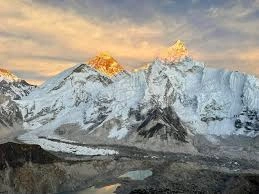
Every year, the Himalayas get a little bit taller. Here’s how it works and why it matters.
A Living Mountain Range in Action
People often call the Himalayas the “Roof of the World,” yet they are more than simply old rocks. Every year, the Earth’s crust moves under the snow-covered tops of the mountains, pushing them up by a few millimeters. Strong geological forces have been shaping Asia for tens of millions of years. They still have an effect on everything from the weather to river systems to earthquakes.
Scientists can now keep better track of this height than ever before, thanks to recent advances in satellite-based monitoring and seismology. People now know that the Himalayas are one of the most tectonically active and swiftly rising mountain ranges on Earth. It’s interesting to learn about this growth for school, but it also has real impacts on how to prepare for disasters, build infrastructure, and make sure there is enough water in all of South Asia.
The Tectonic Engine That Built the Himalayas
When the Indian Plate and the Eurasian Plate struck each other, the Himalayas were formed. The Indian subcontinent started to move north at a rate of a few centimeters each year about 50 million years ago. It finally got to Eurasia. The Indian Plate didn’t stop; it kept pressing under its northern neighbor in a process called continental subduction.
This impact keeps repeating, and it puts a lot of stress on the Earth’s crust, which bends and splits rock layers and propels them up into the sky. This formed the long line of peaks that includes Mount Everest, K2, and Kanchenjunga, as well as thousands of smaller summits that aren’t as well-known but are just as vital.
Modern GPS and satellite data show that the Indian Plate is still migrating into Eurasia at a rate of 4 to 5 centimeters per year. The ground doesn’t always rise when this happens, but it’s the fundamental reason why the Himalayas keep getting bigger.
How fast are the Himalayas getting bigger?
varying areas and ways of surveying give varying estimates of how fast the Himalayas are growing. Most studies, on the other hand, agree that the most active regions rise by a few millimeters to more than a centimeter per year. In some regions of the middle Himalayas, where Eurasia pulls on the Indian Plate the hardest, the land can rise more than 10 millimeters every year.
We may not think these numbers are very big, but over millions of years, they add up to quite high levels. For example, if a segment of the range rises 5 millimeters every year, it would rise 500 meters in 100,000 years, which is a short time in geological terms.
Scientists have a few different ways to measure this uplift:
– GPS sensors on mountain summits and in valleys keep track of small changes in the positions of things.
– Satellite radar interferometry, or InSAR, can discover tiny changes in the height of the surface over huge areas.
– Paleoseismology looks at old earthquake data that has been preserved in rock and sediment to learn more about how the Earth’s surface has altered over time.
– These studies reveal that the Himalayas are not only rising taller, but they are also changing shape because they are getting bigger and smaller due to earthquakes, landslides, and erosion.
The Growth Cycle of the Himalayas and Earthquakes
The same tectonic forces that push the Himalayas higher also make them one of the most dangerous regions on Earth for earthquakes. The Indian Plate is migrating north, which puts stress on big faults like the Main Himalayan Thrust (MHT). This is a big fault that goes under most of the range and slowly goes down.
When the rock can’t bear the stress, it breaks and causes a big earthquake. The 7.8-magnitude Gorkha earthquake in Nepal in 2015 and earlier earthquakes in Kashmir (2005) and Assam (1950) are strong reminders of how weak the area is. These earthquakes can make the ground rise or fall swiftly, often by many meters in just one event.
It’s strange, but earthquakes are an important element of how the Himalayas rise. When a fault breaks, stress moves along the fault system. This makes the parts around it push together and rise even higher. The “stick-slip” process makes the crust stick, which puts stress on it, and then slips, which helps the mountains grow over time.
Erosion: The Himalayas’ Worst Enemy
Tectonic forces push the Himalayas up, but erosion works against them to break them down. The Ganges, Brahmaputra, and Indus rivers make deep valleys and bring a lot of dirt to the plains below. This process happens even faster when there are glaciers, landslides, and monsoon rains.
It’s astounding that in some parts of the Himalayas, the rate of erosion is almost the same as the rate of uplift. This means that erosion can take away almost as much material as the mountains go up by a millimeter. The balance between tectonic uplift and surface erosion changes the land and influences the sediment load of significant rivers that feed ecosystems and agriculture in India, Bangladesh, and Pakistan.
Things are a lot harder now because of climate change. Because temperatures are rising and glaciers are melting, the way rain falls is altering. This can cause flash floods and landslides to happen more commonly. These changes might speed up erosion for a short time, which could make up for some of the tectonic uplift that will happen over the following few decades.
How it affects the weather and the amount of water available
Some people call the Himalayas “Asia’s Water Towers” because they are where some of the continent’s most important rivers start. The range is always getting higher, which modifies how water flows, how rivers flow, and how sediment travels. These things all change how much water flows downstream.
For example, uplift can make hills steeper, which can make rivers flow faster and carry more water. This can change the risks of flooding, hydroelectric projects, and irrigation systems. Changes in erosion and sedimentation, on the other hand, can obstruct reservoirs and affect the regular flow of rivers.
The weather in the area is also very crucial because of the Himalayas. Because they are so tall, they push wet air masses away and make rain shadows, which changes the course of the monsoon. This influences the weather on the Indian subcontinent and the Tibetan Plateau. The weather patterns could shift a little bit over a long time as the mountains get bigger.
The Himalayas are still getting taller by millimeters, making them the tallest mountains in the world.