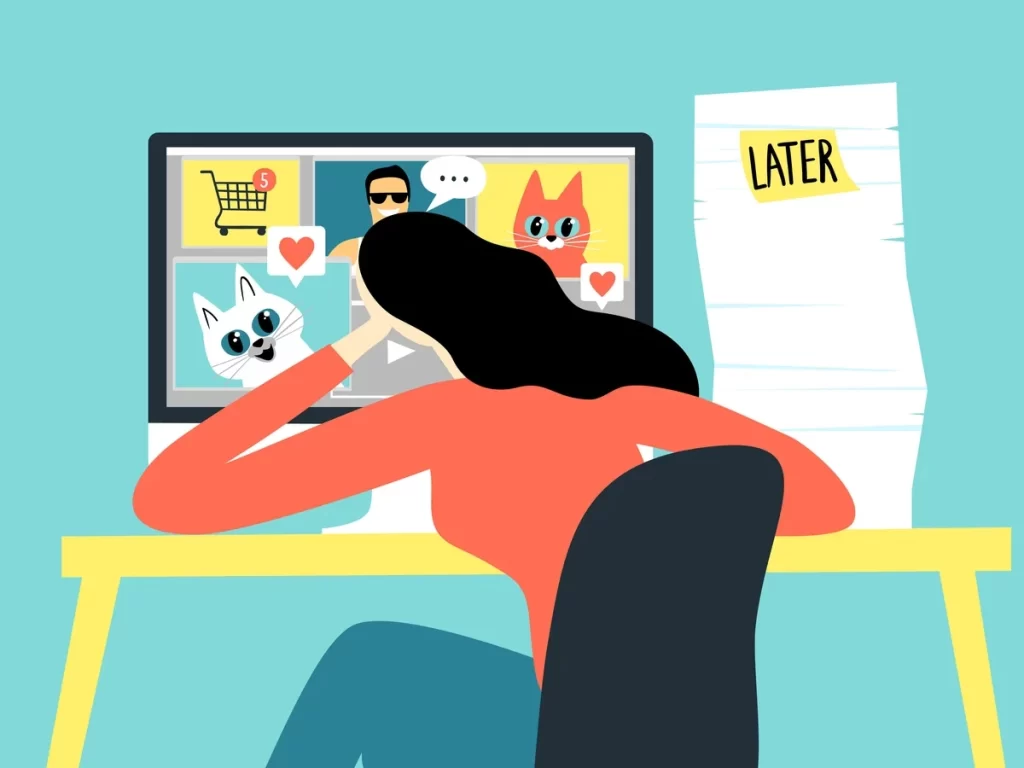
Billions of people are always distracted because of smartphones, social media, and continual notifications. This big problem is not just affecting the way we do things every day, but it’s also changing the way our brains work, which has a big impact on our mental health, focus, and productivity.
The Rise of the Distraction Economy
These days, life is set up to be disrupted. When tech businesses build apps, they use persuasive techniques to get and maintain users’ attention. Every ping is like a shot of dopamine. People look at their phones 96 times a day and use them for more than four hours a day. This isn’t a mistake; it’s how the attention economy works: when users are engaged, the company makes money.
Notifications, endless scrolls, and algorithmic feeds, like slot machines, use our brain’s reward system. Psychological studies indicate that these components generate erratic reward schedules, rendering cessation of use challenging. As a result, the ability to stay focused for long periods of time, which has been developed over thousands of years, has faded. On average, office workers switch jobs every 47 seconds. They lose 40% of their productivity because they have to switch contexts.
Neurological Foundations of Distraction
The prefrontal cortex is the region of the brain that handles executive functions like focus and impulse control. Constant distractions impact this part of the brain. Neuroplasticity shows that the brain can change its shape. This means that when you are constantly distracted, the pathways that let you do more than one thing at once develop stronger, while the pathways that let you focus deeply get weaker. Neuroscientific studies show that too much time spent on digital media can damage gray matter in areas of the brain that are important for empathy and critical thinking.
The default mode network is what happens when you fantasize or come up with new ideas. Chronic problems with this network make it harder to think in different ways. Functional MRI studies show that people who often multitask with media have more activity in the anterior cingulate cortex, which means they are always aware of stimuli. However, they do worse on activities that require sustained attention. This rewiring eventually leads to a condition of continual shallow processing, where it becomes hard to read or think deeply.
Also, being exposed to blue light and scrolling late at night can make this worse by messing up your sleep. You receive less REM sleep, which is bad for memory consolidation, which makes you more fatigued and less able to focus. Teenagers are especially at danger since spending too much time in front of screens might make it harder for them to pay attention and make them act like they have ADHD.
Mental Health Effects on the Mind
Not just in the brain, but also in the body, distraction makes anxiety and grief worse. The dread of missing out makes cortisol levels go up, which leads to compulsive checking. Highlight reels on social media can make people perceive themselves in a new way, which can lead to comparison traps that make them feel bad about themselves. Studies show that limiting social media use to 30 minutes a day can significantly reduce feelings of worry and hopelessness.
It’s easy to put things off in this situation. When there are distractions, things that need a lot of work look too hard, so we go for quick rewards like emails or likes. You feel good for a short time when you accomplish easy things, but you feel horrible for a long period when you don’t do your critical things. This is called a feedback loop. Researchers who research pleasure call this “attention residue,” which indicates that things you did before stick in your mind and make it harder to think effectively.
Some of the most important psychological effects are higher stress levels from too much information, less ability to control emotions because frequent stimulation makes it hard to be mindful, and a rise in digital addiction that affects millions of people in a way similar to substance abuse.
Effects on the economy and society
Distraction is terrible for everyone in society. Over the last few decades, students’ attention spans have been substantially shorter, which makes learning harder. Teachers argue that technology is making schools less effective, and even though money is being spent on tech, test scores aren’t going up. In the workplace, burnout is a concern because cultures are always on.
Diversions cost the economy a lot of money, with big economies losing hundreds of billions of dollars per year. When deep thought, which is needed for breakthroughs, is substituted with shallow thought, innovation stops. Even making judgments may go wrong. Executives who are preoccupied make riskier choices, which is why so many companies make blunders.
Culturally, there are less and fewer noteworthy talks. Most people say they ignore other people when they are on their phones, which makes it tougher to connect with them. This rewiring also changes how you feel for others: it’s tougher to perceive things from their point of view when you don’t spend as much time with them in person. People used to be able to pay attention for longer periods of time before digital technologies. But now they are as short as the shortest ones, and there are more cases of mental illness and less new ideas.
How to Get Your Attention Back
Undoing this rewiring requires effort. To begin, plan your space so that phones are not allowed in some places and use tools to block out distractions. The Pomodoro method, which has you work for 25 minutes and then take a 5-minute break, helps you focus again.
Mindfulness exercises help you focus better. Meditation helps you focus better after you do it a lot. Digital minimalism is only following feeds that have content that is worth your time. It’s good for your brain health to dim the lights and turn off all screens before bed.
Schools teach kids by having them spend time without screens and taking lessons that help them pay attention. Policymakers want measures like the right-to-disconnect statute that says people can’t send emails after hours. People are asking tech businesses to make their products with the health and safety of consumers in mind.
There are established strategies to help, such doing one thing at a time to get more done, being outside to feel less mentally exhausted, and writing in a journal to clear your thoughts.
The Way Forward: Rewiring for Strength
We are growing more divided because we are always being distracted, yet neuroplasticity provides us hope. Doing things on purpose can help us pay more attention. Companies that plan for the future develop regulations that keep people from becoming sidetracked, which makes teams happy. People can now change how they concentrate using new technologies.
In the end, it’s not about disliking technology; it’s about learning how to use it. As AI-driven distractions take over society, knowing how to draw people’s attention back is a skill that could save your life. The future rewards those who can discover meaning in the noise, and this could turn people become builders of their own cognitive future.
Why We’re Always Distracted and How It’s Affecting Us