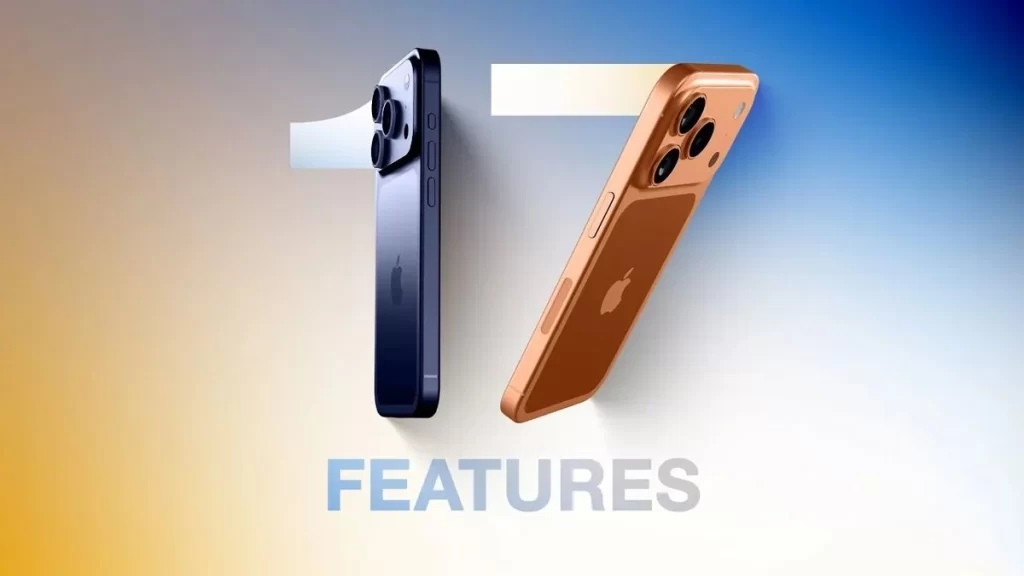
The tech industry is buzzing with news regarding Apple’s long-awaited iPhone 17 lineup. Some people think the firm is all about cutting-edge innovation, while others think it’s about raising prices to keep its trillion-dollar business going. As insiders spread stories about little changes and rising costs, both consumers and experts are starting to wonder if Apple’s once-unmatched innovation is being replaced by judgments centered on making money. This building problem comes up at a very bad moment, just a few months before the planned opening in September 2026. It makes you think about the constant battle between iPhone leaks, innovation vs. price, and what this implies for the future of smartphones.
Most of the time, people in Asia’s supply chain talk about new iPhones in hushed tones. This time, the news of the new iPhone leaks comes from well-known leakers like Ming-Chi Kuo and reliable sources like MacRumors. There are rumors that the iPhone 17 series will have a new “Slim” model that could take the place of the Plus. This phone will just be 6mm thick, which is thinner than any other flagship phone. There are also rumors of better under-display Face ID technology, which would get rid of the notch and make the design truly bezel-less.
But these tantalizing teases cost a lot of money. Analysts estimate that the base iPhone 17 Pro could cost $1,199, which is $100 more than the iPhone 16 Pro. The new phone costs more because it includes superior parts, like LTPO OLED panels and A19 CPUs that are speedier and produced using a more efficient 2nm technology. Some sources in the supply chain say that manufacturing camera systems with 48MP telephoto lenses for all Pro models will cost more. People are also saying that the frames would be constructed of titanium, which won’t get scratched. These iPhone leaks make it seem like luxury is getting better, but is it really that much harder to get?
Some people think this is part of a pattern: the average price of an iPhone has gone up by 25% in the last five years, from around $850 in 2021 to more than $1,050 today. Loyalists love the high-quality craftsmanship, but the case gets stronger when competitors like Samsung and Google offer the same features for less money.
The way Apple does research and development is at the heart of the conflict between price and innovation. People who support the leaks argue that Apple Intelligence 3.0 might make AI more easy to utilize. This might lead to generative AI on gadgets that can change pictures in real time, estimate what you’re going to text, and even keep an eye on your health by combining sensors better. Imagine an iPhone that can teach you how to keep healthy just by watching how you walk with its new motion coprocessor. Or picture an iPhone that can design workout plans just for you without utilizing the internet.
But a lot of people who don’t believe think these changes aren’t that big. Like the Galaxy S series from two years ago, the iPhone 17 will probably have better cameras. It could feature periscope optics that let you zoom in 10 times optically. Display refresh rates fixed at 120Hz, with no bump to 144Hz or micro-LED innovation, feel ancient compared to OnePlus and Xiaomi’s aggressive moves toward foldables and cameras that are hidden under the screen. Silicon-carbon anodes make batteries last 20% longer, but they don’t change the category substantially because they don’t use novel silicon stacking or gallium nitride charging.
The past makes the stress much worse. Face ID on the iPhone X in 2017 was Apple’s last big update. After that, they added one ProMotion screen and one LiDAR scanner at a time. Huawei’s tri-fold designs and Oppo’s electrochromic camera technologies, on the other hand, show that they are willing to take more risks. “Apple is great at polishing diamonds, but who is mining the new veins?” asked a venture capitalist in a recent chat. This feeling adds to the talk about the upcoming iPhone leaks: is refining a fresh idea or just a way to make something seem familiar?
You can’t speak about the iPhone’s new features and prices without simultaneously talking about the economy. Apple’s gross margins are exceptionally high, between 45% and 50%. About 25% of the company’s total sales come from service revenue, like as App Store fees and iCloud subscriptions. Some individuals suspect that the iPhone 17 Pro Max might cost $1,599, which would make it a status symbol like expensive watches. There will be several colors, like the “Titanium Desert Rose” that people are talking about.
The figures show that the approach worked: Apple has 28% of premium smartphone sales in the $600+ class, while Samsung only has 22%. Users update every 3.5 years on average, which is more often than the 2.8 years they did in 2020. They get long-term support, like seven years of iOS updates. That’s why. Customers can upgrade more easily with strong trade-in programs that lower the cost of improvements by $300 to $600.
But they are quite worried about how much it costs. In countries like India and Brazil that aren’t very developed, where less than 5% of people own an iPhone, raising prices might make individuals who want to buy one less likely to do so. Prices for electronics are going up by 7%, which makes Americans more likely to care about how much things cost. Recent studies reveal that millennials are 15% more inclined to look for “value.” Competitors are taking advantage of this. For instance, the Google Pixel 9 Pro features cameras that are just as excellent as the iPhone’s and costs $999. The Nothing Phone (3) has odd Glyph interfaces and costs half as much.
These subheadings demonstrate the difference: Apple’s prices aren’t random; they’re a premeditated move to acquire exclusivity. But when leaks show that entry-level gadgets are coming closer to $900, the balance between fresh ideas and price changes moves toward feelings of avarice.
People are going crazy on social media about the latest iPhone leaks. In the past week, there have been 2.5 million posts on #iPhone17 on X (formerly Twitter). Some people are happy about it (“Finally, an iPhone with a full screen!”) while others are upset about it (“$1600 for a bigger screen? No, thank you. There are threads about prototypes in the r/Apple forum on Reddit. A poll with 45,000 votes indicated that 62% are pleased about Slim, but 71% don’t want costs to go higher.
Some experts don’t agree. Dan Ives from Wedbush still thinks that 250 million iPhone 17s will be sold. He argues that the Apple Watch and AirPods work well together, which keeps customers in the ecosystem. Anshul Gupta, an analyst at Gartner, warns that “premium fatigue” might set in and sales in the U.S. could decline by 5% to 7% if prices go above $1,200 and there are no foldable options. Marques Brownlee (MKBHD) and other influencers remark, “Leaks are breadcrumbs; WWDC reveals the feast.”
More depth comes from environmental views. Apple aims to be carbon-neutral by 2030, and to do so, they need to develop things that last. The starting prices are higher since 90% of the materials needed to produce the iPhone 16 are recycled. Some people complain that e-waste piles up when repairs cost too much and that it’s tougher to keep up with newer versions.
In Silicon Valley, the news about the iPhone leaks is causing a lot of talk. Samsung is moving faster on its plans for the Galaxy S26 and promising AI-powered “Galaxy Brain” capabilities to rival with Apple’s AI. Companies in China, including Vivo and Honor, are making the race for periscope zooms more tougher by talking about focal lengths of 200mm. The Tensor G5 CPU from Google promises the same amount of raw power, seven years of support for Android, and costs that are fair.
Apple still can’t get foldable phones to work. There are patents for a foldable iPhone, but no leaks about it. The Motorola Razr Ultra (around $1,000) and the Huawei Mate XT tri-fold are the finest options. Foldable phones account up 18% of the market in Asia, but only 2% of the market around the world. Apple is taking a chance by not paying attention to this market.
This competition makes the battle between price and new ideas even more acute. Apple makes the most money from iPhones, which bring in more than $100 billion a year.But companies like Xiaomi sell a lot of high-end phones with the same technology for less than $500.
These breaches illustrate that a lot of things will change, not just the tech. The government is doing a better job of watching over things. The EU is looking into whether the App Store is too huge, which could mean reduced prices. At the same time, President Trump’s antitrust proceedings in the U.S. are looking into tech industry monopolies. Taiwan’s TSMC fabs create A-series semiconductors, which are part of a supply chain that might be affected by problems around the world.
There are more choices for customers. CMF and Tecno’s affordable AI phones provide everyone access to functionalities that were only available on iPhones before. This helps people make good decisions.
When you look at patterns, the stakes become clear. The Pixel 9 costs $799, and the iPhone 17 with the A19 chip will probably cost $849. The iPhone 17 Slim is 6mm thick and costs $1,099. The Galaxy S26 is $999. The iPhone 17 Pro includes a telephoto lens with 48 megapixels and costs $1,199. The price of the OnePlus 13 is $899. The Vivo X200 costs $1,099 and sports a 10x zoom. The iPhone 17 Pro Max costs $1,599. This table indicates how much more expensive products are than those of competitors, which adds to the discourse.
New iPhone 17 Leaks Explode: Innovation Stalled or Pricing Out of Control?