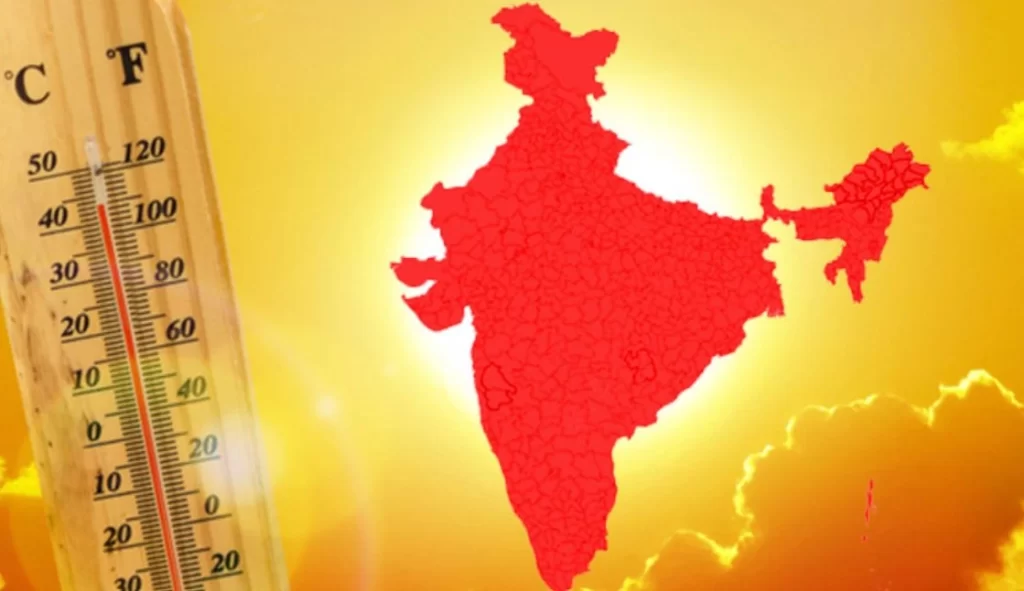
Forecast for the Weather in 2026
IMD’s advanced models and global services like Copernicus say that the weather would be quite poor from March to June 2026. In central and northern India, the heat index might reach over 45°C. In Rajasthan, Madhya Pradesh, and Uttar Pradesh, it could reach 48–52°C. NASA’s satellites show that the average summer temperature has risen by 1.2°C since the year 2000. The rise will happen faster in 2025 when the La Niña trends alter.
According to IMD’s prediction for January 2026, the core zones will have 20 to 25 days of heat waves, which is 25% greater than last year. The weather will be warmer than usual in 80% of the country. This guess is based on the fact that the soil is drier and there are high-pressure systems. The weather forecast says that Rajasthan will endure heat waves for 25 to 30 days, with highs of 50 to 52 degrees Celsius. In Uttar Pradesh, the temperature would be between 47 and 49 degrees Celsius for 20 to 25 days. There will be similar rises in other places, which is a major divergence from what usually happens.
Why? Changes in nature and things humans do make heat waves worse. Greenhouse gases have raised the average temperature by 0.7°C since before the Industrial Revolution. Every year, 10 million more people move to cities, which generates heat islands that are 2 to 5 degrees Celsius hotter than the countryside. When trees are taken down, the cooling evaporation stops, and monsoons that come and go could dry out the soil before the monsoon.
In 2025, the Indian Ocean Dipole was only mildly positive, which meant that there was no rain and the heat got worse. If emissions don’t go down, experts say there could be “heat domes” like the one that happened in Europe in 2022. Dr. Madhavan Rajeevan, who used to be in charge of the IMD, says that these changes are definitely related to how we use fossil fuels, especially coal. Burning stubble in Punjab generates aerosols that make the heat trap even worse.
Problems with health
In the summer of 2026, heat waves put India’s 1.4 billion citizens at risk, especially those who were already frail. When instances went climbed by 300% in 2024, hospitals might be full of individuals with heart problems, heat strokes, and dehydration. People over 65, kids, and 400 million people who work outside are all at risk.Women who work in the fields in rural locations are far more likely to get hurt.
The National Disaster Management Authority believes that heat waves kill about 24,000 people per year, but this number is certainly higher because not all deaths are documented. In Uttar Pradesh, 500 persons had died by May 2025. Things are growing worse because of new mental health issues, such a 15% surge in suicides at busy times. There are heat response plans in 200 towns that contain warnings and places to cool off, but they aren’t being put into action as rapidly as they should be. Advisories in early February 2026, through shaded stops and water outlets in Pune, Maharashtra, have helped keep the number of deaths low.
Damage to the economy and farming
Farming is the most affected, as 45% of Indians depend on it. In the heat, wheat and pulses don’t do well, and every degree makes yields drop by 10% to 20%. There may be 5–8% fewer Rabi crops in the summer of 2026. Food prices would go up since there would be shortages all around the world. The World Bank says that heat waves cost the economy $30 to $50 billion a year, which harms businesses and buildings.
There could be blackouts like the ones that happened in 2025 if power consumption goes up by 15%. Tourism is moving to the hills, but locations like Goa on the coast are losing coral and fish.
Some important effects are:
When the temperature rises over 35°C, productivity drops by 20%.
Claims for infrastructure insurance are going up by 40%.
Farmers with small farms that don’t have irrigation get even more in debt.
We need upgrades that can deal with climate change.
Policy Steps
India uses both adaptation and mitigation to deal with more heat waves. The new National Action Plan on Climate Change says that by 2030, half of the country’s energy should come from sources that don’t run out. That should include 100 GW of solar power. The “heatwave codes red” app for Maharashtra sends out alerts right away. There is ₹10,000 crore under the Heatwave Resilience Fund to help cool roofs and green spaces. It began in January of 2026.
IMD’s Skymet radars make predictions 30% more accurate. India demands $100 billion in damages for what happened at COP30. In rural regions, enforcement is slow, and coal resistance makes things worse. More and more individuals are asking for better rights for workers and a ban on employing people at noon.
There are new ideas and projects coming ahead. Technology fights back against the threat. IIT Delhi’s AI heat maps can help you plan by showing you where the hottest places are with 90% accuracy. Drone misters cooled the markets in Delhi by 5°C, and solar evaporative coolers consume 70% less electricity. Pune’s “zero-heat” districts have planted 1 million trees since 2024.
Goonj and other NGOs give migrants bright outfits. Climate Central’s WhatsApp updates make it easier for people to get IMD data, which helps communities stay strong during the summer of 2026.
A View of the World
People all throughout the world are aware of the problem in India. For instance, 2025 was the warmest year ever, which had tremendous effect on Europe and Asia. Australia and India have both sent out early warnings since their predictions for 2026 are comparable. Both India and Pakistan are rated as 8.5 out of 10 on the vulnerability scale. According to World Weather Attribution, climate warming increases things that happen in 2025 30 times more likely to happen.
India is getting ready for one of the hottest summers on record.