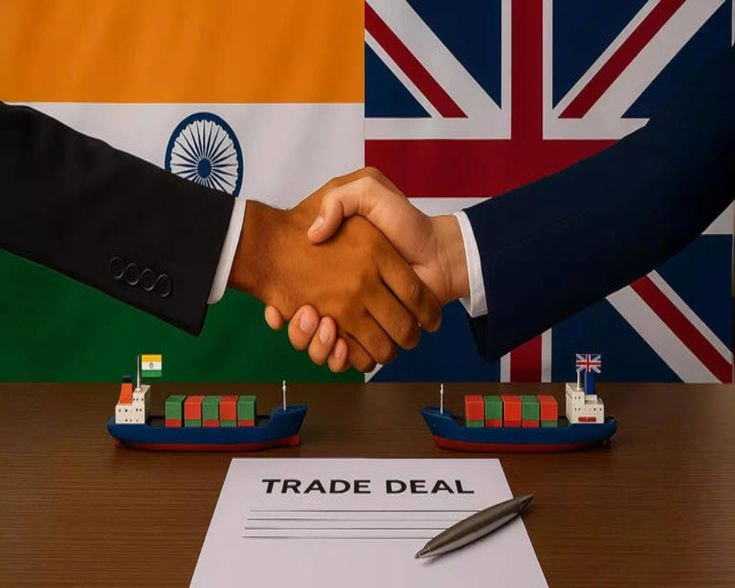
India’s bold plan to lower tariffs on some imported items is a big change in its trade strategy. The goal is to increase exports, keep prices stable, and make global supply systems stronger. This temporary tariff cut plan was announced because of issues in the world economy. It promises to transform India’s status as a major manufacturing country.
Strategic tariff cuts are very important for commerce.
The Indian government has lowered the taxes on a small number of goods that come into the country for a brief time. This is supposed to benefit crucial fields including chemistry, electronics, and equipment. The finance ministry’s most recent notice made this decision official. It lowers the basic customs fees on lithium-ion batteries, semiconductor parts, and pharmaceutical intermediates by 10 to 15%. Officials say it is a “short-term stimulus” that will continue for six to twelve months. It is aimed to fix short-term supply concerns and also encourage people to create value at home.
Electronics and renewable energy are two of the most affected categories. Duty decreases on solar panel inputs and EV battery cells will speed up the utilization of green energy. Chemicals and plastics are also affected. For example, reducing tariffs on ethylene and methanol will aid petrochemical downstream plants. Lower taxes on precision tools also aid industries like auto and aerospace by making it easier to get parts for machines.
This targeted approach avoids making huge cuts across the board and instead concentrates on high-impact imports that aid producers who export. Early estimates imply that importers might save between $5 and $7 billion. This could mean reduced prices for consumers and higher profits for exporters.
Winners and adjustments in strategy in different areas
The next big thing is electronics and semiconductors.
The tariff cuts will help the electronics industry the most because they will slash the prices of more than 50 items by 8 to 12 percent. India’s smartphone assembly has expanded from 60 million units in 2015 to 350 million in 2025, but the country still relies on imports for semiconductors and screens, which make up 70% of the market. Lower tariffs on lithium cells and rare earth magnets would make it easier to make electric cars, which should reach 30% of the market by 2030.
Foxconn and Tata Electronics, two of the biggest winners from the PLI, expect their capacity to grow quicker. This cuts our bill of materials by 5–7%, which allows us to offer rates that are competitive in Southeast Asia. Renewables will also gain because cheaper solar inverters are predicted to add 20 GW of capacity per year.
Chemicals and Pharmaceuticals: Keeping Supply Chains Steady
Every year, the U.S. imports $80 billion worth of chemicals. Bulk medications and colors obtain tariff reduction of 7.5% to 10%. This goes against China’s dominance, which meets 60% of India’s needs. Big drug businesses like Sun Pharma and Dr. Reddy’s expect their profit margins to go up. This is essential because of US FDA inspections and pricing pressures.
The tariffs on ethylene in plastics reduce from 7.5% to 5%. This is good news for Reliance Industries’ Jamnagar complex. The change will aid exports of products like packaging films, which are estimated to reach $15 billion by 2028.
Auto and Machinery: Making the Competition More Difficult
Automobile parts suppliers are glad that the number of gears and forgings has gone down. This helps keep prices down during the move to electric vehicles. Mahindra and Maruti Suzuki plan to send twice as many goods to Africa and Latin America. Heavy machinery tariffs have gone down for textile looms and CNC machines. This has enabled small and medium-sized businesses in Tamil Nadu and Gujarat get back on their feet.
These sectors indicate how exact the approach is. High-multiplier areas are likely to see electronics, chemicals, cars, and renewables exports rise by $4 to $15 billion.
The World and How Trade Partners React
India’s modification to its tariffs makes sense in a world trade system that isn’t very stable. New Delhi is trying to be a reliable choice now that US President Donald Trump has been re-elected and tariffs are going up on both sides. The EU is happy to find that solar panels from India are cheaper because they are having trouble with electricity. ASEAN partners are also looking about negotiating deals to work together on projects.
India gets the most imports from China, which brings in $100 billion. Duties are making Vietnam and Indonesia more appealing, which puts indirect pressure on China. The cuts aren’t supposed to hurt anyone; they only encourage “friendshoring” without making important suppliers mad. Temporary status makes sure that the rules of the WTO are followed and that there are no conflicts with safeguards.
Experts like Swati Rao at ICRIER say that decreasing input prices could have a ripple effect. They could lower CPI inflation by 0.5%, which would enable the RBI drop rates. The Nifty 50 went up 2% after the news, which is an encouraging indication for foreign investors who put in $80 billion in FDI last year.
But there are problems coming up. When tariffs are closer together, smuggling is more likely to happen, so customs technology like AI scanners needs to be on the watch. Steel and textile makers in the US are anxious about losing protection, which is why some are asking for anti-dumping investigations.
More Effects on the Economy of India
The fiscal 2026–27 budget is all about growth through capital spending, thus temporary decreases in tariffs fit well with that. The trade increase supports rural areas that are slowing down because of erratic monsoons. GDP growth is forecast to be between 6.8% and 7%. The most crucial thing on the list is making jobs. There might be 500,000 employment in electronics alone, in areas like assembly and research and development.
It is vitally crucial to keep inflation in check. Imports that are less expensive help keep food and gas costs from rising too much, which helps fulfill the 4–5% retail inflation target. ECLGS extensions make it easier for MSMEs, which make up 45% of exports, to get credit.
Lowering taxes on green tech helps us reach our objective of reaching net-zero faster, which is in accordance with what COP promised. Women-run businesses that manufacture garments and crafts gain money indirectly by having access to machinery, which makes it easier for individuals to get money.
People have distinct points of view. Piyush Goyal, the Minister of Commerce, says it is “pro-business, pro-poor.” Amar Patel of NITI Aayog states, “Short-term changes need to become permanent for long-term benefits.” Unions want to make sure that workers can handle more imports by giving them the skills they require.
Policy risks and how to lessen them
Every policy has some risk. If exports don’t take up, cutting duties might make the current account deficit larger, which would put pressure on the rupee at 85/USD. The economy has some breathing room thanks to currency hedging and $650 billion in foreign exchange reserves.
One thing that could happen is a global recession, and the IMF’s prediction of 3.2% growth in 2026 makes people less hopeful. Dairy lobbies are fighting back at home, which demonstrates how hard it will be to balance politics before the state elections.
Mitigations in place: Performance audits connect extensions to export goals. The ₹2 lakh crore budget for PLI 2.0 expansions would cover 14 different industries. ONDC and other digital trade platforms make it easier for B2B enterprises to find each other.
For a limited time, India lowers tariffs on several essential imports to help trade and the economy.