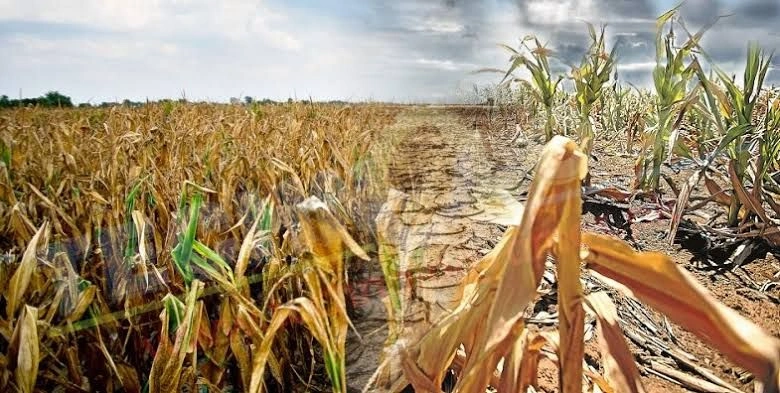
Farmers in India are hurt by climate change because it makes monsoons less dependable. Rain-fed farming, which makes up about 60% of all agriculture, has been affected by late starts, long dry spells, and heavy rain that falls in short bursts. For instance, the southwest monsoon in 2024 brought 8% more rain than usual, but it didn’t fall evenly. A lot of rain fell in northern areas like Punjab and Haryana, which is where most of India’s food is grown. But Karnataka and Maharashtra didn’t get as much rain. This change dries out the soil, makes it hard to water crops, and lowers the yields of kharif crops like paddy and maize by 20–30% in places that are affected.
More than 1,200 billion cubic meters of groundwater are used by farming every year. This is a lot more than what can be replaced. Climate change speeds up evaporation since temperatures are anticipated to rise by 2 to 4 degrees Celsius by the middle of the century. The Ganga and the Yamuna, for example, will have to deal with a lot of stress. Farmers in Punjab, which used to be termed the “food bowl,” are upset because the water levels are going down. They have to use pumps that take a lot of energy, which makes production more expensive.
Pulses and millets, which are particularly crucial for vegetarians’ health, are also at risk. Chickpea yields in central India have declined by 15% in the last ten years. People argue that the long stretches of hot, dry weather are to blame. When it’s hot outdoors, cows and buffaloes get upset, so they don’t make as much milk. A lot of mixed farming approaches depend on animals. This has an effect on the price of milk, which is 25% of rural incomes.
Heavy rain and drought are both examples of extreme weather.
Cyclones, floods, and droughts are more likely to happen in India right now. The Indian Meteorological Department reported that since 1950, there have been 10% more heavy rain events that produce floods that devastate houses and businesses. Floods in Assam and Bihar engulf millions of hectares every year, damaging homes and crops. But 68% of the regions where plants were grown encountered a drought at least once. For instance, the drought in Maharashtra from 2019 to 2020 killed 40% of the cotton and sugarcane crops.
These things take nutrients out of the soil and add salt, which makes it less useful. This is especially true in coastal deltas like the Sundarbans, where the sea level rises and saltwater gets into crops. Warm places are good for pests that spread through vectors. Since 2018, autumn armyworm infestations have hurt maize crops in 20 states, costing India than ₹20,000 crore.
The country is having problems
Smallholder farmers are the ones that are impacted the most. They own 85% of farms that are smaller than 2 hectares. Because diesel and fertilizers are more expensive, it costs 20 to 30 percent more to make items. But income hasn’t kept up, which has led to debt traps and suicides—more than 10,000 a year in regions like Maharashtra and Telangana. People in the country go to cities when they have troubles. This makes slums and places where people can work without a job worse. This has an indirect effect on how much food costs and how much people want it.
Food processing companies can’t acquire the raw ingredients they require, therefore they can’t create things and people lose their jobs. When the EU and other countries place carbon border fees on commodities, Indian goods are less competitive on the world market because flood irrigation makes them look like items that give off a lot of carbon.
What the government is doing and what troubles it is having with its rules
The Indian National Adaptation Fund for Climate Change offers ₹1.14 lakh crore to help farmers grow crops that can survive climate change. This comprises a variety of different crops and small-scale irrigation. The PM Krishi Sinchayee Yojana and the Climate Resilient Crops initiative are two programs that intend to develop 10 million hectares of land that can be watered. The Climate Resilient Crops project says that there are more than 50 kinds of rice and wheat that can grow in dry, salty places.
But other individuals are still worried about how it was done. The government gives money to crops that need a lot of water instead of millets, and just 48% of cropland gets water. People don’t trust the Fasal Bima Yojana crop insurance system as much because it just compensates for premiums and not much when there are a lot of losses. Experts say that switching to agroforestry, using the IMD’s Umang app to get AI-driven weather forecasts, and precision farming are all good options.
In Gujarat, drip irrigation is an effective technique to adjust. It cut the quantity of water utilized by 60% and increased the amount of food made by 25%. They will keep pushing millet until 2026, when it will be better for the environment. This will happen in 2023, the International Year of Millets. Under PM-KISAN, Direct Benefit Transfer offers 120 million farmers ₹6,000 a year to help them deal with price shocks.
Climate change is making it harder to farm in India, and food costs are going up.