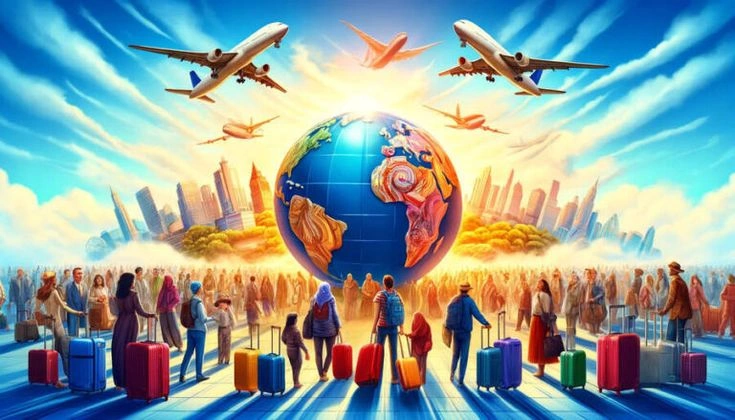
People are traveling again, and there are more of them now than there were before the outbreak. The World Tourism Organization, which is part of the United Nations, forecasts that by 2025, 1.4 billion tourists from different countries would have come to the world. This is 2% more than it was in 2019. Data from early 2026 shows no signs of slowing down; January alone recorded a 15% spike over the same month last year. The tourism boom after the epidemic is bringing in trillions of dollars to the economy, making millions of employment, and transforming tourist places all over the world. A lot of people want to travel, new technologies are coming out, and people are starting to take journeys that are healthier for the environment.
More and more people from all around the world are coming to view it.
Tourism from other countries is back and better than before. In 2025, more than 100 million people flocked to France, making it the most popular tourist destination. The US and Spain weren’t too far behind. For example, 7.2 million tourists climbed the Eiffel Tower in Paris, and 85 million people from other countries went to Spain’s beaches and towns. Thailand and Vietnam, two new markets in Asia, grew by as much as 40%. The rules for travel were less strict and the advertising was more intense, which is why this happened.
Europe is recovering pretty well; places like Rome, Barcelona, and Amsterdam have grown by 10% or more. A lot of individuals went on trips within China, and as China fully reopened following its “zero-COVID” era, a lot more tourists from other countries came to see it. The “Incredible India 2.0” campaign brought in 12 million foreign tourists to India, which is 4 million more than in 2023. The Maldives and other small island economies had 95% hotel occupancy, which meant that record numbers of tourists were favorable for GDP growth of more than 10%.
This momentum is more than just vengeance travel; it’s a new way of doing things. Low-cost airlines offered more flights to smaller destinations, digital nomad visas grew more prevalent, and the most popular trips planned were experiential ones like wellness retreats and cultural immersions. According to the International Air Transport Association, 4.8 billion people will fly by 2025. This is 5% higher than the most people that flew in 2019.
How it affects the economy and job growth
A lot of money is made by these record numbers of travelers. In 2025, tourism around the world pulled in $11.7 trillion, or 12.7% of the world’s GDP. It also produced almost 35 million new jobs in the hotel, aviation, and allied fields. The US spent more than $1.2 trillion on travel, which sustained one in nine jobs and brought life back to rural areas through national parks and agritourism.
Asia-Pacific stood out with $1.1 trillion in sales. This was because China was getting better and there were many fantastic sites to see in Southeast Asia. Foreign tourists spent $28 billion in India, which benefited the country’s hotels, crafts, and transportation. Tourism contributes 15% to the Middle East’s GDP growth, largely because 92 million visitors flew into Dubai and the Vision 2030 events in Saudi Arabia. Building pricey eco-resorts brought in a lot of money for little countries like Seychelles.
These numbers get bigger when you multiply them. For every dollar a tourist spends, the economy grows by $3 to $5. Businesses are establishing anything from food trucks to adventure tours, and governments are using the money they gather from taxes to pay for roads and other public works. After the outbreak, the travel industry has made things more equitable, especially for women and young people in developing countries, where there were more job options than in big cities.
What Caused the Boom
This is a perfect storm of new ideas and old needs. AI-powered solutions like better travel planners make booking 30% easier by giving consumers personalized itineraries and realistic previews of their journeys. People felt safe again thanks to contactless technology, and airlines rapidly added more seats.
People got increasingly interested in sustainability. For example, 70% of millennials would prefer go on vacation to destinations that are healthy for the planet. This is why Costa Rica’s jungles and New Zealand’s parks are so popular. This got a lot bigger because of social media. Influencers made $13 billion from viral videos on TikTok and Instagram, like the cherry blossoms in Japan and the auroras in Iceland. Many people have seen hashtags like #SustainableTravel and #PostPandemicAdventures.
It was also useful to change the rules. Digital Schengen permits made it easier to get into Europe, Australia’s working holiday programs pulled in adventurers, and Dubai’s infrastructure improvements made it a hub. What happened? The travel industry is more open to everyone now that the epidemic is over. Secondary cities and trips in the off-season perform well.
Spotlights on the Region: Stories of People Who Made It
During the Renaissance in Europe, Italy’s Amalfi Coast and Greece’s islands established records, even though Venice paid €5 a day to keep the crowds down. The 2024 Olympics made Paris incredibly exciting, and the city grew by 20% as a result. It did this by mixing its sports past with its gastronomy.
Asia is growing quite quickly. Bali had 6.3 million visitors, Saudi Arabia had 100 million during Riyadh Season, and wellness tourism in India’s Varanasi-Goa circuit went up a lot. There were a lot of individuals at yoga retreats and spiritual places all year long.
Mexico’s Riviera Maya added 8.7% to GDP, Canada’s Banff had the most winter visitors ever, and Brazil’s Carnival drew massive crowds.
More and more individuals are visiting Africa and the Middle East. South African safaris were up 28%, Morocco’s souks attracted cultural lovers, and Dubai’s modern elegance made it a must-see.
Record-Breaking Visitor Numbers Ignite Explosive Post-COVID Travel Revival and Global Economic Surge