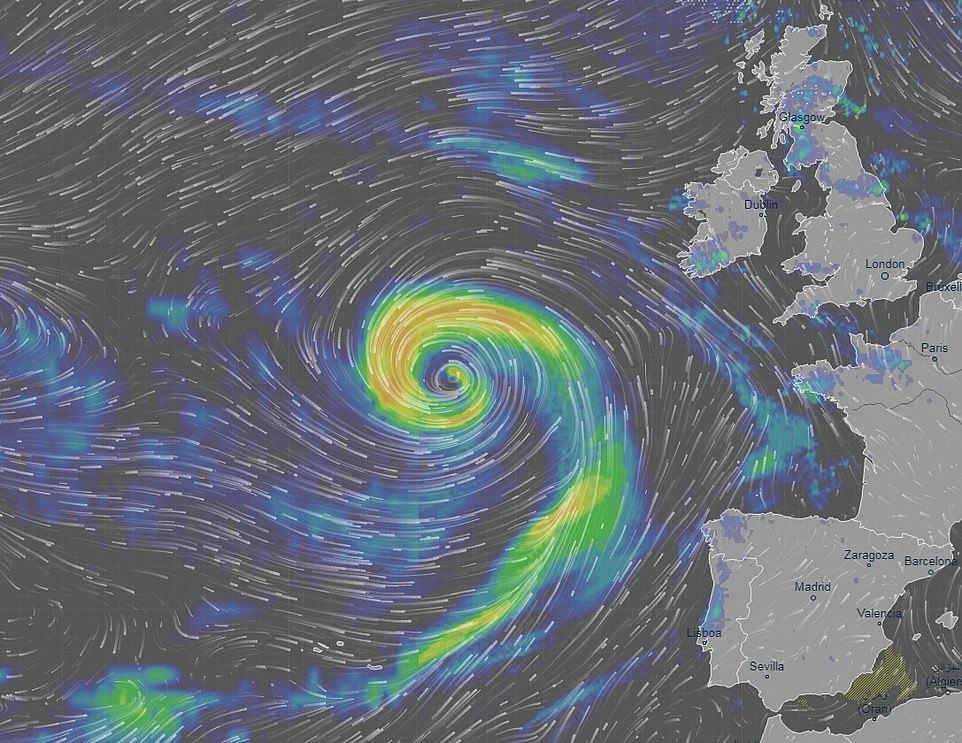
As the environment becomes less stable, sudden variations in the weather have become a continual force that makes life harder than ever. People all over the world can’t fly or take the train because of these rapid changes in the weather. For instance, dense fog is covering big airports and powerful storms are damaging train tracks. Last week, thousands of people had to deal with prolonged delays and cancellations because of bad weather that hit several regions of the world. This shows that transportation networks are getting weaker. This article goes into detail on what caused these problems, what they did, and what they did to the bigger picture. It shows how aviation safety rules and train infrastructure are being tested in ways they have never been before.
The Science Behind Quick Changes in Weather
Climate change makes the atmosphere more complicated, which is why the weather can change suddenly, such going from a clear sky to thick fog, heavy rain, or strong winds. Meteorologists say that a lot of this instability is caused by polar vortex disruptions and jet stream wobbles, which are happening more often and more violently.Weather organizations from around the world say that extreme weather events have gone up by 25% in the last ten years. Fog alone caused more than 15% of all flight delays in Europe and North America throughout the winter.
The India Meteorological Department (IMD) claimed that in January 2026, sudden fog in the north made it hard to see, which stopped airport operations by up to 70%. This kind of instability happens a lot in India. In the US, an unexpected Arctic blast canceled more than 2,000 flights at Chicago’s O’Hare International Airport. These things don’t happen in a vacuum; they’re part of a global trend where climate change renders normal trips into dangerous bets.
Flight Delays: A Problem in the Sky
When the weather changes quickly, the safety of flying is the first thing to go wrong. The International Civil Aviation Organization (ICAO) has rigorous rules that say airlines can’t fly when visibility drops below 550 meters or crosswinds go above 30 knots. What happened? Every year, millions of passengers get delayed because of cascading aircraft delays.
The recent pandemonium at Delhi’s Indira Gandhi International Airport is a good example. Thick fog, which is a usual symptom of quick weather changes in the Indo-Gangetic plain, caused roughly 300 flights to be delayed and 50 to be canceled in just 48 hours. Passengers waited hours at the airports, while low-cost carriers like IndiGo and SpiceJet had the most trouble. In Europe, London’s Heathrow Airport was also in chaos as Storm Gertrude arrived with severe winds. This forced 120 planes to change course and closed runways for short periods of time.
The stats reveal a dismal story:
The Federal Aviation Administration (FAA) says that weather causes 70% of all plane delays around the world.
Bad weather produced problems for U.S. airlines that cost them $5 billion in 2025.
Because the monsoon caused the weather to change quickly, cancellations on Asia-Pacific routes rose by 40%.
To deal with this, airlines are improving their technology. For example, they are adopting AI-powered forecasting systems that can predict fog up to 12 hours ahead of time. But experts like Captain Rohit Kapoor, an aviation consultant, believe that “aviation safety margins are razor-thin; one rogue squall can cascade into network-wide paralysis.”
There is chaos on the rail network because the lines are under attack.
Train service delays caused by sudden changes in the weather are just as terrible, and they affect both freight and passenger lines with ruthless efficiency. Floods, landslides, and snowdrifts that erupt out of the blue can hurt train networks that go through big, open landscapes.
Indian Railways has never seen anything like it before when landslides happened along the Konkan Railway because of rains that weren’t normal for the time of year. This stopped trains and buses between Mumbai and Goa for 36 hours. More than 50 trains were affected, and 20,000 people were stranded. The Northeast Frontier Railway stated that flash floods caused 15 trains to stop or go off the tracks. Unpredictable monsoons that were made worse by climate patterns caused this to happen.
Amtrak’s biggest rail route in the U.S., the Northeast Corridor, had to battle with hourly delays because an unexpected nor’easter deposited 18 inches of snow in less than 24 hours. Strong winds from an Atlantic low-pressure system forced Network track to set speed limits on 1,200 miles of track across the UK. This caused 200 services to be canceled.
Some of the most important consequences are:
India’s rail woes cost the country $100 million a day in lost freight profits.
Safety Incidents: Since 2020, there has been a 12% rise in derailments caused by bad weather.
Passenger Hardship: Average delays of more than four hours, and requests for compensation are up by 30%.
Rail companies are making their systems more resilient by installing higher rails and employing drones to look for floods early on. However, infrastructure isn’t keeping up with the changing environment.
Responses from the government and business: Adaptation in action
Governments and businesses are rushing to shield themselves from the effects of bad weather. The Indian Ministry of Civil Aviation told 20 major airports to put “fog-ready” rules in place. These guidelines say that planes can land in nearly little visibility using Category III instrument landing systems. The U.S. Federal Aviation Administration (FAA) spent $1.2 billion on NextGen weather technology, which should cut delays in half by 2027.
Extreme Weather Impacts: 2,000+ Flights, Trains Canceled Amid Volatility