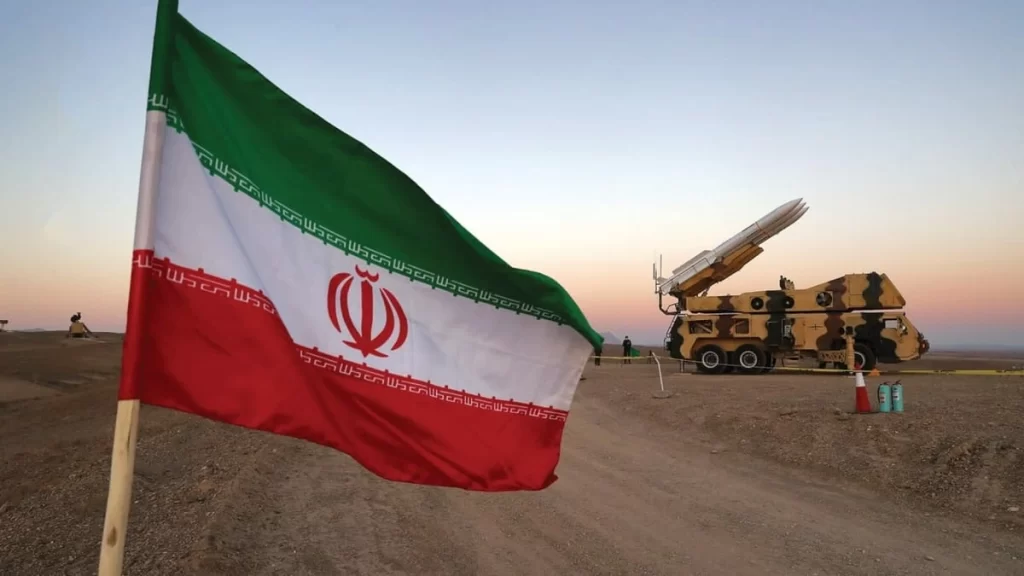
Israel and the United States worked together to attack Iranian locations, which led to Iran firing missiles back into the region. This is one of the most dramatic escalations in the Middle East in recent years. The new series of attacks is considerably different from the ways of the shadow war that came before it. It also makes the terrible idea of an open, multi-front war between Iran, Israel, the US, and regional proxies more likely. The crisis is testing the shaky balance of deterrence that has stopped the Middle East from going to war for years. Oil markets around the world are on edge, as are regional capitals, and important countries are screaming for peace.
What Made the Last Rise Happen?
It looks like a series of hidden attacks, leaks of information, and supposed plotting have made everyone more stubborn, which is what caused the most recent bloodbath. U.S. and Israeli officials have pointed to Iran’s support for proxies in Gaza, Lebanon, and Yemen, as well as strikes on American bases in Iraq and Syria, as evidence that Tehran is ramping up its pressure campaign against Washington and Tel Aviv. Iran has also said that the US and Israel had killed scientists, damaged nuclear-related facilities, and planned operations to change the government all across the area.
The ongoing battle in Gaza and the rising tensions along the border between Israel and Lebanon have made things exceedingly risky. Even a tiny error might lead to a massive response. Many individuals believe that the most recent wave of violence is the culmination of months of back-and-forth acts. In the end, Israel and the US decided to conduct out “decapitation-style” operations against Iranian-linked installations that they thought were important to Tehran’s ability to dissuade other countries in the region.
How the US and Israel Attacked
Reports from security and intelligence groups in the area stated that the attacks hit a mix of places where missiles and drones are built and command-and-control networks linked to Iran’s Islamic Revolutionary Guard Corps (IRGC) and its affiliated militias. People think that some of the areas that were struck are in central and western Iran, as well as in parts of Iraq and Syria that Iran controls. Officials from the U.S. and Israel have been careful not to say too much about what they are doing in public, but high-ranking defense officials have labeled the campaign a “precision-denial” effort to make it harder for Iran to project force across the area.
Reports claim that the attacks employed a mix of advanced guided bombs dropped from planes, stand-off missiles, and maybe even drones that could launch from more than one area. Some analysts claim that in some situations, the weapons were designed to do as little damage as possible to civilian infrastructure in the long term, even if they would make vital buildings unusable for weeks or months. It looks like the planners tried to achieve a compromise between the requirement to display might and the political risk of launching a broader war by picking the targets.
Tehran’s response with missiles
Iranian state media and security sources in the region reported that Tehran had fired a lot of ballistic and cruise missiles toward areas in the eastern Mediterranean and the greater Levant just a few hours after the attacks by Israel and the US. According to early accounts, strong air-defense systems like the ones utilized by the U.S. and Israel were able to stop some of the missiles. Iran’s decision to respond with a public missile attack, on the other hand, revealed that it had changed its mind.
Tehran has dubbed the missile launch a “defensive” and “proportionate” act of self-defense, stating that it had to respond to an attack on its own country. Iranian officials have made it clear that the strikes were not meant to hurt individuals, but to achieve “military” and “security” goals. But the governments in the area are scared that people might die or property would be damaged. Iran’s use of ballistic missiles in particular indicates how keen it is to show its strength over long distances and make it apparent that it can still shoot back even after taking a huge hit.
Strategic Reasons for the Rise
There are many geopolitical reasons why Israel, the US, and Iran have all become more open and confrontational. Israel is already under a lot of stress at home because of the war in Gaza and the growing threats from Hezbollah and other Iranian-backed groups. This situation is not good for them. Tel Aviv looks to be seeking to take the lead again by carrying out or allowing strikes on targets linked to Iran. This is to show its people that it is serious and to stop Iran’s regional network from carrying out more attacks.
President Donald Trump has made the United States’ foreign policy more aggressive by focusing on a mix of economic pressure, military readiness, and direct action against enemies. People in the administration have stated that the most recent strikes are part of a bigger plan to keep Iran from reaching its aims in the area without initiating a long ground battle. At the same time, Washington has been eager to express support for Israel and reassure Arab allies that the U.S. is still committed to their protection, even as some regional capitals are questioning Washington’s integrity.
The strategic calculation is harder for Iran. Tehran has long strived to preserve a balance of terror, where any major attack on its land could lead to a lethal response. The missile attack may be seen as an attempt to make that deterrence greater, especially because international sanctions are getting harsher and people are unhappy in the country. But Iranian officials also need to avoid a full-scale war, which might render the economy even less stable and give their enemies more power.
The Chance of a War on Multiple Fronts and What It Means for the Area
The most immediate result of the strikes by Israel and the US and Tehran’s missile response on the area is that the chances of having numerous active fronts in the Middle East have gone up. Hezbollah has already stepped up its rocket and drone attacks on northern Israel from Lebanon. Israel has responded by bombing Lebanon heavily, which has increased fears of a standoff that could evolve to a full-scale war. The Houthis, who have been allies of Iran for a long time, have increased their missile and drone strikes on commercial ships and energy facilities in Yemen. This makes things harder for all the Gulf states when it comes to security.
Saudi Arabia, the United Arab Emirates, and Jordan are all watching the clash closely because they know that even a modest fight between Iran and Israel might affect trade routes, energy flows, and stability in the area. The governments of the Gulf have secretly worked with the US and European partners to make strategies for what to do in an emergency. This means sending naval forces to the Persian Gulf and the Red Sea ahead of time and boosting air defenses. Some people in the area are also becoming more anxious about getting embroiled in a battle they didn’t start, especially if Iranian-backed soldiers start doing more than just fighting in their customary locations.
Calls for De-Escalation and Responses from Other Countries
The most recent wave of violence has led to a lot of diplomatic activity and public remarks from the world’s leading countries.European Union leaders have advised everyone to “show maximum restraint” and called for discussions to start up again quickly, stressing that the Middle East is on the cusp of a worse war. France, Germany, and the UK have all said that we need to avoid a situation where small strikes lead to a bigger war in the region. They have also hinted at the possibility of emergency talks between the US, Israel, and Iran.
China and Russia have been more circumspect. They have spoken out against any actions that could put the region’s security at risk and called out what they call “unilateral military interventions” by Western countries. Moscow has declared again that it supports Iran’s right to “defend its sovereignty,” but it has also advised Tehran to not make things worse. Beijing has also called for a “political and diplomatic” solution, saying that prolonged fighting in the Middle East will affect the world’s oil markets and economies that are still rising.
The UN Security Council has met in an emergency to talk about the issue. Some members have remarked that we need to build up a strategy to de-escalate and tools to keep an eye on things right soon to find and stop more strikes. But not all of the permanent members agree on everything. For example, the US and its allies are on one side, while Russia and China are on the other. This has made it hard to find one answer.
How it affects the Middle East’s economy and safety
The most recent escalation has huge consequences on the economy and security, as well as on the military and diplomatic fronts. The oil and gas markets have been on edge since the exchanges. Prices for regional benchmarks have gone up a little, but not too much, and shipping and insurance costs have become more unpredictable. Traders and analysts are watching the Strait of Hormuz and the Bab el-Mandeb chokepoints very closely. Tensions in the area could already cause problems in both of these places.
Iran fires missiles back at Israel and the US. The Middle East is about to go to war.