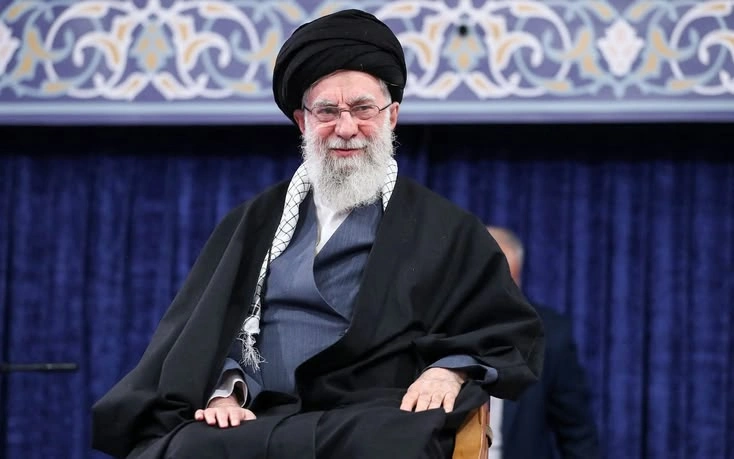
The US-Israel-Iran confrontation has turned into open warfare, with the assassination of Iran’s Supreme Leader Ayatollah Ali Khamenei in an Israeli airstrike. This led to waves of retaliation strikes and predictions of a wider escalation. As President Donald Trump promises to use extraordinary action, the crisis in the Middle East is now putting human lives at risk all throughout the region and disrupting global energy markets.
What started the Iran War in 2026
The present rise in the US-Israel-Iran confrontation goes back to late February 2026, when Israel and the US worked together to attack important Iranian sites, such as nuclear plants, ballistic missile sites, and command centers. This mission, which was based on tensions from the 2023 Gaza war and a short fight in 2025 called mission Midnight Hammer, was meant to stop Iran from getting nuclear weapons and stop groups like Hezbollah, Hamas, and the Houthis from getting backing from proxy networks.
On February 28, Israeli troops attacked Tehran, murdering Khamenei. In response, President Trump said there would be “heavy and pinpoint bombing” that would continue “as long as necessary.” Before the strikes, the US wanted Iran to stop enriching uranium, limit its missiles, and stop supporting proxy groups. Iran refused these terms during protracted discussions. The attack had been going on for four days by March 3, 2026, and there were reports of explosions in Tehran, Qom, and Kish Island.
Iranian retaliation and the rise of proxies
Iran hit back hard by sending drones and ballistic missiles to US bases in Iraq, Jordan, Kuwait, Bahrain, Qatar, Saudi Arabia, and the UAE, as well as to Israeli land. Hezbollah, Iran’s ally in Lebanon, fired missiles into northern Israel from Lebanon. This led to Israeli counterstrikes and turned Beirut into a possible battlefield. The Houthis in Yemen started attacking the Red Sea again, while Iran blocked the Strait of Hormuz, cutting off a key oil route.
Iran’s Revolutionary Guard threatened “the most ferocious offensive” in its history, while parliamentary speaker Mohammad Bagher Qalibaf warned of “devastating blows.” These measures have made the Middle East issue worse, affecting civilian airports in Kuwait and UAE ports, and even the Akrotiri base in Cyprus, which is part of the UK.
Terrible toll on civilians
This US-Israel-Iran war is hurting civilians the most. Reports from HRANA and the Iranian Red Crescent say that on March 2, the death toll in Iran had risen to more than 555, with more than 742 civilians dead and about 1,000 injured. Strikes destroyed homes in Tehran and Fars province. Witnesses said that buildings in Niloofar Square and Qom were destroyed, which raised concerns about strikes on non-military targets.
Sirens went off all around Haifa as Iranian rockets killed nine people in Beit Shemesh, near Jerusalem. Six US service members died in strikes in the region, and Gulf states reported casualties. The conflict now threatens 300 million civilians in a dozen countries, from Lebanon to Oman, as proxy fire spreads havoc without regard for who it affects.
Recent numbers show how civilian populations are affected:
More than 555 people have died in Iran, including 35 in Fars province on March 2.
Israel said that at least nine people have died because of missile attacks that hit open areas in the Galilee.
Six members of the US-led coalition have died, and many more have been hurt in Gulf countries.
Regional interruptions have stopped airport and port operations, leaving daily commuters stuck and stopping trade.
Putting a strain on international relations
The turmoil in the Middle East has broken up alliances around the world. UN Secretary-General António Guterres called both US-Israeli strikes violations of the UN Charter and Iran’s response to violations of its neighbors’ sovereignty, calling for emergency discussions to avoid disaster. The Security Council held emergency meetings, and Bahrain, France, China, and Colombia all called for action.
The E3 (France, Germany, and the UK) in Europe asked for prudence and new nuclear talks. They stayed in “close communication” but did not support strikes. Putin and Xi held crisis talks after Khamenei’s death, calling it a “cynical breach.” China wants to secure its oil shipments through Hormuz, while Russia strengthens Iran’s military. A spokesperson for Trump stated that the actions were vital to stop Iran from gaining nuclear weapons.
Things that shake up the world economy
The disagreement between the US, Israel, and Iran has the biggest impact on energy markets all around the world. Brent oil rose 8% to slightly over $82 a barrel on March 2.It then stayed between $77 and $80, which added around $14 to the weekly cost of gas for families in places like Australia. If the Strait of Hormuz stays closed, oil prices might rise to $200 a barrel, which could cause a global recession by cutting off supply from Iran, Qatar, and Saudi Arabia.
Economists say that inflation might rise and economy could slow down around the world, although OPEC’s spare capacity could help if the fighting stays limited. Stock markets have gone down as uncertainty has grown. Analysts say there is a 40% possibility that oil prices could double to $150 if ground soldiers are sent in. Countries like India, which depend on energy imports a lot, are worried that this could slow down their economies.
Strategic Analysis and Opinions from Experts
President Trump said that the strikes had four main goals: to destroy Iran’s missile stockpile, navy, nuclear program, and proxy militias. He called this the end of what he called a “47-year proxy war.” Experts in security, like H.R. McMaster, say that Iran’s nuclear programs sped up after the 2025 battles, creating a crucial “window of opportunity.” But retired Lebanese general Maroun Hitti and others warn that Lebanon might become a complete “active battlefield” in the spillover.
The geopolitical situation in the Middle East is very unstable right now. Israel has had some short-term success in dismantling proxy networks, but this could lead to a larger battle in the region. The Council on Foreign Relations and other think tanks look at the moderate risks of escalation that come from Houthi and Hezbollah replies.
The death of Khamenei has led to a crisis in the Middle East that is affecting the whole world.