This helps lenders make faster and fairer lending decisions. Business Standard That last point needs more attention than it usually gets. Credit scoring has left out billions of people in the past, especially in emerging markets, because they don’t have the formal financial history that traditional models need. AI-based credit scoring that uses data from other sources is quietly becoming one of the most important tools for helping people get access to financial services in the last ten years.
The combination of financial services and artificial intelligence is changing the industry in ways that haven’t been seen before. It is opening up fields that were only open to big hedge funds, algorithmic trading companies, and quant funds with access to large data models. Individual investors can now use analytical tools that were only available to Goldman Sachs before.
Manufacturing: The Smart Factory Starts to Look Like It
Artificial intelligence is giving manufacturers something they’ve been looking for for generations: almost no unplanned downtime on the factory floor.
Deloitte says that AI-powered predictive maintenance boosts productivity by 25%, cuts down on equipment breakdowns by 70%, and cuts down on maintenance costs by 25%. These aren’t small improvements; they’re the kinds of big changes that change the way costs are calculated and the way competitors compete.
AI is making automation, predictive insights, and cost optimization happen in the manufacturing industry. Companies are using AI development services to make decisions based on data that help them make their production more efficient and cut down on downtime. Business Standard Supply chain optimization, quality control through computer vision, and AI-assisted product design are all quickly becoming standard ways of doing things instead of just experiments.
The bigger idea, which is sometimes called Industry 4.0, is a real change in the way things work. When machines can predict when they will break down, when cameras can find quality problems before a human inspector would, and when pattern recognition algorithms can find problems in the supply chain weeks in advance, manufacturing becomes much more stable.
The Problem That Lies Within the Chance
It would be dishonest to write about AI technology trends in 2026 without also talking about the real worries that come with the excitement.
Ethics, bias, safety, and responsibility are still the most important things for organizations to worry about. The huge demand for AI is putting a strain on energy supplies, hardware availability, and network resources. CNN says that training and running big AI models takes a lot of computer power, and as these systems grow around the world, the energy costs are becoming a real policy problem.
The rise of “shadow AI,” or the use of generative AI tools without institutional oversight, is becoming a bigger worry. As regulations come into place to make sure businesses stay in compliance, forward-thinking companies are starting to look into controlled environments where employees can safely test out approved AI tools. New Kerala There is also the human question that no measure of efficiency can fully answer: what happens to the workers whose jobs AI takes over? The pace of automation isn’t waiting for those answers to come. Governments, teachers, and businesses are still trying to figure out what they are.
A Technology That Has Finally Arrived
Industry leaders say that 2026 will be the year when research hype turns into widespread use in many fields. This means that AI and autonomous agents will no longer be used as separate tools, but will be directly integrated into business workflows.
That maturity took a lot of work. It comes from years of failed pilots, too many promises, and painful lessons about the difference between what AI can do in a controlled demo and what it can do reliably at scale in a complex organization. The story of artificial intelligence breakthroughs in 2026 isn’t about big discoveries in a lab. It’s about the slower, less exciting, and ultimately more important work of making powerful technology safe enough to use.
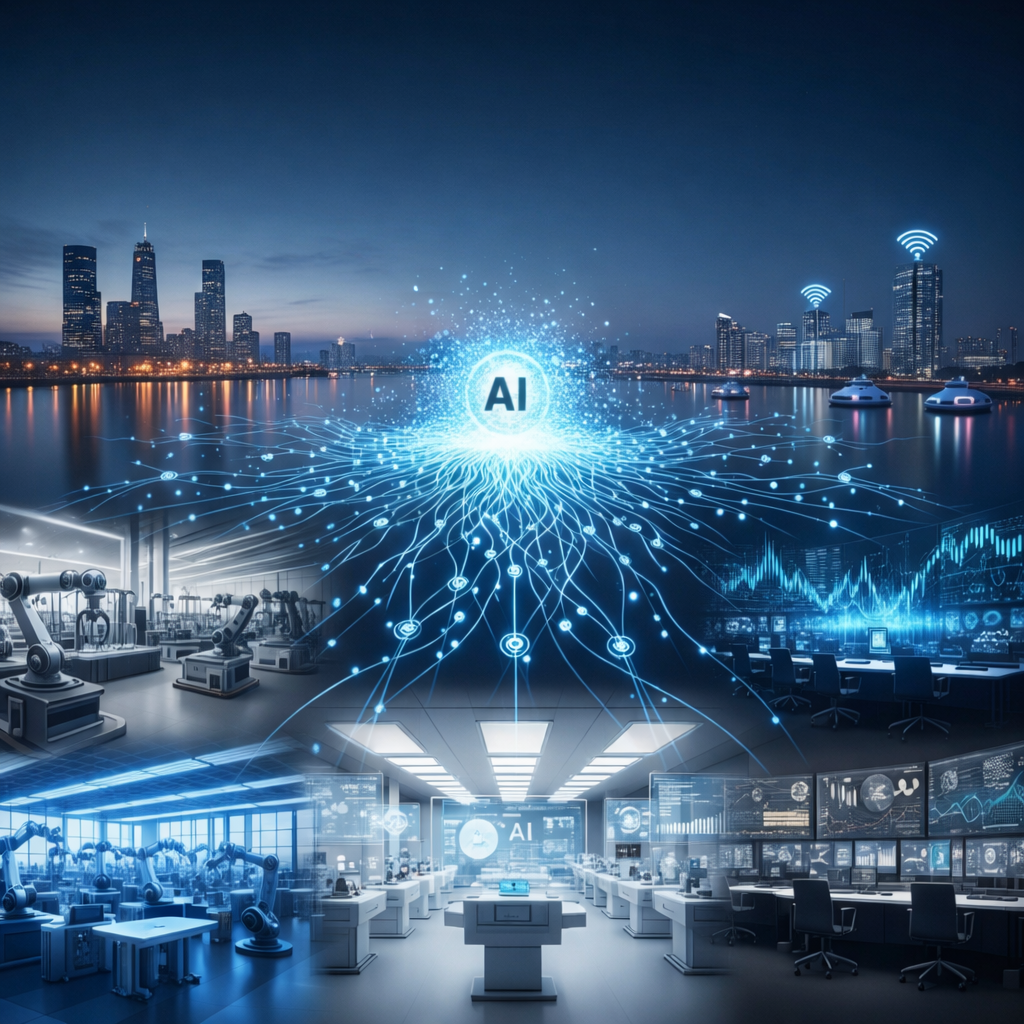
Healthcare, finance, and manufacturing are the industries leading the charge because the stakes are too high to wait. Patients need to be diagnosed faster. Markets need to do a better job of managing risk. Factories need to compete with factories all over the world. And AI, no matter how complicated or controversial it may be, is giving real answers to real problems.
There was no fanfare when the revolution came. It came quietly, hidden in a clinical workflow, a credit decision, and a factory sensor. Now it’s changing everything.