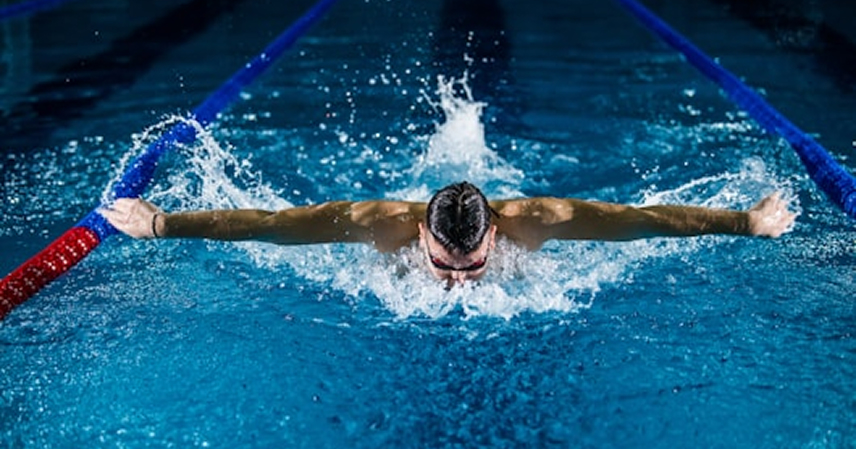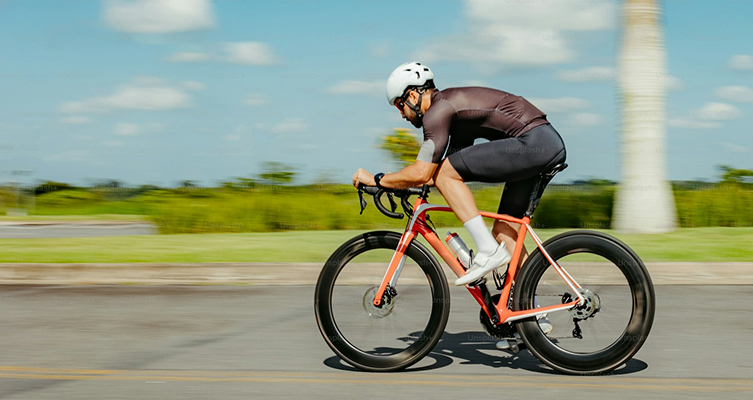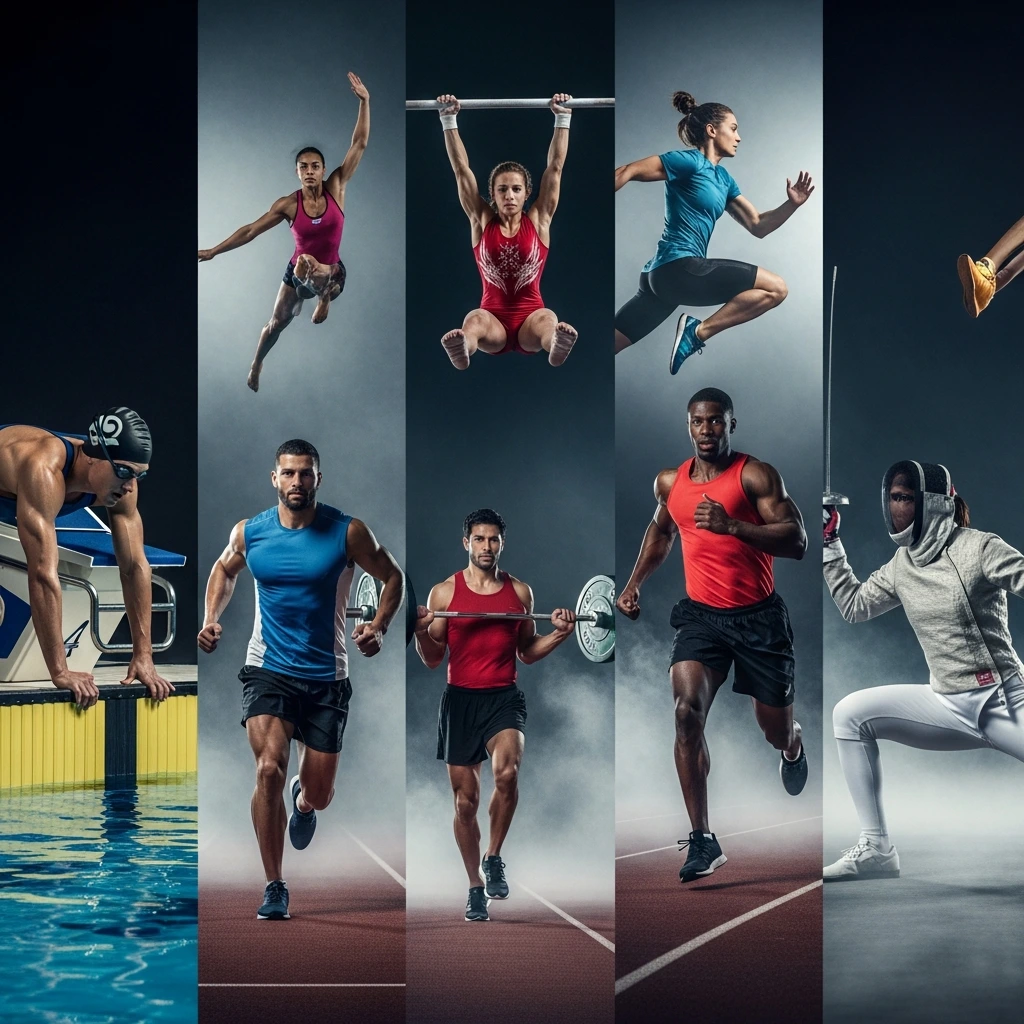
Every Olympic medal begins not on a podium, but in a gym at 5 AM, on a track in the rain, or in a pool long after the crowds have gone home.
There is a version of the Olympics that the world sees — the opening ceremonies, the medal moments, the tears on the podium. And then there is the version that nobody films: the years of solitary, grinding, repetitive preparation that make those moments possible. Right now, in training facilities from Oslo to Osaka to Oklahoma City, that invisible version of the Olympics is in full swing. The world’s athletes are preparing for not one but two massive Olympic chapters — and the intensity in the air is unmistakable.
In 2026, the global sports calendar is in the middle of a remarkable transition. One Olympic chapter has just closed, another is building momentum, and the world’s greatest sporting event is already casting its shadow two years forward. For athletes, coaches, and national Olympic committees, the preparation never truly stops. It just shifts its focus.
Milano Cortina 2026: A Winter Games Like No Other
The most recent chapter of this Olympic story was written across the mountains and ice rinks of northern Italy. The 2026 Winter Olympics, officially known as Milano Cortina 2026, took place from February 6 to 22, 2026, across multiple sites spanning Lombardy and Northeast Italy — the first Olympic Games in history to be officially co-hosted by two cities, with Milan primarily hosting the ice events and the remaining competitions clustered around Cortina, Livigno, and Fiemme.
Around 2,900 athletes from over 90 National Olympic Committees competed in 116 events across eight sports and 16 disciplines, with ski mountaineering making its debut as a Winter Olympic event — the first new sport added to the Winter Games programme in years.
The opening ceremony set a tone that matched the grandeur of the surroundings. In an unprecedented move in Games history, two Olympic cauldrons were lit simultaneously in both Milan and Cortina d’Ampezzo.
It was a reminder that even the most meticulously planned Olympic Games carry an element of last-minute improvisation — and that the athletes who train for years deserve venues that match their dedication.
The Paralympic Winter Games: Sport’s Most Inspiring Chapter
Following the Olympic Winter Games, the Paralympic Winter Games Milano Cortina 2026 are scheduled from March 6 to 15, 2026 — spreading the spirit of elite competition across six Paralympic sports and bringing a new generation of athletes into the global spotlight.
For Paralympic athletes, the preparation journey is often longer, harder, and less resourced than their Olympic counterparts. Yet the performances they deliver — on sit-skis down treacherous alpine slopes, in sled hockey arenas, across cross-country tracks — routinely produce the most emotionally charged moments of any sporting calendar. The Paralympics are not a footnote to the Olympics. They are their own magnificent story, and Milano Cortina is giving them a worthy stage.
LA28: The Biggest Games in History Is Already Taking Shape
Even as the Winter Games concludes, the attention of the global sports world is already turning toward the horizon — and specifically toward Los Angeles, California, host of the 2028 Summer Olympics. The LA28 Olympics will be the largest Games in history, featuring 36 sports and 351 medal events, with the Opening Ceremony scheduled for July 14, 2028, and the Closing Ceremony for July 30, 2028.
The qualification machinery — the complex, globally coordinated process by which athletes earn their right to compete — is already turning at full speed. The IOC Executive Board has approved qualification systems for all sports well ahead of schedule compared to previous Games, deliberately providing National Olympic Committees, athletes, and their support teams with earlier visibility and longer timelines to plan their preparation for LA28.
The LA28 qualification systems are designed to ensure athletes have multiple opportunities to qualify, maintain continental and universal representation, and minimize travel demands — reflecting lessons learned from the Paris 2024 Games and earlier editions.
For fans eager to be part of the moment, the logistics are already moving. Registration to enter the draw for the first ticket lottery opened in January 2026, with selected fans able to purchase tickets starting in March — and an estimated 14 million tickets will be available overall, with one million starting at just $28 and a third priced under $100. The democratic pricing is a deliberate statement from LA28 organizers: these Games should be accessible, not just to the privileged few, but to the full spectrum of Los Angeles and the watching world.
The Venues That Will Define a City
Part of what makes LA28 preparation news so compelling is the sheer ambition of the venue plan. SoFi Stadium — home of the NFL’s Los Angeles Rams and Chargers — will be transformed into the largest swimming venue in Olympic history, configured for 38,000 spectators.
In February 2026, Congress approved $94.3 million in mobility-related funding for LA28, covering service planning, station experience enhancements, development of mobility hubs, light rail improvements, and planning and design for pedestrian access near Games venues as part of the Games Enhanced Transit System. Moving millions of spectators across one of the world’s most traffic-congested cities requires not just ambition but serious infrastructure investment — and that investment is now underway.
The Games will also reach beyond California. Softball and canoe slalom events will be held in Oklahoma City, and the LA28 organizers have announced plans for a 50-state relay to bind the nation with Los Angeles — a recognition that the Olympics, while geographically anchored in one city, belong to an entire country and an entire world.
What This Moment Means for Athletes Everywhere
Behind every Olympic preparation news update is a human story. Right now, a gymnast in Tokyo is perfecting a floor routine she has been refining for three years. A distance runner in Kenya is finishing a morning training session before most of the world wakes up. A swimmer in Australia is analyzing stroke data from her last competition, looking for the fraction of a second that separates her from a podium place. A bobsled team in Germany is studying the physics of a corner they will race in a venue they have visited only twice.
The IOC’s decision to approve LA28 qualification systems earlier than for any previous Games was taken deliberately to give athletes and National Olympic Committees more time to plan — a recognition that the preparation journey is as important as the competition itself, and that athletes deserve clarity about their pathway to the Games.
For global sports updates watchers, that clarity is arriving across sport after sport, nation after nation. Qualification windows are opening. World championships are being circled on training calendars. Coaches are periodizing training programs to peak at exactly the right moment in the summer of 2028.
The Olympic Flame Never Really Goes Out
There is a temptation to think of the Olympics as a quadrennial event — something that arrives, dazzles, and then disappears for four years. But for the athletes who pursue it, the Olympic cycle is relentless and continuous. The moment one Games ends, the next one begins — in the early morning training sessions, in the rehabilitation rooms, in the quiet conversations between athletes and coaches about what the next few years need to look like.
Milano Cortina 2026 showed the world once again what human beings can achieve on snow and ice when given the opportunity to compete at the highest level. The Paralympic Winter Games are now delivering their own extraordinary chapter. And in Los Angeles, a city that has hosted the Olympics twice before — in 1932 and 1984 — the preparations for a third time are already generating the kind of energy that only the world’s greatest sporting event can produce.
The medal ceremonies are two years away. But the competition, in every training hall and qualification event on the planet, has already begun.
The world’s athletes are ready. The only question is: are we ready to watch?