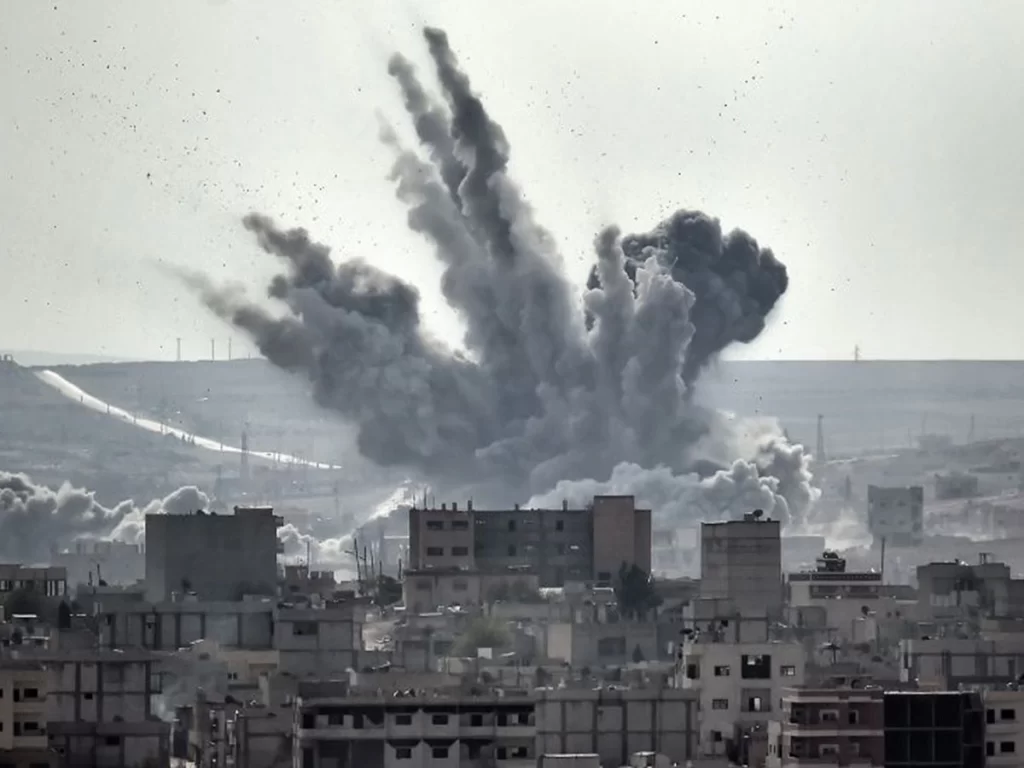
The US-Israel-Iran crisis is now in its 13th day, and airstrikes and missile attacks are rising at an alarming rate across the Middle East. What began as targeted attacks on Iranian proxies has escalated into a high-stakes confrontation in the region that involves major world powers and might disturb oil markets and global security. New missile strikes are lighting up the night sky over Israel, and Iranian infrastructure is being destroyed by retaliatory attacks. World leaders are working quickly to stop a disaster that might redefine how countries work together. The issue between the US, Israel, and Iran is getting worse, which shows how weak deterrence is when there are proxy wars and advanced weapons. This needs to be dealt with by diplomats right away before it becomes worse.
What led to the current US-Israel-Iran conflict
The most recent flare-up in the US-Israel-Iran conflict was in early February 2026, when intelligence reports said that Iranian-backed militias in Syria and Lebanon were employing drones to target Israeli border positions with exceptional accuracy. Israel was the first to attack, hitting Hezbollah strongholds from the air. The US discreetly supported this choice because it has always sworn to protect Israel. By March 1, Iran had stepped up immediately by firing a volley of ballistic missiles at Tel Aviv. As a result, the US sent carrier strike groups to the eastern Mediterranean.
This pattern is like years of hatred, however on day 13, the level of hostility is really high. According to Iranian official media, more than 200 US-Israel bombings have attacked nuclear plants and missile stockpiles in Natanz and Fordow. On the other side, Israel believes that its Iron Dome and Arrow systems have blocked 85% of Iranian missiles from hitting their objectives. The US has dispatched F-35 stealth jets and Tomahawk cruise missiles, stating that it has to be involved because of the 2025 Jerusalem Accords.
Experts claim that the spike in tensions is because Iran is speeding up its uranium enrichment program. US intelligence says that the program is already 90% pure, which is only weeks away from making weapons-grade material. “It’s not about proxies in the US-Israel-Iran conflict anymore; it’s a direct test of red lines,” says Dr. Elena Vasquez, a Middle East researcher at the Brookings Institution. Her assessment is in line with satellite photographs that show charred land in Iran’s central provinces, where explosions have destroyed power lines that supply 15 million people.
Day 13 News: Airstrikes and missile attacks get worse.
The fight between the US, Israel, and Iran had been going on for 13 days on March 12, 2026. The sky over the area became a deadly place for precise fighting. In the morning, the Israeli Air Force, with help from US electronic warfare, attacked more than 50 Iranian air defense positions in western Iran. Tehran promptly fought back with “Operation True Promise III,” which deployed 150 Fateh-110 and Khorramshahr missiles toward military bases near Haifa and Dimona.
People in Tel Aviv who saw it stated there was a lot of chaos: air raid sirens rang for 45 minutes straight while interceptors flew overhead. The number of deaths is still rising, but Iran’s Health Ministry reports that airstrikes have killed 347 people, including 12 high-ranking Revolutionary Guard commanders. Israel says that 22 civilians have perished from parts of missiles, and hospitals are filled of people who have been harmed by shrapnel.
Here are some of the most noteworthy things that happened on day 13:
Israeli Precision Hits: F-16I Sufa planes destroyed three Iranian S-400 radar facilities, making it hard for Tehran to track US-Israel planes that were coming in.
The USS Abraham Lincoln fired 28 Tomahawk missiles at Quds Force bases near Isfahan, destroying around 40% of Iran’s short-range missile arsenal.
Iranian Counterstrikes: Advanced hypersonic missiles slipped past the first defenses and hit an Israeli refueling base, leaving the south low on fuel.
Proxy Escalations: Houthi rebels in Yemen fired missiles at US ships in the Red Sea, and Iraqi militias targeted US positions in Baghdad.
These airstrikes and missile attacks have done a lot of harm. When drone strikes hit Saudi Aramco pipelines in favor of Iran, the price of oil shot up 12% to $98 per barrel. The Strait of Hormuz, a crucial maritime route, is now more perilous for vessels traversing it. This situation directly affects a fifth of the global oil trade.
Strategic Analysis: Key Terms in the US-Israel-Iran Dispute
A closer look at the US-Israel-Iran conflict reveals a deliberate blend of deterrence, technological prowess, and asymmetric warfare. Concerns about potential regional repercussions are evident in search trends.
Israel’s military approach relies heavily on securing air dominance. The F-35I Adir jets, armed with Spice-2000 glide bombs, are the means by which this is achieved.
These weapons enable long-range attacks.
The US also sends THAAD batteries to Jordan, which can stop 92% of Iranian ballistic threats.
Iran, on the other hand, needs a lot of stuff and new ideas. It has at than 3,000 missiles in its stockpile, including fast warheads that can sneak past David’s Sling interceptors. Mark Schwartz, a retired US general who led operations against ISIS, said, “Iran’s missile attacks are meant to overwhelm, not just destroy.” Statistics demonstrate how uneven things are: Israel has lost three warplanes to ground fire, while Iran believes it has shot down 17 planes.
Cyber things are only a small fraction of the whole picture. Some unverified reports allege that US Cyber Command screwed up Iranian command networks, which made missile launches take up to 20 minutes longer. The rial plunged 18% in the previous week because of sanctions, which have affected Iran’s economy a lot. People in Tehran are protesting for an end to the conflict.
Effects on individuals and the economy
The US-Israel-Iran war kills more people every day. According to estimates from the UN, more than 1.2 million people have had to flee their homes in border areas. Lebanon and Jordan are feeling a lot of pressure because of the large number of refugees. Airstrikes in Iran have cut off power to 40% of Isfahan province, which has led to water shortages and outbreaks of sickness. Cyber strikes by Iranian hackers are causing outages in communities across Israel.
The impacts on the economy are just as evident. The price of oil around the world has gone up 15%, from $85 a barrel to $98. In the same way, the prediction for Iran’s GDP growth in 2026 has been lowered from -2.1% to -5.8%. The Israeli shekel is worth 7% less than the US dollar, and trade through the Strait of Hormuz, which processes 21 million barrels a day, has dropped by 70%. Airlines have canceled 1,500 flights a week, and tourism in the UAE is down by 60%.
Different countries have different replies. The EU set fresh limits on Iran’s oil exports, and China asked for things to calm down so that its investments in the Belt and Road Initiative would be safe. Russia supplies Su-35 jets to Iran and branded US-Israel actions “imperial aggression.” It also hinted at providing advanced weapons.
Voices from the Frontlines and Expert Opinions
There are a lot of different ways to look at how bad the conflict is on the ground. An unidentified reservist in the Israeli Defense Forces’ 101st Paratroopers Brigade remarked, “Every missile attack feels personal; we’re defending home against an existential threat.” A hospital worker in Tehran observed, “The US-Israel-Iran conflict has turned our city into a war zone—civilians pay the price.”
Experts are warning about escalation ladders. Dr. Ahmed Khalil from the RAND Corporation adds, “Proxy involvement could bring in Hezbollah’s 150,000 rockets, which would make the US-Israel-Iran conflict a full invasion.”” Some things that could happen in the future are:
Diplomatic Off-Ramp: The UN Security Council talks in Geneva might stop Iran’s nuclear program in exchange for support.
If things went really badly, the Hormuz Strait would close, oil prices would go up to $150 a barrel, and NATO Article 5 discussions would start.
Technological Wildcard: There are rumors that Iran has EMP weapons that might blind the defenses of the US and Israel.
The US-Israel-Iran confrontation is now in its 13th day, and tensions are escalating as airstrikes and missile attacks keep happening.