
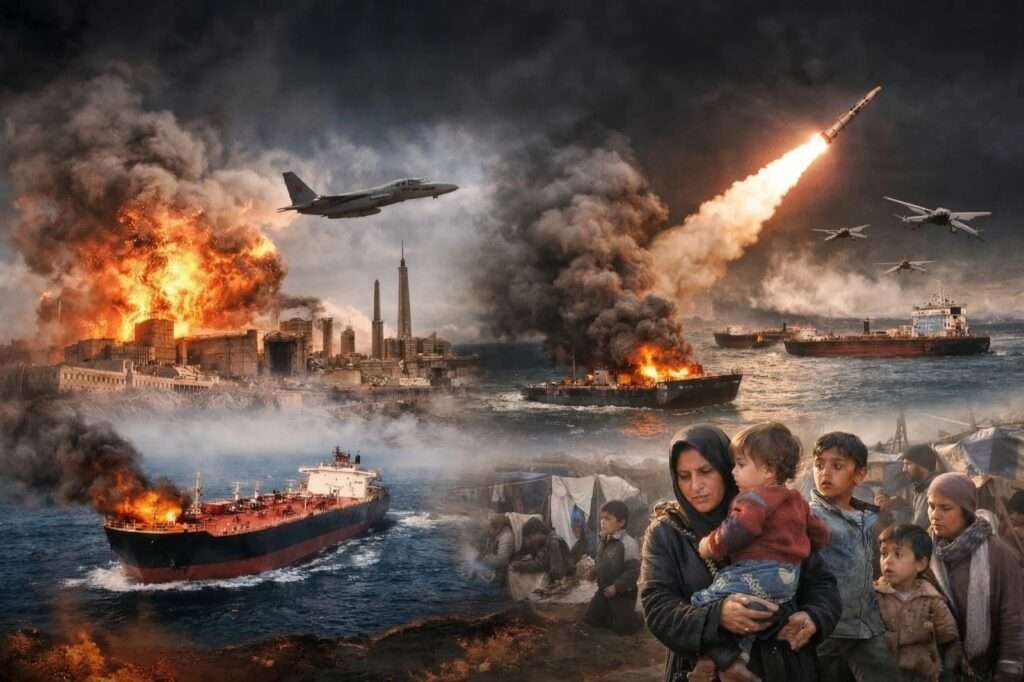
When you watch a crisis unfold in slow motion, you can see the pieces moving, the tensions rising, and the exits closing off one by one. This makes you feel a certain kind of dread. A lot of the world is in that situation right now, watching the conflict between Iran and Israel get worse and worse until it feels like it’s no longer a regional problem that faraway capitals can safely ignore.
This isn’t just a story about two countries. It’s a story about a region on the edge, about oil that heats homes and powers factories across continents, and about regular people caught between political goals they never chose.
How We Got to This Point
There was a warning before the current escalation. Iran and Israel have been at odds for decades because they disagree on how to run the region, their nuclear goals, and proxy wars that range from Lebanon to Yemen. But things changed. According to officials, Israeli airstrikes that hit Iranian nuclear infrastructure and key personnel were necessary and preemptive. Iran has called these strikes acts of war.
Tehran’s response has been quick and broad. Missile and drone attacks have spread across the Gulf region, making military bases, shipping lanes, and civilian populations nervous. Every action leads to a reaction. Every act of revenge raises the bar for what comes next.
The US has not stayed out of it. American involvement, whether through direct military action, sharing intelligence, or diplomatic signals, has made an already volatile situation even more complicated. The triangle between Iran, Israel, and the US is not new, but the stakes have never been so high.
The Hormuz Strait: A Chokepoint That the World Can’t Lose
The Strait of Hormuz is one of the most important places in the world that has been affected by this conflict. This narrow waterway, which is only 21 miles wide at its narrowest point, carries about 20% of the world’s oil. Every day, tankers carrying crude oil from Saudi Arabia, the UAE, Kuwait, and Iraq pass through it. Container ships, LNG carriers, and commercial ships also keep supply chains going.
There has already been a partial disruption. And the markets have seen it.
Prices for oil have gone up a lot. Shipping companies are changing the routes of their ships, which adds thousands of miles and millions of dollars to their trips. The cost of insurance for Gulf transit has gone up a lot. All of this happens together. In the end, it leads to higher prices for food, gas, and other things that affect families who live far from any battlefields.
In this way, the Strait of Hormuz crisis is everyone’s crisis. A fight that started between two countries has now spread to gas stations in Europe, factories in Asia, and grocery stores in North America.
The Human Cost That Doesn’t Get Enough Attention
In the flood of geopolitical analysis and market data, it’s easy to forget about the people. There have been thousands of deaths. Reports from all over the area say that hospitals are full, neighborhoods are destroyed, and families are split up by fear and flight.
People have had to leave their homes in large numbers. Some are moving within their own countries to find safer places to live. Others are trying to make longer trips, adding to the already strained flows of people moving around that have been a part of this area for a generation. A parent grabbing papers and a child’s hand, an old person leaving behind everything they built—each of these people shows how lives are interrupted in ways that numbers can’t show.
This is what it really looks like on the ground when tensions in the Gulf get out of hand
A World That Wants Things to Calm Down—But Is Anyone Listening?
Governments around the world have made statements, held emergency meetings, and asked people to be careful. European, Asian, and UN leaders have all called for de-escalation. It is said that diplomatic channels are open, with people who are not talking to each other sending messages through intermediaries.
The main question right now is whether those efforts will work. History teaches us that regional wars can spread quickly when mistakes build on mistakes. For example, when one attack goes too far or one response is seen as existential rather than tactical.
Analysts and veterans of foreign policy are not only worried that this war will go on. It gets bigger. That other groups, like Hezbollah, Houthi forces, and even state actors with their own plans, are getting more involved. That what is now a dangerous crisis becomes something that is harder to get out of.
What’s next
No one knows for sure how this will end. What can be said is that the effects on global security are real and immediate. Energy markets are still very unstable. The amount of diplomatic space is getting smaller. And the people who are living through this war—those in Tehran, Tel Aviv, and villages along the Gulf—are paying prices that no policy document fully explains.
People all over the world are watching. And hoping, maybe more than anything else, that the leaders who can stop the violence will find the strength to do so before the next choice is made that can’t be changed.

