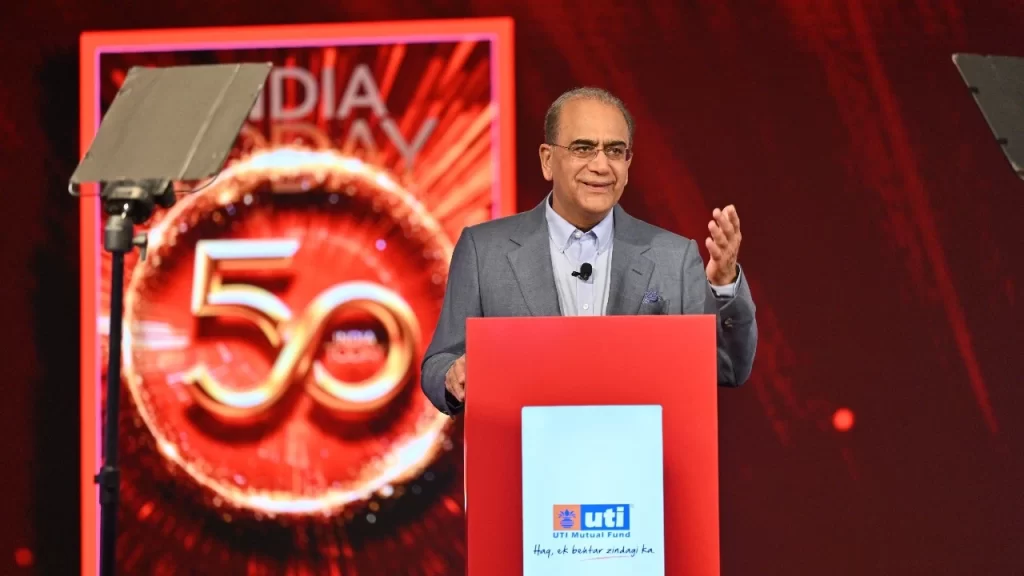
The India Today Conclave 2026, India’s most important thought leadership event, brought together people from all around the world to debate about how politics and economies are evolving around the world. The event took place during a time when politics were shifting and the economy was adjusting. It showed how significant India is becoming as a voice in world affairs.
A brief overview of the event
The India Today Conclave 2026 took place over two exciting days in mid-March at a luxury conference venue in New Delhi. More than 1,500 delegates, policymakers, economists, and diplomats from all around the world gathered to the event. This event happens every year thanks to the India Today Group. The theme for this year was “Navigating Global Turbulence,” and it was all about the economics and politics throughout the world. Some of the topics were trade wars, energy transitions, and realigning alliances. There were many notable speakers, like Nobel Prize winners, central bank governors, and foreign ministers. This made the arguments interesting to people all around the world.
The first session began with a keynote speech on “Geopolitics in the Trump 2.0 Era,” which set the stage for open discussions. Most of the early comments were about President Donald Trump’s reelection and his administration’s bold “America First” goals. Panelists discussed on how these rules will effect markets that are rising, including India. More individuals than in past years were able to attend since people from all around the world could do so online. This indicates how well the conclave’s mix of different formats worked to reach more individuals.
Global Politics Focus: New Look at U.S.-India Relations
The U.S. Ambassador to India and the Indian External Affairs Minister S. Jaishankar appeared on a panel named “Indo-Pacific Alliances: Trump 2.0 and Beyond.” The conversations were mostly about Trump’s threats to raise tariffs and how that would affect trade between the two countries, which was worth $200 billion in 2025. Jaishankar talked about India’s strategic independence and said, “Partnerships are not zero-sum; they must change with respect for each other.””Panelists said that the Quad is still strong even though the U.S. is shutting itself off.
The challenges in West Asia were the focus of another conference called “Middle East Flashpoints: Oil, Iran, and Proxy Wars.” Experts pointed to past friendly fire incidents, including Kuwait shooting down U.S. F-15 jets, as proof that things are becoming worse. Iran’s failure to observe the oil limitations was a flashpoint. One expert predicted that if supply concerns last until 2027, the price of oil around the world may go up by 15%. India’s uranium deal with Canada was a diplomatic success since it acquired the energy it needed for its nuclear programs while also addressing U.S. concerns.
Things to keep in mind from politics panels:
India’s hunt for semiconductors is getting a boost from Trump’s reelection, which has sped up “de-risking” from China.
India buys 1.5 million barrels of oil every day, and the standoff between Russia and Ukraine could endure until 2027.
The U.S. won’t commit to money, which is holding up COP31 discussions and slowing down climate diplomacy.
These concepts made a world with several poles, which means that India needs to find a balance between its relations to BRICS and the West.
What Are Economic Dialogues
Changes in the supply chain and trade disputes were the first song on the economy track, “Global Trade 2.0: Tariffs, Tech, and Resilience.” Pierre-Olivier Gourinchas, the IMF’s senior economist, stated that Trump’s plan to hike tariffs on Chinese goods by 60% would lead global GDP growth to decrease by 2% to 3.1% in 2026. Nirmala Sitharaman, India’s Finance Minister, answered with hope, pointing to PLI projects that have brought in $150 billion in investments since 2021. She said a lot about making the supply chain more diverse. India is the leader in electronics exports, which are growing by 40% per year. Vietnam and Mexico are competitors.
A part full of numbers demonstrated that the EPFO’s interest rate stayed at 8.25%, even though inflation was about 4.5%. In “Unicorn Boom or Bust?” the founders talked about how AI funding might run out once the bubble bursts in 2025. The startups were the stars of the show. India’s 120 unicorns created 1.2 million jobs, but venture capital inflows fell by 30% to $20 billion, which led to calls for less tight standards. Trade tensions could lead global GDP growth to dip to 3.1%, but India’s GDP growth is expected to continue strong at 7.0% because people in India buy a lot of things.
Advice and Stories from Experts
Paul Krugman, a Nobel Prize-winning economist, talked on “Inflation’s Last Mile” at a fireside chat. He didn’t like how central banks were acting like hawks. He remarked, “Powell’s Fed is like a driver hitting the brakes on a clear road—there are bumps ahead that aren’t needed.””Krugman said that the U.S. would lower rates by the third quarter of 2026.” This would make it cheaper for emerging nations to borrow money and help India pay off its $600 billion in foreign debt.
Indira Rajaraman, an Indian-born vice president of the World Bank, spoke about fiscal federalism and advised governments to use GST 2.0 to make more money. Her research revealed a significant disparity: Maharashtra and Gujarat together accounted for more than 40% of the total collections, while the less affluent states contributed a mere 10%.
PV Sindhu’s anecdotes about how athletes are cared for added a personal touch and linked sports to soft power during flight delays.
Government data showed that 37% of women were working in 2025, but the Supreme Court’s reluctance to allow menstruation leave sparked concerns over justice. “Nobody will hire women,” said Chief Justice Surya Kant, which led to talks on growth that involves everyone.
India Today Conclave 2026: Important Talks About Politics and the World Economy