
SEOUL, South Korea — March 14, 2026
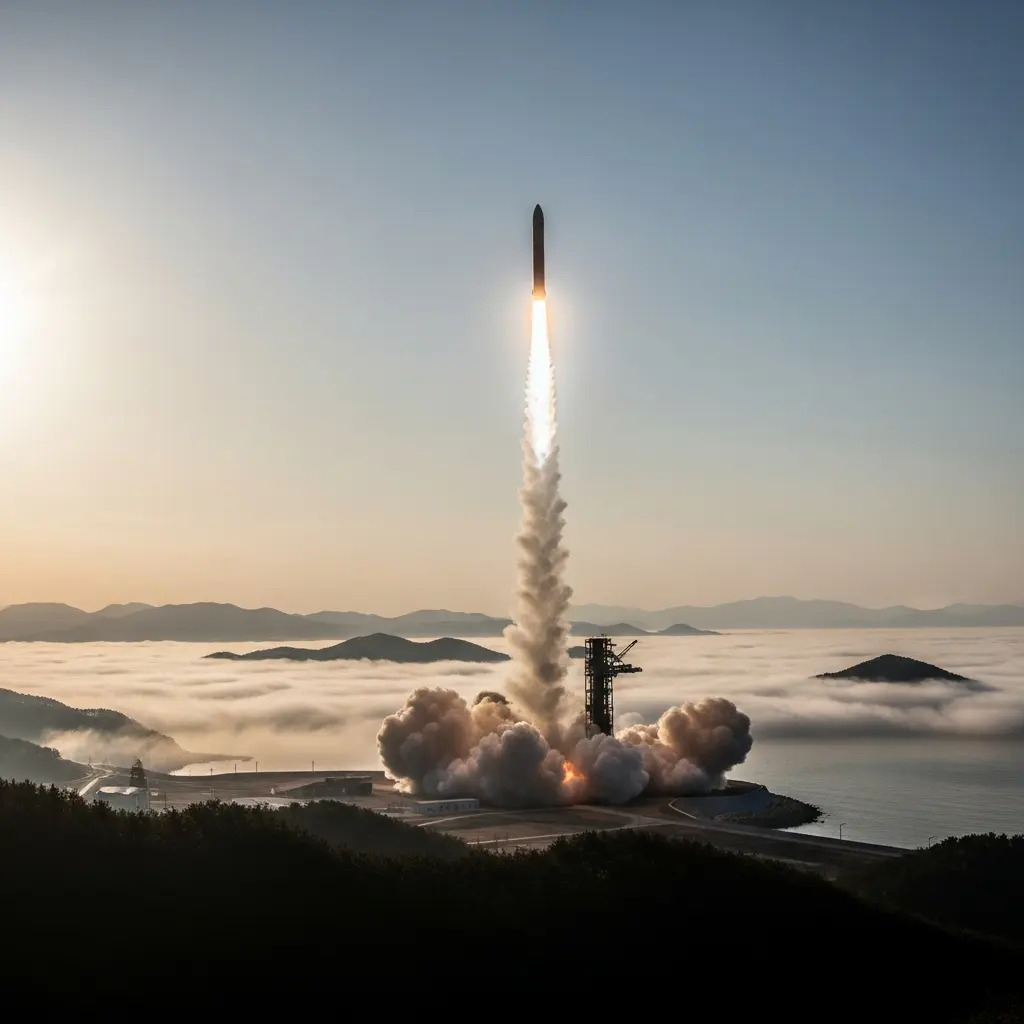
Tensions on the Korean Peninsula surged once again this week as North Korea launched what regional defense authorities describe as a suspected ballistic missile, timed precisely to coincide with ongoing joint military exercises between the United States and South Korea. The provocative launch has drawn swift international condemnation and renewed urgent questions about nuclear deterrence, regional stability, and the future of Korean Peninsula diplomacy.
The Launch: What We Know
North Korean leader Kim Jong Un oversaw the test-firing of strategic cruise missiles from a naval destroyer, with North Korean state media confirming the missiles struck their designated island targets in the Yellow Sea after flying for nearly three hours. New Kerala Pyongyang described the weapons as “strategic” — a term it typically reserves for systems capable of carrying nuclear warheads — a designation that immediately elevated the severity of the incident in the eyes of analysts and allied governments.
The timing was unmistakable. The launches came directly as South Korea and the United States initiated their annual joint military exercises, with Pyongyang issuing a formal statement labeling the drills a “dangerous provocative act” that materially increases the risk of armed military conflict.
Kim Jong Un’s Strategic Calculation
North Korea’s decision to conduct missile tests during allied military drills is not new — it is, in fact, a well-established pattern in Pyongyang’s foreign policy playbook. What has changed is the sophistication and scale of the weapons being tested.
The vessel used in the latest launch, the Choe Hyon, is North Korea’s first 5,000-ton destroyer, launched last April as Kim called for a major expansion of the country’s naval capabilities. Reports indicate the ship carries a range of weapons, including nuclear-capable cruise missiles and tactical ballistic missiles, with its missile and radar systems bearing a notable resemblance to those found on Russian naval vessels.
This detail is significant. Analysts say North Korea’s accelerating missile development is aimed at improving precision strike capabilities, challenging the United States and South Korea, and testing weapons systems before potentially exporting them to Russia. The North Korea–Russia military relationship, deepened by the war in Ukraine, has fundamentally altered the regional security calculus in ways that Washington and Seoul are still grappling with fully.
A Message Wrapped in a Missile
Beyond the hardware, the strategic intent behind these launches has been carefully analyzed by security experts. Analyst Hong Min of the Korea Institute for National Unification assessed that the underlying message from Pyongyang is that attacking North Korea would not be as straightforward as a precision strike against a smaller adversary — the North intends to signal that its deterrence capability is credible, operational, and expanding.
Kim Jong Un himself stated that North Korea’s nuclear deterrence is a necessary response to what he described as the current “geopolitical crisis and complicated international events,” framing missile launches not as aggression but as defensive necessity — a narrative Pyongyang has refined over decades to justify its weapons programs to both domestic and international audiences.
Allied Response: Vigilance and Coordination
South Korea and its allies were not caught off guard. Seoul’s military confirmed it had strengthened surveillance posture and was maintaining full readiness capability against the possibility of additional launches. Japan moved swiftly as well, with its defense ministry tracking the launches and lodging a formal diplomatic protest. Japanese officials stated unequivocally that North Korea’s repeated ballistic missile launches constitute a direct threat to regional peace and the security of the international community.
The United States and South Korea have emphasized that their joint military exercises are purely defensive in nature — a position Pyongyang has consistently rejected.
The Diplomatic Dimension
The missile launch also complicates an already delicate diplomatic landscape. The Freedom Shield joint exercises represent the first large-scale combined military drill since President Donald Trump began his second term, and Trump has previously expressed a willingness to revive direct diplomatic engagement with Kim Jong Un. Whether Saturday’s provocation narrows or ultimately opens a pathway back to negotiations remains an open and deeply uncertain question.
Conclusion
North Korea’s latest ballistic missile launch during U.S.–South Korea military drills is more than a routine provocation — it is a carefully calibrated signal from Pyongyang that its nuclear deterrence posture is advancing, its weapons capabilities are growing, and its tolerance for allied military activity on its doorstep remains extremely limited. As the Korean Peninsula inches further from stability, the international community faces an increasingly urgent challenge: how to manage a nuclear-armed North Korea that is simultaneously more capable, more confident, and more deeply integrated into a global network of like-minded authoritarian states than ever before.

