March 14, 2026, in Beijing
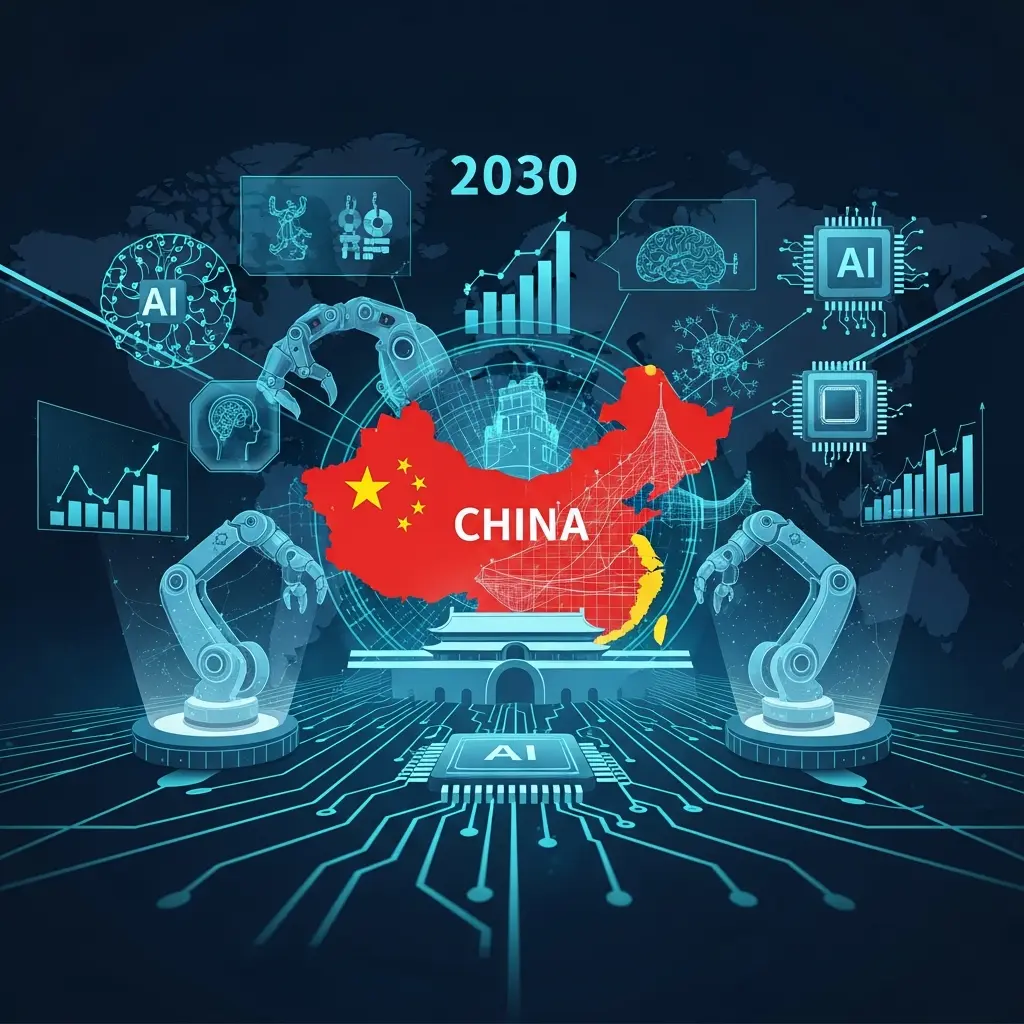
China has officially announced one of the most ambitious technology plans in modern history. By the end of this decade, it plans to become the clear world leader in robotics and artificial intelligence. On March 5, 2026, almost 3,000 delegates met in Beijing’s Great Hall of the People for the 15th Five-Year Plan. This 141-page plan covers the years 2026 to 2030 and mentions artificial intelligence more than 50 times. It also includes a full AI-Plus Action Plan to bring the technology to almost every part of the Chinese economy. U.S. News & World Report Analysts and policymakers around the world are now looking at what many are calling an economic declaration of war on the West’s technological superiority.
A Plan to Take Over
The paper talks about a big “AI+ action plan” that aims to have AI in 70% of China’s economy by 2027, 90% by 2030, and 100% by 2035. It promises to make quantum computers that can grow, a quantum communication network between space and Earth, humanoid robots, 6G, brain-machine interfaces, and nuclear fusion. 12news.com
The plan includes embodied intelligence for the first time. This term refers to AI systems that are built into physical robots. This is a big step up from niche technology to a strategic industrial priority. Uppermichiganssource This is a sign that Beijing has been working toward for years, and the world is now being asked to take it seriously.
Humanoid Robotics: From Show to Plan
Hundreds of millions of homes watched the Spring Festival Gala, China’s most-watched TV show, on February 16. Humanoid robots from four different Chinese companies danced, did comedy sketches, did parkour, and showed off their martial arts skills. What looked like entertainment on Al Jazeera was really an industrial statement.
China has more than half of the world’s industrial robots and more than 80% of the world’s humanoid robots. Cities like Beijing, Wuhan, and Shanghai are setting up special training areas to help robots get used to real-world settings like stores, nursing homes, and smart homes. At the same time, they are collecting standard operational data. According to Al Jazeera, shipment predictions for 2026 are high. Consolidated estimates say that China’s humanoid robot production will go up from about 10,000 units in 2025 to tens of thousands, with the most optimistic estimates saying that it will reach between 100,000 and 200,000 units by the end of the year. U.S. News & World Report: China’s goals go beyond just making more things. They also want to control the supply chain and set global standards. China currently controls a large part of the global supply chain that supports robotics. For example, it has about 70% of the global market for lidar sensors and is quickly becoming the most important player in controllers, harmonic reducers, and other key robotic parts. Al Jazeera In December 2025, China’s Ministry of Industry and Information Technology set up a special committee to create standards for humanoid robots and embodied intelligence. By March 2026, they had released the first national standard system that covers the entire lifecycle of the humanoid robot industry. China is now in charge of creating IEC global standards for elder-care robots and is also actively shaping international standards for robot safety, interoperability, and data governance. This is similar to how it has successfully campaigned for standards in 5G and high-speed rail: first, set the domestic standard, then build scale around it, and finally export it as the de facto international standard. The Washington Post: The Demographic Imperative Driving the Push China’s technological acceleration is not purely geopolitical. The plan’s social welfare aspect clearly calls for the use of embodied intelligence in dangerous and labor-scarce areas. This is a direct response to China’s demographic crisis, which has 310 million citizens over the age of 60 and a caregiver shortage of 5.5 million. In Beijing’s view, robots are not just a military asset or an export product; they are also a necessary part of the economy at home.
A Race Reshaped: What It Means for the World
It’s hard to overstate how China’s rise in AI and robotics will affect the world. The most important thing for the United States may not be any one technology, but the plan’s ability to integrate systems. When the same national framework funds foundation model research, builds physical training centers, requires government procurement, and sets international standards, it creates a pace of innovation that fragmented Western ecosystems have trouble keeping up with. The Washington Post says that by the end of 2025, China’s total installed power generation capacity will have grown by 16.1 percent year on year to 3.89 terawatts. Clean energy now makes up 52 percent of the energy mix, which means that the country’s rapidly expanding AI data center infrastructure is supported by one of the world’s most reliable and growing power grids.
In conclusion
China’s 15th Five-Year Plan is not a list of things they want; it is a carefully planned road map that is supported by state capital, regulatory frameworks, manufacturing scale, and the ability to set global standards. The plan’s 141 pages lay out the careful, step-by-step building of an institutional structure that Beijing believes will make China’s dominance in physical AI not only possible, but also certain. The Washington Post: The big question for governments, businesses, and tech leaders around the world is no longer whether China will be a major player in AI and robotics by 2030. It’s whether anyone else will be able to compete.