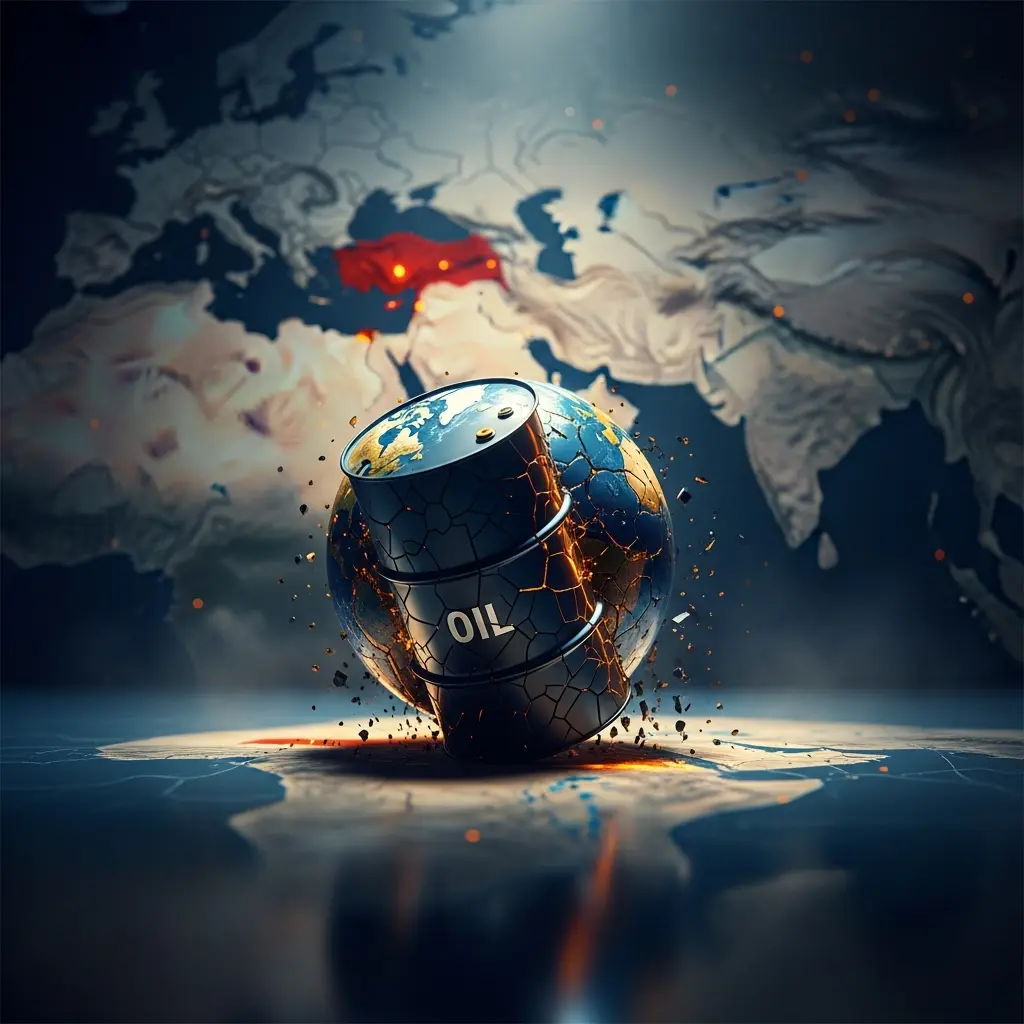
There’s a narrow strip of water — just 21 miles wide at its tightest point — that quietly holds the global economy hostage. The Strait of Hormuz, wedged between Iran and Oman, has always been one of those places that most people never think about. Until now.
Since late February 2026, that neglected corridor has become the heart of the most catastrophic oil supply crisis the world has ever seen.
How It All Began
On February 28, 2026, the United States and Israel initiated synchronized attacks on Iran. The targets were military installations, missile sites, and IRGC command centers. Iran’s response was immediate and forceful. They struck at their Gulf neighbors, menaced shipping lanes, and eventually announced the closure of the Strait of Hormuz to commercial vessels.
The response was immediate. Within days, tanker traffic through the strait — which normally carries roughly one-fifth of the world’s daily oil supply — dropped to near zero. Shipping behemoths Maersk, Hapag-Lloyd, CMA CGM, and MSC halted all transits through the Strait of Hormuz. Insurers then withdrew coverage for any ships trying to navigate the area, thereby shutting down the vital waterway without a single physical obstruction.
At least five tankers have been damaged. Around 150 ships are anchored on either side of the strait, waiting. Two crew members have been killed. And hundreds of millions of barrels of crude sit in tankers going nowhere.
The Largest Oil Disruption in History
The International Energy Agency did not mince words. In its March 2026 Oil Market Report, it declared that this conflict is “creating the largest supply disruption in the history of the global oil market.” That’s not a small claim. It outranks the 1973 Arab oil embargo. It dwarfs the Gulf War disruptions of 1990. This is unprecedented.
Gulf nations have cut total oil production by at least 10 million barrels per day — nearly 10% of everything the world consumes daily. Global supply is projected to fall by 8 million barrels per day in March alone. More than 3 million barrels per day of refining capacity in the region has already been shut down due to attacks or lack of viable export routes. Qatar declared force majeure on its gas contracts. Saudi Arabia has been diverting some crude through alternative pipelines, but those routes can only carry a fraction of what the Strait normally handles.
The math simply doesn’t work. There is no quick fix.
Prices Surge, Wallets Shrink
When supply collapses and demand doesn’t, prices do what they always do — they go up. Brent crude, which was trading around $70 a barrel before the conflict, surged to nearly $120 at its peak. It has since pulled back to around $103, but the volatility has rattled markets globally. In the United States, average regular gasoline prices rose from $2.94 a gallon to $3.63 — and analysts warn the worst may not be over. Some are projecting $150 per barrel in a prolonged worst-case scenario.
European natural gas prices nearly doubled in the first week of the crisis. Japan, which sources around 95% of its crude from the Gulf, has asked its government to release emergency stockpiles. India is pivoting toward Russian crude. China, which had been moderating its Russian oil intake, is now expected to abandon that restraint entirely.
Consumers are not the only ones hurting. Fertilizer prices have spiked — roughly one-third of global fertilizer trade transits the Strait of Hormuz. Urea prices jumped from $475 to $680 per metric ton, and that increase will ripple through the food supply chain in the coming months. Aluminum, plastics, jet fuel, LPG — all are in short supply. About 85% of Middle Eastern polyethylene exports flow through Hormuz, meaning the price of everything from packaging to car parts is quietly on the rise.
Emergency Measures and Their Limits
On March 11, IEA member countries unanimously agreed to release 400 million barrels from emergency strategic reserves — the largest coordinated release in the agency’s history. The United States separately announced it would draw down 172 million barrels from its Strategic Petroleum Reserve.
Markets reacted, but prices kept climbing. Analysts have pointed out the obvious: 400 million barrels sounds like a lot, but at normal Hormuz flow rates of 20 million barrels per day, that covers only about 20 days. The reserves buy time. They cannot replace a functioning shipping corridor.
A Crisis Without a Clear Exit
The fundamental problem remains unresolved. Iranian commanders have pledged to continue using the Strait as a pressure point. As of March 15, limited traffic — primarily Iranian and Chinese-flagged vessels — is trickling through, but the commercial shipping world has effectively stood down.
The world is not just watching an oil crisis. It is watching the fragility of a global economy that was quietly built around one 21-mile gap in the map — and is now reckoning with what happens when that gap snaps shut
.
The question nobody can answer yet is the most important one: how long?
The World Holds Its Breath: Middle East Conflict Sends Oil Markets Into Freefall