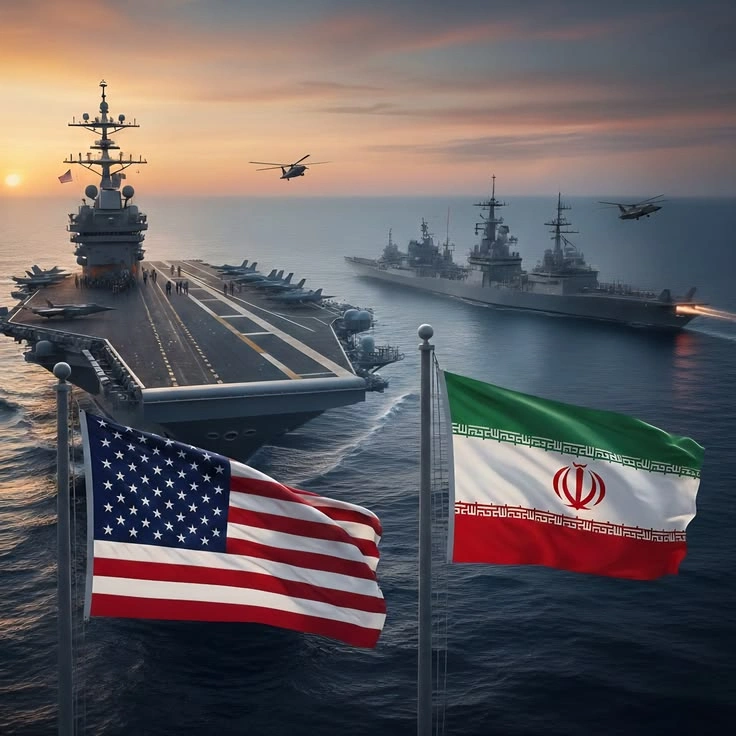
The situation between Iran, the US, and Israel is deteriorating, and the global oil supply is facing unprecedented strain. The Strait of Hormuz is nearly impassable, and crude prices have surged past $100 a barrel. This disruption is sending ripples through economies worldwide, with fuel costs climbing and inflation threatening to take hold.
The Conflict’s Origins
By early 2026, the simmering animosity between Iran, the US, and Israel had boiled over, fueled by years of proxy wars, nuclear disagreements, and regional power plays.
On February 28, 2026, American and Israeli forces coordinated a strike against Iranian nuclear sites, military installations, and cyber infrastructure.
Early accounts suggested that Iran’s Supreme Leader, Ayatollah Ali Khamenei, had perished in the initial waves of the assault, a situation that further inflamed the already precarious hybrid conflict.
It now includes kinetic strikes, cyber attacks, and more than 150 hacktivist incidents.
The war had been going on for three weeks by the middle of March 2026, and there was no end in sight. Israel’s attacks on Hezbollah in Lebanon grew, and US forces bombed military targets on Kharg Island in Iran, which is an important oil export hub. President Donald Trump, who was re-elected in 2024, has said that there will be no discussions with Iran until its military and leadership are broken up. This is in response to Tehran’s calls for talks. Iranian officials, on the other hand, said they would transform oil infrastructure related to the US into “piles of ashes,” which made people even more worried that the conflict would spread to other countries.
This escalation represents a shift from secret proxy wars to open conflict, which not only stops oil from flowing but also disrupts global trade lines for chemicals, fertilizers, and LNG.
Under Attack at a Key Strategic Point
The Strait of Hormuz is a small channel that is only 21 miles wide at its narrowest point. It handles about 20–25% of the world’s oil commerce by sea, or about 20 million barrels per day on average. Iran’s blockade on March 2, which was enforced by missile threats and mine-laying, has stopped tanker travel and left billions of dollars in energy shipments stranded.
Immediate shutdowns have hurt important players: Qatar stopped all LNG output, Saudi Arabia stopped its biggest refinery, and Iraq ceased loading Kirkuk to Turkey. Attacks and storage constraints have caused production losses of 6.7 million to 10 million barrels per day in Kuwait, Iraq, Saudi Arabia, and the UAE. The US attacks on Kharg Island, which sends out 90% of Iran’s oil, might cripple export terminals for a long time.
The International Energy Agency (IEA) calls this the “biggest oil supply disruption in history.” It was worse than the oil shocks of the 1970s, with 7–8% of the world’s supply out for weeks.
(Satellite picture of the Strait of Hormuz with shipping stopped.)
Chaos in the Oil Market
Brent crude, a key benchmark, jumped from about $70 before the war to over $110 at its highest point, then settled around $100 after some wild fluctuations. This was a 40% increase in just 15 days. WTI followed closely, breaking beyond $90, as worries about supply outweighed worries about demand.
If Gulf facilities are damaged, analysts from ING, Capital Economics, and Rapidan Energy say that prices will rise structurally since there isn’t enough spare capacity outside of OPEC to fill in the gaps. Experts think that the IEA’s extraordinary release of 400 million barrels from strategic reserves is meant to calm markets, but it will only work for a short time. Now, predictions say that Brent might reach $150 per barrel if the war goes unabated, which is much more than what was thought in 2026.
Effects on the economies of the world
The oil shock has effects that go far beyond the Gulf, causing inflation and putting stress on supply chains. Gas costs have gone up a lot in areas like Australia, which has made people worry about interest rates going up. In the US, drivers are getting ready for gas prices to reach $5 a gallon on average.
If energy prices go up, the global CPI could go up by 1–2%. Transportation, agriculture, and industry would bear the brunt of this. Asia, the world’s largest importer, would feel the immediate impact of any shortages. Should the Strait of Hormuz remain closed for an extended period, China and India could experience cascading effects, including rising costs in refining and food supplies. In the United States, the available tools to manage such shocks, like reserves and sanctions, are quickly being exhausted, and the stock market is already reacting negatively.
Hormuz disruptions to fertilizer affect agriculture around the world, and rerouting ships raises costs for other goods. The Economist says the harm will be “severe but uneven,” hurting importers while leaving oil producers like Russia alone. Cyber attacks from Iran’s APT groups make the finance and IT sectors around the world more dangerous.
Gulf countries like the UAE fought fires at Fujairah port, and Qatar and Bahrain said Iran was attacking ports and desalination plants. President Trump’s hard stance—no deals until regime change—clashes with Iran’s intransigence under new leader Mojtaba Khamenei, who promises sustained Hormuz closure. No big power brokers have broken the deadlock, and Europe is calling for de-escalation because it is having its own energy problems.
Middle East War Escalation: How the Iran–US–Israel Conflict Is Affecting the World’s Oil Supply