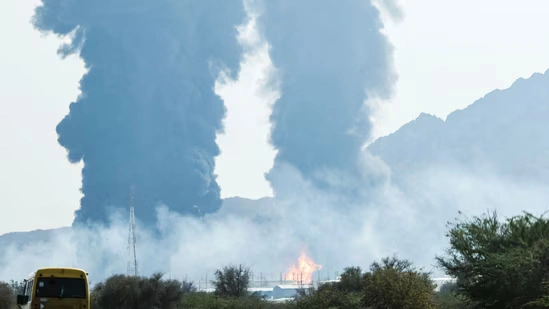
The UAE has actually undertaken a major drive to stop incorrect information from spreading on social media. This shows how concerned the Gulf state is about stopping false information from spreading online, especially when things get tense in the area.
The government has ordered the arrest of many people, including foreigners, who are believed to be spreading false, misleading, or alarmist information regarding the conflict between Iran and US-Israeli forces. As tensions increase in the area, this aggressive measure fits with the UAE’s bigger goals of protecting national security, keeping the peace, and implementing its tight regulations against cybercrime and “rumors.”
The UAE says that incorrect information on the internet is bad for its safety and reputation. As tensions increase in the Gulf, there are air defense warnings, missile threats, and diplomatic problems. In response, the country has gone to court, made public pronouncements, and moved cases along more quickly. This event is part of a larger trend: during times of war, governments are gaining more and more control of digital platforms.
A Big Push to Get Caught
The UAE authorities claimed they will arrest 35 people who are accused of manufacturing and disseminating fake and misleading movies on the Iran conflict and other events in the vicinity. There are 19 Indians in the group, which has gotten a lot of attention in South Asia and shown how easy it is for people from other countries to infringe cybercrime laws. Authorities also alleged that the suspects used social media to share fake, altered, or out-of-context footage that claimed to show attacks, damage, or disturbance in the UAE and other Gulf countries.
Reports say that the people being looked into have been divided into three main groups: those who shared real videos but falsely linked them to the current conflict; those who shared videos that were made by AI or heavily edited; and those who spread clear propaganda praising hostile states and their military actions. Officials noted that in all of these cases, the content may have panicked people, hurt the UAE’s reputation, or gone against information that had been formally confirmed in a very serious security matter.
Lawyers say that these cases will be processed more quickly than usual. Judges can move quickly in these types of court cases where crimes are judged to pose a threat to public order or national security. This means that the UAE wants to penalize anyone who breaks the law and send a strong message to the millions of people who live there and make content that might be tempted to trade in dramatic war-related information.
Laws that are quite strict against cybercrime and distributing false information
The raid happened because the UAE has strict laws against cybercrime and spreading false information. Because chat apps and internet platforms are growing so quickly, these restrictions have been tighter in the last few years. The UAE Cybercrime and Rumors Law says that it is against the law to post or propagate fake news, inaccurate information, or harmful rumors that go against what the government says.
According to Article 52 of the law, anyone who uploads false or misleading material online that could cause panic, upset public order, or hurt the state’s interests must serve at least one year in jail and pay a fine of at least 100,000 dirhams. Lawyers say that when these kinds of crimes happen during wars, crises, or disasters, the punishments can be significantly worse because they are worse for public safety and national security.
Also against the law include hate speech, bigotry, provocation, and using technology in the wrong way. This is one of the most detailed rules for how to utilize social media in the area. Lawyers and compliance experts in the UAE have been saying for a long time that “online activity has real-world effects.” They have made it plain that even posts on personal accounts or in small groups can land you in trouble with the law if they promote false or harmful information.
A brief overview of the most important legal issues
Lying and spreading rumors that go against what the government says is against the law.
People who spread a lot of false information can go to jail for at least a year and pay a fine of 100,000 dirhams.
Coverage of AI-generated or edited content that is thought to be fake or misleading.
those who dwell in the neighborhood, those who live overseas, and sometimes other people who share or republish content are all to blame.
Why the UAE is on High Alert During War
The case is happening in the middle of a fight between US, Israeli, and Iranian troops that is getting worse. Missile threats and air defense responses have already happened in the Gulf because of this war. Military exchanges have resulted to attacks on or threats to airspace in the Gulf. Because of this, the UAE, Kuwait, and Bahrain have turned on their air defense systems, cautioned people about safety, and put important regions on high alert.
The UAE has made it clear that it will preserve its land, which has a lot of important infrastructure, a lot of expats living there, and foreign military bases. But it has made it obvious that it doesn’t want to fight directly. The UAE’s leaders have told the US, Israel, and Iran to talk to each other again and sent the UAE’s ambassador back to Israel. They also suggested that things could get worse in a part of the world that is already not stable.
In this circumstance, any claim of assaults on Emirati cities, airbases, or landmarks, whether true or not, might have a big effect on public trust, the economy, and diplomatic messaging. Officials don’t think that fake fight movies and fake incident reports are only jokes on the internet because of this. They believe that these factors could make the country less safe, make living tougher, or make it difficult to stick to its carefully thought-out diplomatic posture.
What are deepfakes and AI?
One of the most interesting things about the current crackdown is how much it focuses on movies that AI made or changed. News stories and government documents often say that items were “made with AI.” Officials allege that some of the suspects utilized generative tools to make or change recordings of missile strikes, explosions, or noise in public locations, and then broadcast them as live proof of events relating to the Iran conflict.
It’s already against the law in the UAE to post fraudulent or misleading content, but the fact that they specifically include AI shows how governments in the area are changing how they see deepfakes and synthetic media as a security threat. Officials say that AI-generated false information is making things worse. This means that new technologies are not in a legal gray area; the laws that already exist for cybercrime and national security plainly cover them.
The UAE’s actions underscore the immense challenge faced by governments and online platforms globally: monitoring the rapid, widespread dissemination of information that appears authentic and traverses international boundaries. A handful of convincing deepfake videos, for instance, have the potential to significantly alter perceptions of a conflict’s dynamics, pinpointing the victor, the location of assaults, or the state of critical infrastructure. Such distortions could have far-reaching consequences, impacting evacuations, financial markets, and diplomatic efforts.
UAE Takes Tough Action Against Misleading Social Media Posts Amid Iran War