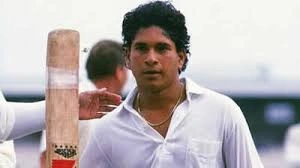
Fans worldwide continue to celebrate that moment, which occurred exactly fourteen years ago today, on March 16, 2012. A defining moment in cricket, without a doubt. This achievement, a fitting end to a storied career, truly showcased the peak of skill, dedication, and sheer willpower. Even now, years later, its influence on the sport’s expansion and its worldwide following is still felt.
The Historic Moment Starts
The scene took place at the Sher-e-Bangla National Cricket Stadium in Mirpur, Dhaka, during a thrilling Asia Cup ODI match between India and Pakistan. Sachin Tendulkar walked out to the crease with India staring down the barrel, needing 330 runs to overhaul Pakistan’s imposing score.
He was 38 years old. The Little Master scored 114 runs off 141 balls without losing a single one, even though Saeed Ajmal and Aizaz Cheema were attacking him hard. He hit the goal with a usual boundary that sent shockwaves of joy across the whole subcontinent.
The close calls in earlier innings kept fans on the edge of their seats. People worshiped in temples, and everyone in the country stopped to wait. When the moment arrived, the clamor from the packed stadium drowned out everything else. More than 200 million people in India alone watched on TV. This wasn’t simply a win in the numbers; it was a story of winning despite persistent pressure, which he did in his 49th ODI innings since the 99th century.
This knock was better because of when it happened. After India won the World Cup in 2011, Tendulkar put to rest any questions about his form in an ODI scene that was evolving to favor more aggressive strokeplay. His cool innings, which blended classic defense with timely attack, demonstrated once again why he was called the Master Blaster.
Milestones That Made a Career
Sachin Ramesh Tendulkar’s climb to the top began in 1989, when he made his debut at 16 against Pakistan in Karachi. He became famous by scoring 59 runs against famous players like Wasim Akram and Waqar Younis. In the next 20 years, he hit 15,921 Test runs at a rate of 53.78 and 18,426 ODI runs at a rate of 44.83. This comprised 51 Test centuries and 49 ODI tons before the 100th Test.
Important events affected his journey:
His first Test ton came at Old Trafford in 1990, when he was just 17 years old and against England’s strong attack.
A magnificent 241* in Sydney in 2004, breaking Shane Warne’s leg-spin spell.
Heroic World Cup performances, like the 98 against Pakistan in 2003 that got India to the final.
After playing 664 international matches over six decades, it looked impossible to break Tendulkar’s records for most runs, most hundreds, and longest career. He modified his approach over time, going from wristy flicks against quick balls to excellent footwork against spin to the famed straight drives that future batsmen learned from. When he departed in November 2013 with the Bharat Ratna, India’s highest civilian award, he left a lasting impact on excellence.
Changing Indian Cricket and the Way Fans Act
This milestone was more than just a sports event; it started a cultural craze in India, where cricket is more than just a game; it’s a method to bring people together. The hashtag #Sachin100th100 became popular on new social media platforms, jersey sales went through the roof, and TV networks saw record amounts of viewers. It illustrated how Tendulkar was a bright example during India’s economic boom, when the prospects of a growing middle class were high.
It motivated an entire generation on the field. Virender Sehwag, a teammate, noted that having him on the team raised the level, and Shahid Afridi, a competitor, lauded his sportsmanship after the game. In Bangladesh, the host country, it brought people together and made them want to get along even though they were rivals in the region. It elevated the standards for ODI batting around the world, which had an effect on players like Joe Root and Kumar Sangakkara.
The impacts on the economy were significant. There were a number of cricket academies, and more than 30% more young people signed up in the years that followed. Tendulkar’s endorsements helped him construct a personal empire worth more than ₹1,000 crore. His experience proved that cricket can be a very profitable business when you combine athletic skill with clever marketing.
Technical Expertise and a Statistical Legacy
Tendulkar was a genius because he could change. His open stance and high bat grip made it easy for him to adapt to any delivery. He played cover drives against fast bowlers and paddle sweeps and late cuts against spinners. He scored hundreds on 14 different grounds against 12 different countries, which shows how flexible he was.
He got three more tons after his 100th and then retired gracefully. His yoga-based training routine set a new standard for professionalism, even though he suffered tennis elbow and groin pulls. His 53.78 average in Tests concealed the fact that he had trouble on dangerous tracks, and his 44.83 average in ODIs proved that he could stay consistent even when the scoreboard was against him.
He achieved 51 Test centuries, averaging around 120 runs per century, and 49 ODI tons, averaging about 85 runs per ton. He often saved India from disaster. This statistical stronghold has an effect on modern analytics, where his data is still utilized to compare the top hitters.
Admiring the Best Voices in Cricket
People from all around sent forth their condolences. Ricky Ponting stated it was “cricket’s greatest individual feat,” while Kapil Dev, who led India to victory in the 1983 World Cup, added, “Sachin shouldered India single-handedly.” Rahul Dravid praised his team’s concentration on the team, adding that long vigils helped other players develop their innings.
Coach Greg Chappell was shocked at how hungry he was: “He chased the 100th with the same zeal as his first.” Virat Kohli leads India in 2026. During the IPL’s T20 revolution, he depends on Tendulkar’s mental power for big games. Mithali Raj, a famous player in women’s cricket, agrees that he knocked down barriers and made the sport more accessible to everyone.
An Icon of Culture That Goes Beyond Borders
People in India sang “Sachin! Sachin!” like anthems in stadiums and on the street. More than 10 million people saw the 2017 documentary “Sachin: A Billion Dreams,” which was about his life. Mumbai honored him by renaming highways, and UNESCO recognized him as a global cultural ambassador.
This is an excellent illustration of how being famous can be a beneficial thing. He was called the “God of Cricket” without getting engaged in politics or other issues that hurt many prominent people.
Trials on the Way to Glory
The chase had some complications, though. Things were hard after 2008, and the 90s stacked up without being changed, which upset people like Sunil Gavaskar. He lost the World Cup final in 2011, which hurt a lot, but his wife Anjali and daughter Sara kept him grounded. His 99th goal against India A in 2011 gave him back his momentum, which contributed to the miracle in Mirpur.
The most important thing was mental power. Tendulkar’s mental strength and tight routines helped him turn stress into energy, and these lessons are still taught in coaching books today.
Lessons for the Future Stars
Tendulkar’s narrative tells us to remain patient in T20’s blitz and events like The Hundred. IPL officials say he was the first person to use data to train players. It’s good that young players like Yashasvi Jaiswal are following in his footsteps because India wants to win the World Cup in 2027.
His story makes the idea of greatness easier to understand by showing that failures are a part of achievement and that working together is more essential than being proud of yourself. Schools all throughout the world use his name to teach kids how to be disciplined.
Making the Future of Cricket
The 100th record chase brought Kohli closer to ODI tons and Root closer to Test standards. During the time of Tendulkar, there were arguments that made DRS and Hawk-Eye more popular. His draw helped BCCI build more infrastructure. The ICC calls it the “Tendulkar Effect,” and it helps minor countries.
He wanted balanced shapes before T20 and knew that long-term answers were needed. He wanted new ideas, but he didn’t want to lose the spirit of Test cricket.
Tendulkar’s Own Ideas
In his book “Playing It My Way,” Tendulkar recalls that the relief he felt after getting his 100th was stronger than the excitement. He said, “It was for the fans who waited with me.” “Numbers fade; impact endures” is what retirement speeches are all about. They talk about the process instead of the milestones.
During the 2026 interviews, he gave advice and stressed how important it is to be flexible while working with AI scouting and bio-mechanics. His foundation’s cricket activities help 50,000 kids every year, which keeps him motivated.
People still reminisce about Sachin Tendulkar’s 100th international century, a truly monumental achievement.