
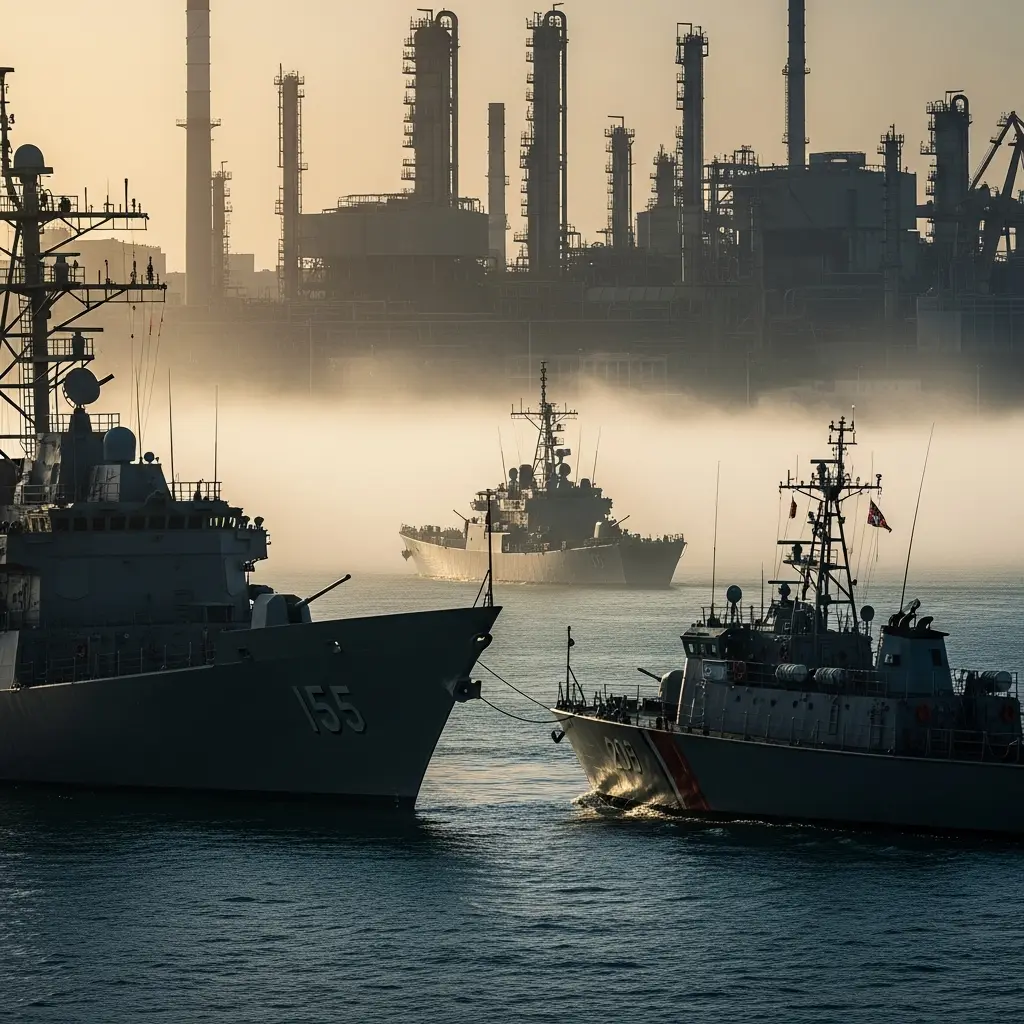
Warships are circling and tankers are changing course. The Middle East crisis is getting worse, and it’s not just a regional flashpoint. It’s a slow-burning threat to the energy lifelines that keep the world economy moving.
When the Persian Gulf starts to boil, there is a certain kind of fear that spreads through both financial markets and foreign ministries. That fear is back. In the past few weeks, tensions between the US and Iran have risen in ways that feel all too familiar: military ships moving around, shipping lanes under pressure, and diplomatic channels being very quiet. But people who watch say the stakes might be higher than they’ve been in a long time.
A fight that won’t end is at the center of the current crisis in the Middle East. US troops have sent more ships to the Strait of Hormuz, which is a narrow passageway where about a fifth of the world’s oil supply flows every day. Iran’s military activity in the area has increased as a result. The result is a tense standoff that isn’t going anywhere. Neither side seems eager to escalate it into open conflict, but neither seems willing to back down.
The effects on shipping oil around the world have been quick and bad. Several tanker companies have changed the routes of their ships away from the Gulf corridors that are usually the most efficient. This has added days to transit times and caused insurance rates to go up by a lot. There have been reports of at least two incidents involving commercial ships, but the exact details are still up for debate. There is no doubt about the effect: oil prices have gone up a lot, and the shipping problems are making inflation worse in economies that are already having trouble with the cost of living after the pandemic.This isn’t just two countries acting tough. “Every factory, every fuel pump, and every flight schedule in the world feels it when the Gulf shuts down.”
For most people who live far from the Persian Gulf, the connection to their daily lives may seem abstract at first. The conflict in the Gulf has caused problems with shipping oil, which has a direct effect on energy prices. These prices affect everything from heating bills to the cost of groceries. Analysts are already coming up with scenarios in which a long standoff between US and Iranian forces, even if no shots are fired, could lower global growth forecasts for the year by a significant amount.
The human side of the crisis is just as important. Several governments have told their citizens not to travel to parts of the Middle East that are not necessary. Several countries have put their emergency plans into action to get their citizens out of the area. This is becoming more difficult because airspace restrictions in some parts of the Middle East are making it harder to fly. To avoid the most sensitive corridors, airlines have quietly changed the prices and routes of long-haul flights. This makes international travel more expensive and takes longer across a large part of the world.
Analysts are especially worried about the current US–Iran conflict because it doesn’t seem like there are any real diplomatic off-ramps. There have been many times in the past when tensions in the Gulf got so bad that they almost led to war. In the end, they were calmed down through a mix of secret talks, third-party mediators, and planned gestures of de-escalation. These days, those systems seem to be so stressed that they don’t work. Important ways to talk to each other have stopped working. The European powers, the Gulf states, and China have the most power to help start talks, but they are either too busy with their own problems or don’t want to take on a role that could be very risky politically.
The effects on global security go far beyond the energy sector. The crisis in the Middle East is making several major powers change the order of their strategic priorities. Washington is juggling the Gulf tensions alongside its obligations in Europe and the Indo-Pacific, a situation that’s stretching its military and diplomatic resources thin. Iran, too, faces potential risks in this unfolding scenario.
The economic pressure from sanctions hasn’t let up, and there are still problems at home that are causing anger, even though the government is publicly defying the US.
People in nearby regions are very worried. Countries along the Gulf that depend on stable shipping lanes for their own economic survival and for the steady export of their own oil and gas revenues are very interested in a solution that doesn’t spiral out of control. But they also don’t want to publicly take sides against either Washington or Tehran, both of which have a lot of power over their own interests.
People who closely watch the Gulf Tensions are careful not to make things worse. In this rivalry, the lines have been pushed forward and tested, but rarely crossed into full-blown war. Most people still think that the calculus of mutual deterrence works. Neither the US nor Iran really wants a shooting war that would be bad for both sides.
But “not a shooting war” doesn’t mean much in terms of comfort. The oil shipping disruption alone, which could last for weeks or months, has effects that get worse over time. The airspace restrictions have a ripple effect on aviation networks that are still trying to get back on their feet financially. The unresolved US-Iran conflict makes people around the world worry about security, which hurts trade, investor confidence, and the quiet stability that keeps interconnected economies running smoothly.
The Gulf has always been a place where the interests of big powers, regional goals, and the basic workings of the global energy system all come together. At the moment, all of those pressures are going in the same direction. The world is watching and hoping that history’s pattern of pulling this area back from the brink will hold once more. They know very well what will happen if it doesn’t.

