
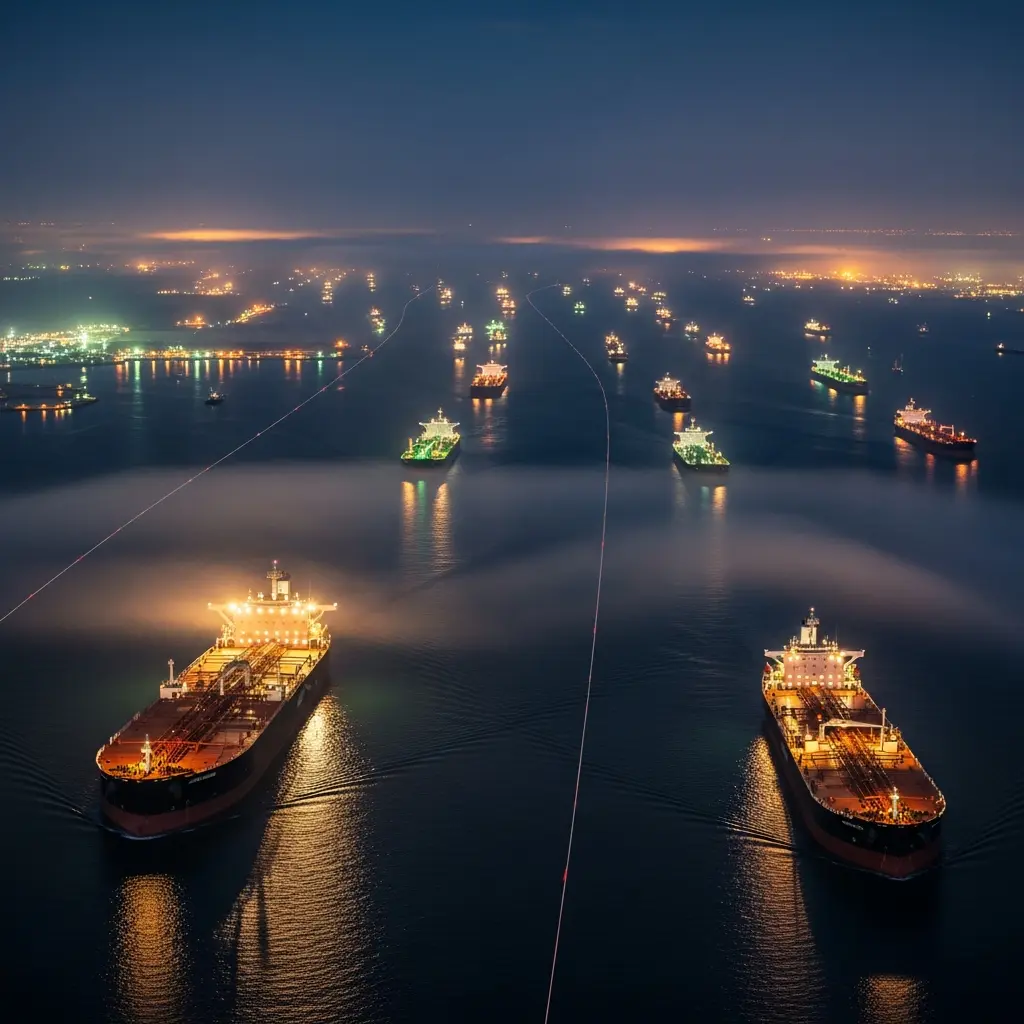
A strip of water barely 33 kilometres wide at its narrowest point sits between stability and chaos in global energy markets — and right now, that strip is under more pressure than it has been in years.
Look at any map of global energy trade and your eye is inevitably drawn to a thin sliver of blue between the Arabian Peninsula and the Iranian coast. The Strait of Hormuz has never been a comfortable place for the world’s energy traders to contemplate — but right now, with naval vessels repositioning and security alerts climbing, it demands the full attention of anyone who heats a home, fills a tank, or watches inflation data.
The heightened security situation gripping this critical shipping route crisis is not emerging from nowhere. It is the latest chapter in a long story of geopolitical friction that treats the Strait as a pressure valve — the place where regional tensions translate most directly into global consequences. What is different today is the convergence of factors making the situation particularly volatile: military posturing in the wider Gulf, strained diplomatic channels, and an energy market already stretched thin by years of supply uncertainty.
Naval forces from multiple countries have increased their monitoring presence along the transit lanes. The stated aim is deterrence — to signal that any attempt to close or meaningfully disrupt the Strait will be met with swift response. But there is an inherent paradox in this kind of muscular reassurance. More warships in a confined waterway, shadowing one another through narrow lanes already shared with supertankers, raises the statistical probability of miscalculation. The oil supply risk, in other words, doesn’t just come from deliberate action — it also comes from the mounting friction of proximity.
“You can’t fully insure against Hormuz. It’s the one chokepoint the global energy system was never truly designed to live without.”
Energy markets have wasted no time in pricing in the uncertainty. Oil market volatility has spiked noticeably over recent sessions, with benchmark crude prices gyrating on each new headline from the region. Traders are, by nature, forward-looking — and what they are looking at is a scenario in which even a partial, temporary disruption to shipping through Hormuz could pull millions of barrels per day from the market at a stroke. The premium they are demanding to hold that risk is rising by the day.
For India and the broader sweep of Asian economies, the stakes are especially acute. India imports roughly 85 percent of its crude oil, a significant share of which transits through the Strait of Hormuz. For Beijing, Tokyo, Seoul, and Singapore — all major energy importers — the arithmetic is similarly stark. These are not abstract concerns about distant geopolitics; they are live questions about whether refineries keep running, whether petrochemical plants maintain output, and whether consumers face sudden price shocks at the pump. The Indian government, alongside several other Asian nations, has been quietly dusting off contingency plans — alternative suppliers, strategic reserve drawdowns, demand-side measures — that they hope never to have to activate.
The shipping route crisis extends beyond oil alone. Liquefied natural gas from Qatar — a major supplier to Europe and Asia — also moves through the Strait. So do significant volumes of petrochemicals and refined products. The Strait of Hormuz is not just an oil pipeline in water form; it is a vital artery for the broader energy and chemical supply chains that underpin modern industrial economies. A disruption does not simply raise petrol prices — it potentially threatens industrial feedstocks, electricity generation, and the cascading network of goods whose production depends on affordable energy inputs.
Experts who study these chokepoints have long warned that global energy infrastructure is quietly optimised for a world without such disruptions — which is precisely what makes them so dangerous when they occur. Alternative routes exist, in theory. Saudi Arabia operates the East-West Pipeline, capable of bypassing the Strait with a portion of its oil. The UAE has invested in a pipeline that can do the same for Abu Dhabi’s crude. But combined, these pipelines can carry only a fraction of what moves through Hormuz on an average day. There is no genuine substitute at scale. The global oil supply risk is, at its core, a Hormuz risk.
What happens next is genuinely uncertain. The most likely scenario remains one of continued tension without direct confrontation — a managed standoff that inconveniences markets, elevates insurance costs, and generates diplomatic noise without tipping into something more destructive. Most analysts cling to this base case not out of complacency but because the alternatives are so much worse, and because history suggests that the Strait has been pulled back from the brink before.
But the global energy system is not a patient institution. Oil market volatility, if sustained, has real-world effects that compound over weeks and months. Shipping insurers ratchet up premiums. Operators reroute vessels on longer, more expensive paths. Import-dependent nations draw down reserves they would prefer to keep full. And at the end of this chain of this chain of decisions, ordinary people in cities far from the Persian Gulf find that their cost of living has quietly ticked upward in ways that no minister can fully explain at a press conference. The Strait of Hormuz has always been the world’s most consequential 33 kilometres of water. Today, that truth feels more urgent than ever.

