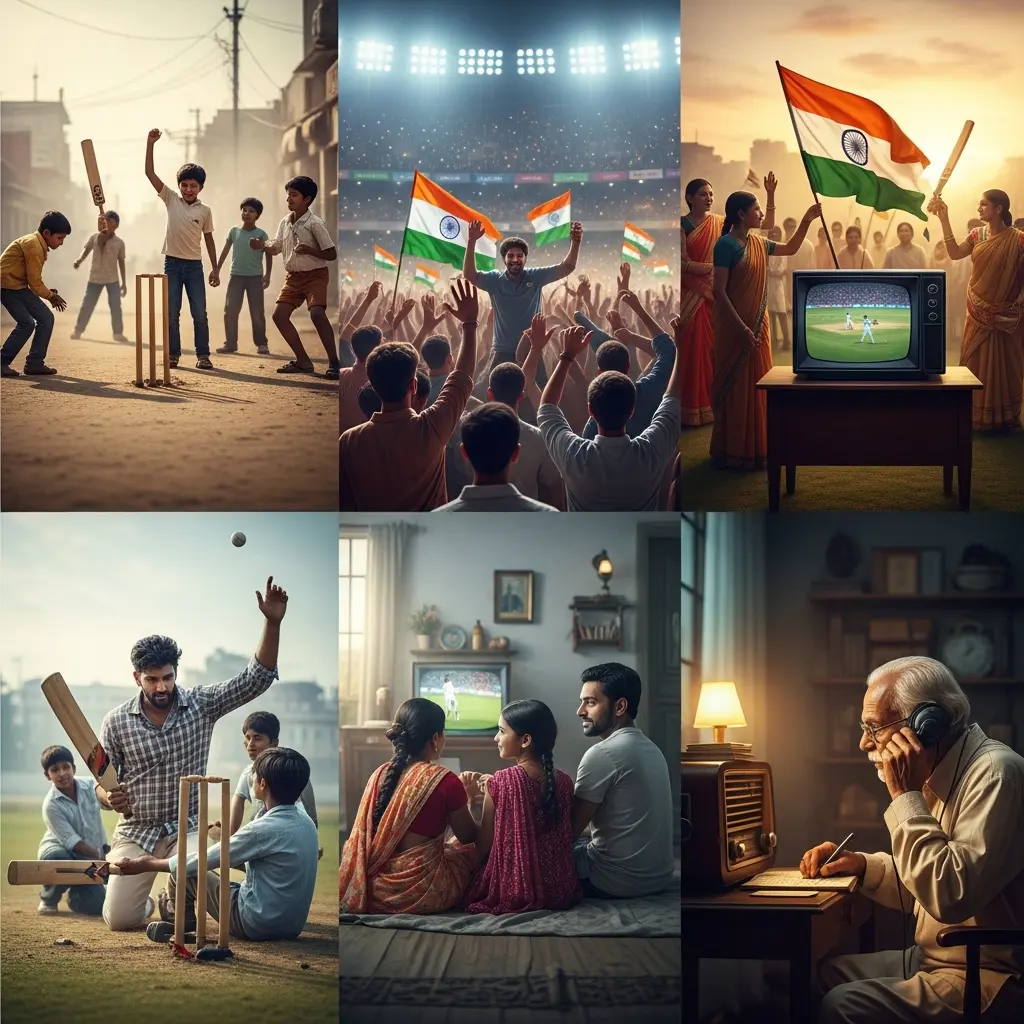
n a country of breathtaking diversity, cricket is perhaps the one shared language. From packed stadiums to street corners with improvised stumps, the game continues to bind India together in ways that no other sport — or perhaps any other institution — quite manages to replicate.
Walk through any Indian city on a match day and you will feel it before you see it. The tea stall owner has turned up the volume on his old transistor radio. The office canteen has a screen mounted in the corner, surrounded by colleagues who were supposed to be at their desks an hour ago. In apartment buildings, you can track the state of play just by listening — the sudden roar through the walls when a wicket falls, the collective groan when a catch is dropped, the eruption that follows a six that clears the boundary with something to spare. This is cricket in India. Not merely a sport. A shared pulse.
Cricket news in India occupies a category of public attention that is genuinely unlike anything else in the country’s media and cultural landscape. Politics comes close, but politics divides as often as it unites. Bollywood captivates but along generational and regional lines. Cricket, somehow, reaches almost everyone — cutting across language, caste, class, and geography in a way that still astonishes sociologists who study it. A child in a Chennai suburb and a farmer in rural Punjab and a software engineer in Bengaluru may share very little in their daily lives, but put India on a cricket field and they share something immediate and electric.
The India sports ecosystem in 2026 is broader and more competitive than it has ever been. Football is gaining traction, especially among urban youth.
Kabaddi has found a passionate following through the Pro Kabaddi League.
Cricket in India isn’t just followed — it’s lived. The players are not athletes so much as characters in a story the entire nation is reading simultaneously.
A significant part of cricket’s enduring hold is the Indian Premier League, which has transformed the sport’s relationship with entertainment, commerce, and global talent in ways that were barely imaginable when the tournament launched less than two decades ago. The IPL is not simply a cricket tournament — it is a cultural event that anchors roughly two months of the Indian calendar, generates billions of dollars in broadcast and sponsorship revenue, and provides a stage on which domestic players can make their reputations in front of the largest cricket audience on Earth. For fans, it delivers the almost daily drama of matches in a format designed for maximum excitement, with the world’s best players wearing their city’s colours alongside emerging Indian talent hungry to prove themselves.
The players themselves carry a weight of expectation that is almost unique in world sport. For those who don the Indian jersey, success isn’t just about career satisfaction or financial gain. It’s about national sentiment, a feeling shared by hundreds of millions who watch every match, every delivery, and every team announcement with a passion that can be quite intense. The pressure on Indian players is immense, and the way many of them manage it—competing at the top while dealing with the demands of celebrity in a nation of 1.4 billion devoted fans—is truly commendable.
Did you know
India is home to several of the largest cricket stadiums in the world by capacity. The Narendra Modi Stadium in Ahmedabad holds over 130,000 spectators — making it the biggest cricket ground on the planet — and when it is full for a major match, the atmosphere it generates is routinely described by visiting players as unlike anything else in global sport.
With several major tournaments on the horizon in 2026, the cycle of anticipation that powers Indian cricket fandom is already building. Squads are being debated. Form charts are being scrutinised. Social media is alive with opinions about selection, strategy, and the inevitable comparisons between current players and the legends who came before. The conversations happening in tea stalls and WhatsApp groups and office corridors across the country are the same conversation — just in a thousand different voices, in a dozen different languages, with the same underlying question running through all of them: can India win?
It is about something harder to quantify — a sense of collective identity, of national pride expressed through a game that India did not invent but has made undeniably, irreversibly its own. As long as a bat meets a ball on Indian soil, the answer to that question will matter enormously to an enormous number of people. And that, more than any statistic, is why cricket news remains the heartbeat of India sports.