Eid-ul-Fitr 2026 has come to India in the same way it always does: with the sight of a crescent moon, the sound of takbeer filling the air, and millions of hearts quietly letting out a sigh after thirty days of devotion.
It starts with everyone holding their breath the night before. Families sat around the TV. People on rooftops and balconies looked up at the sky. A quiet, shared sense of excitement that stretches from the narrow streets of Old Delhi to the wide coastal boulevards of Kozhikode. And then, as news spreads that the crescent moon has been seen, something beautiful happens: India breathes out and Eid begins.
Eid 2026 has come to every part of the country with the same warmth and energy that has always been there. The Muslim community in India woke up on Eid-ul-Fitr with full hearts and homes that smelled like sewaiyan cooking on the stove. They had been fasting from before sunrise to sunset for thirty days, praying and thinking, and being generous and restrained.
The Morning Prayer That Unites a Nation
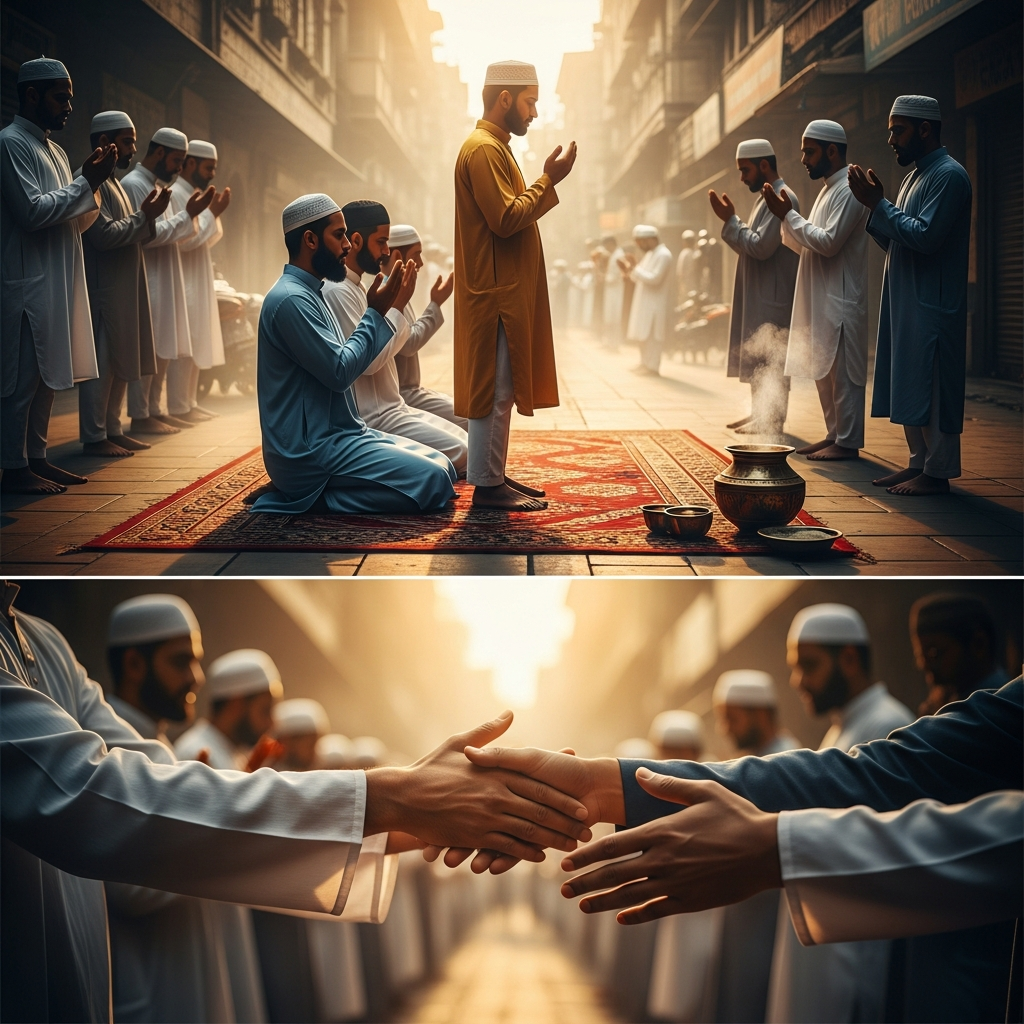
Before the city is fully awake, the faithful are already on the move. Men and boys in clean white kurtas, women in embroidered salwar kameez and new dupattas, and families all walking, riding in auto-rickshaws, or crammed into shared tempos toward mosques, Eidgahs, and open spaces where the Eid prayers will take place. In cities like Hyderabad, Lucknow, Mumbai, and Kolkata, the crowds are so big that loudspeakers carry the imam’s voice to people standing far beyond the gates.
The prayers for Eid are short, but they mean a lot. They mark the end of Ramadan, which India has celebrated together for a month. During this time, mosques were fuller, charity flowed more freely, and the call to prayer changed the rhythms of daily life in subtle ways. When the prayers are over and people who don’t know each other hug each other and say “Eid Mubarak,” it’s a very touching moment that shows what communal faith can be at its best.
First, give to charity, then eat.
When people talk about Eid-ul-Fitr, they often forget to mention that the day starts with an act of giving. Zakat-ul-Fitr is a type of required charity that every Muslim who can afford it must pay before the prayers. It is meant to make sure that the poorest members of the community can also celebrate the day with respect and a full meal. It’s a quietly radical idea that no one should go hungry on a day of celebration just because of their circumstances.
This spirit of giving that Ramadan brings to India for a whole month doesn’t just go away when Eid comes. Muslim community groups have been giving out food, clothes, and other necessities in the days leading up to and including Eid. In cities like Delhi, Mumbai, and Bengaluru, where there are a lot of poor people living in cities, the amount of giving that happens during this time is truly amazing, but most people outside the community don’t notice it.
The Food That Makes Eid, Eid from the Kitchen
Sewaiyan, which is vermicelli cooked slowly in milk with sugar, cardamom, and sometimes a handful of dry fruits or saffron, is what Eid smells like. Each family has its own version, which has been passed down through the years, and each family thinks that their version is the best. This is the first thing that goes on the stove on Eid morning in homes all over the country. It’s also the first thing that every guest, Muslim or not, is given when they come in.
And there will be a lot of guests. Above all, Eid is a time when doors are open. People who haven’t talked to each other all year are now sitting across from each other with plates of biryani and bowls of haleem. Friends of Hindu, Sikh, and Christian faiths are welcomed just as warmly as family, and sometimes even more so. On this day, people all over India celebrate festivals that show the country at its most generous and least divided. It’s worth taking a moment to appreciate that.
Authorities Make Sure the Celebration Goes Off Without a Hitch
Behind the warmth and fun, a big logistical operation has made sure that the celebrations go off without a hitch.For the most part, those efforts seem to have worked: the morning prayers went off without a hitch in cities all over the country, and the festive gatherings that followed filled public spaces with music, color, and the happiness that comes at the end of a long fast.
What Eid Tells Us
Eid-ul-Fitr is more than just the end of a fast. It is the end of a month of working on something that is really hard: being disciplined, empathetic, and thankful. During Ramadan, people are asked to fast for a short time and on their own, so they can better understand what it is like for those who have no choice but to fast. Eid is the holiday that comes after the fast and the understanding.