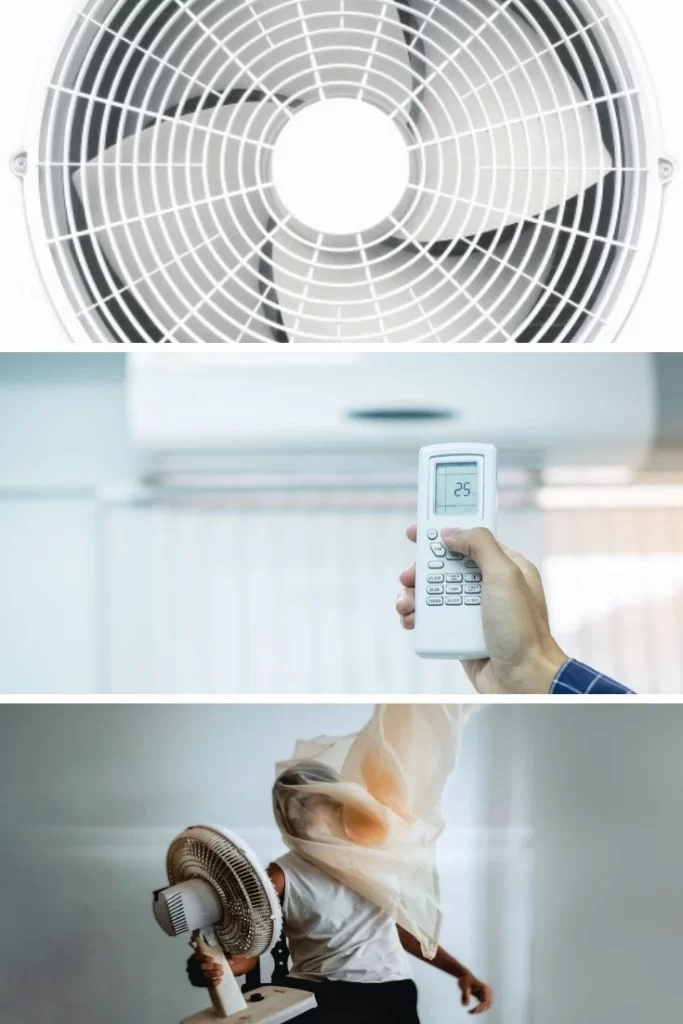
Millions of people in Tier 2 and Tier 3 cities have to struggle with the heat in India’s sweltering summer heat waves, when temperatures often go above 45°C. They don’t have the luxury of air conditioning. A social media post, which claims you can “cool your room for Rs 0—no AC needed,” has gained considerable traction.
It gives easy, cheap ideas like using wet drapes and earthen pots to lower the temperature in a room by up to 5 degrees. These traditional Indian methods of beating the heat are gaining traction, fueled by rising electricity prices and the fact that over 80% of households in cities beyond the major metros still lack air conditioning. This trend reflects a blend of established practices and modern needs.
This study will comprehensively analyze these cost-effective cooling technologies, employing scientific concepts, expert perspectives, and data from India’s persistent heat-related issues.
The Heat Crisis in India: The Imperative of Cost-Effective Cooling Solutions
The India Meteorological Department (IMD) reports a 0.7°C increase in India’s average temperature over the past decade. By 2026, heatwaves had already taken a grim toll, with more than a hundred lives lost in places like Rajasthan and Maharashtra.
Urban heat islands exacerbate the already challenging living conditions in cities such as Pune. Furthermore, a 2025 NITI Aayog survey revealed that only 18% of residences in Tier 2 and Tier 3 cities are equipped with air conditioning.
On the other hand, over 60% of homes in big cities like Mumbai and Delhi do. Cooling costs may be as high as 40% of a person’s monthly bill, therefore a lot of people are seeking for choices that are better for the environment and don’t need a lot of AC.
“AC nahi hai?” (Hindi for “No AC?”) sparked the “Rs 0 cooling” fad. No problem. “Rs 0 mein apna kamra 5 degree thanda karo — aaj raat se.” The post, which has been shared a lot on Instagram Reels, WhatsApp forwards, and community-based sites, features a list of DIY ideas for using common household items for evaporative cooling and cross-ventilation. Experts from the Indian Institute of Tropical Meteorology (IITM) have confirmed that these methods operate by leveraging simple physical processes like evaporation and convection to cool down small, well-ventilated rooms by 3 to 5 degrees Celsius. These methods promise immediate, low-impact relief for people who live in places like Pune, where the evenings are humid and make matters worse. They also assist India accomplish its climate goals by making people less dependent on cooling systems that use a lot of electricity.
Hack 1: The Evaporative Cooling Powerhouse—Wet Curtain Magic
The “wet curtain hack” is what sparked the craze that went viral. All you have to do is put a wet dupatta or thin cotton cloth over a window frame. The cloth lets heated air from outside flow through it, which makes the water evaporate. This takes heat out of the air and cools the wind by 4 to 6 degrees Celsius. This basic method is like the old “khus khus” reed screens that were used in traditional Rajasthani havelis. Long before electricity came inside, people used them to stay cool.
Modern thermodynamics backs this up. Evaporation needs latent heat, which is about 2260 joules per gram of water, to come from the air around it. This makes the air cooler. According to a study by the Central Building Research Institute (CBRI), wet curtains in rooms with natural circulation can lower the temperature by up to 5°C and make the air a little less humid. This is especially true if the fabric is changed every few hours to a new, evenly damp sheet. The best results came from smaller, one-room setups, which are frequent in Tier 2 and Tier 3 towns.
Users should use lightweight cotton fabrics like dupattas or old bed sheets, soak them in water at room temperature, and then lightly wring them out so they don’t drip. Putting the cloth directly in the path of moving air, as in front of an open window that faces the prevailing winds, makes sure that the cooled air gets inside the room. People who got the technology early in places like Lucknow and Indore say they sleep better at night. There are also a lot of viral movies that show thermometer readings going from around 38°C to around 33°C in an hour. Using a wet curtain with a ceiling or table fan in Pune’s humid climate might make the cooling effect even stronger because more air flow speeds up evaporation when the relative humidity is below 60%.
Hack 2: Figure out how to time cross-ventilation so that cool air stays inside at night.
Another crucial rule in the Rs 0 cooling strategy is to plan cross-ventilation carefully. “Open windows only before 6 a.m.” and “after 8 p.m.” This isn’t random advice; it’s a smart way to deal with India’s tendency of rising urban heat. During noon and the early afternoon, when temperatures can reach 42°C or higher, the weather is frequently the warmest. But the air outside normally cools down by 5 to 10 degrees Celsius at night since the Earth’s surface loses heat through radiation and the sun’s load is lower.
The Council of Architecture’s urban planners and energy efficiency experts highlight the idea of “night purging,” which means getting rid of the heated air that builds up inside after nightfall and then sealing off rooms during the warmest portion of the day. A pilot study by TERI (The Energy and Resources Institute) in Delhi demonstrated that simple window-timing methods can lower indoor temperatures by roughly 4°C at their highest. This means that fans don’t have to work as hard, which saves them 30% of the power they use. In Tier 3 locations with a lot of people, buildings frequently don’t have excellent insulation or thermal mass. Cross-ventilation (windows or vents on opposite sides of a room) can let the air move quicker inside, up to 2–3 meters per second, which can make people feel considerably more comfortable.
Users should follow a three-step plan to get the best outcomes. Before dawn, between 4:30 and 6 a.m., all the windows and doors in the room should be wide open to let in cool air from outside and force out any heat that is still there. From 8 a.m. till early evening, usually around 8 a.m. To keep out hot air and sunlight, windows should be closed and curtains should be drawn from 8 a.m. to 8 p.m. The second cooling phase starts around 8 p.m. The openings are opened again and stay open until late at night, when the reduced temperatures help reset the room’s thermal environment. In places like Pune, where there are a lot of houses close together and narrow roads that trap heat, following a strict schedule for cross-ventilation can drop the temperature inside by 3°C at night. For folks who don’t have air conditioning, this is a major deal.
Hack 3: Matka Under Fan—Bringing Back Old Indian Cooling Technology
The simple clay container, or matka, that goes under a ceiling fan is a new version of what people used to call “ancient Indian cooling tech.” The matka’s permeable walls let moisture gently escape when it is full of water. This water turns into steam and absorbs heat, which cools the space around it by 5 to 7 degrees Celsius. When you turn on the ceiling fan above, it moves the cooler, somewhat more humid air about the room.
There is historical evidence that passive cooling technologies were used in Indus Valley towns. Terracotta storage containers and porous buildings made it possible to control the temperature inside without using mechanical cooling systems. In a normal 10×10-foot space, researchers at IIT Kanpur recently tried out a matka-and-fan setup. They discovered that it could drop the temperature in the room by around 4.5°C in an hour and elevate the relative humidity to about 50%, which is a level that many people enjoy in hot, dry weather. Clay containers are different from plastic or metal ones because they have a lot of holes in them (around 20–30%), which lets moisture out slowly and gradually. This keeps the humidity from going up and down quickly, which can happen with spray-based methods.
People frequently position the matka in the middle of the room or near to the main seating area to get the most out of this hack. This allows the fan blow the cool air in all directions. Some people put ice cubes in the water or use two pots stacked on top of one other to make the room bigger. Cleaning the pot once a week is the best way to stop algae and mineral deposits from building up and making it less useful. In many homes in rural areas of Maharashtra, Gujarat, and parts of Uttar Pradesh, the matka-under-fan method is still utilized. The National Disaster Management Authority (NDMA) has begun to openly advocate it as a simple and cheap technique to minimize the risk of heatstroke during very hot weather.
Hack 4: Build Your Own Ice Fan to Quickly Lower the Temperature by 4–5 Degrees
If you have a freezer or can buy ice from a store, the DIY ice fan hack will cool you off right away. Just set a small bowl or pan of ice cubes in front of a table fan. When ice melts at 0°C, it absorbs heat from the air surrounding it. The fan then moves the cooled air across the room, which makes the temperature drop a lot.
From a physics point of view, the fan makes the air flow faster over the ice surface, which makes convective heat transfer better and permits more heat from the area around it be carried away and then released again. The National Environmental Engineering Research Institute of CSIR in Nagpur completed studies that indicated that putting ice in a simple plastic or metal bowl can drop the temperature surrounding it by 4–5°C in 30 minutes. This works best in small, tight environments like bedrooms or study corners. When you tilt the fan slightly up, the cool air spreads out across the room instead of being focused in a narrow stream. This makes the effect stronger.
People who live in cities like Nagpur, where power outages make it hard to use fans, have welcomed this short-term option. You may easily come up with your own way to do it. A ordinary 2–3 liter dish packed with ice cubes and a little salt on top to lower the freezing point and make it take longer to melt works nicely. Some people also lay a little towel or cloth over the bowl to keep it cooler for longer and slow down evaporation. The effect is only in one area, but employing an ice fan with a wet curtain or cross-ventilation practice can assist the temperature drop even more. This makes evenings considerably more bearable for folks who don’t have air conditioning.
Hack 5: Put white lime wash on roofs to make them 30% less hot.
Another low-cost, high-impact option that homeowners or long-term renters can do is put a white lime wash (chuna) on flat roofs. This approach is predicated on the concept of solar reflectance. Surfaces of a white hue are capable of reflecting between 80% and 90% of incident solar radiation, whereas darker roofing materials and concrete slabs may absorb over 80% of the incoming sunlight. Field studies conducted by the Central Building Research Institute in hot, semi-arid regions demonstrated that a lime-washed roof can diminish heat transfer into the underlying structure by approximately 30%, achieved through the reflection of heat rather than its absorption.
Furthermore, this method is both cost-effective and straightforward to implement. The roof surface is then covered with a thin, even layer of a mixture. This mixture is made of lime powder, water, and a small amount of a binding agent, like glue or a slurry made from cow dung.
If done right, the coating should hold up for the entire monsoon season. Expect to pay somewhere between Rs 100 and 200 for every 100 square feet, though the final price will depend on what materials cost in your area.
In cities such as Pune, where many homes feature flat roofs, a lime wash can significantly lower the heat absorbed by upper-floor apartments. This is due to the fact that temperatures on the upper levels often exceed those on the ground floor by a few degrees.
To combat rising temperatures, organizations focused on policy, including the NDMA and the Bureau of Energy Efficiency, have started to support cool-roof projects. Some governments are experimenting with small subsidies or incentives, through initiatives like PMAY-Urban, to encourage building owners to apply these reflective coatings, particularly in areas prone to excessive heat.
If tenants can’t alter the roofs, they can paint the walls and ceilings white or use light-colored paint. These also assist keep rooms cooler by lowering the amount of radiant heat that comes in.
Bonus: Unplug phone chargers to get rid of hidden sources of heat.
One piece of advice that isn’t as well known but has been tested and confirmed to work is to unplug phone chargers and other electronics that aren’t being used from bedroom outlets at night. When not in use, each charger only needs 5 to 10 watts. However, when you add up the effects of many adapters, LED bulbs that are left on, and small appliances, you can witness a 1 to 2°C rise in indoor temperature over a few hours. The Bureau of Energy Efficiency undertook an audit of energy efficiency and found that phantom loads—devices that use power even when they aren’t being used—can make up as much as 10% of a household’s electricity use and make rooms a lot warmer in tightly sealed spaces.
If you live in a small apartment or room, getting rid of these sources of waste heat can make things a little more comfortable without needing any extra equipment. It’s easy to make changes that work well with the more obvious cooling tactics. For example, you can turn off lights that aren’t needed, don’t use small room heaters or electric kettles in the sleep, and unplug chargers when your gadgets are fully charged. These practices help keep electricity rates down and make it easier for local power infrastructure during the busiest summer times.
Cool Your Room for Rs 0: Smart Ways to Lower Indoor Heat by 5 Degrees Without AC