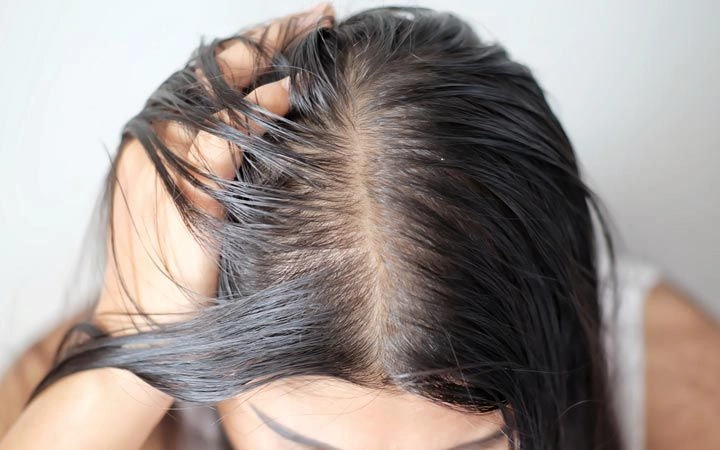
The sunny season brings with it a less pleasant reality: oily roots, hair that falls out all the time, and a scalp that always feels dirty. Here is the whole, science-based answer to why summer is bad for your scalp and what you can do about it right now.
You shower every morning. You do a good job of washing your hair. But by noon, your hair appears like it hasn’t been washed in three days. Your roots are heavy, your scalp is itchy, and hair is falling out quickly on your pillow, comb, and shower drain. If this feeling happens a lot between May and June as the temperature gets hotter every year, you’re not imagining things. This is a phenomenon that doctors know about. There is a clear scientific reason for it and a very helpful way to fix it.
During the summer, more individuals search for “oily scalp treatment,” “hair fall in summer,” and “how to minimize scalp oil.” Dermatologists and trichologists have known for a long time that summer is the worst period for too much sebum, irritated follicles, and accelerated seasonal shedding. The first thing you need to do to return your scalp back to being clean and healthy is to learn how this works.
—# The Science Behind Too Much Sebum in the Summer
The sebaceous glands are the true problem, and they are literally at the bottom of it. These little structures that release oil are located in the skin at the base of each hair follicle. They are very sensitive to changes in hormones and temperature.
Sebum is excellent for you in small amounts. It protects the scalp from items in the environment that can injure it, keeps moisture in, and gives the hair a natural shine. The scalp possesses between 400 and 900 sebaceous glands per square centimeter, which makes it one of the oiliest regions of the body.
But when the temperature outdoors goes up, the body does two things that make things worse. First, when the temperature goes up, the sebaceous glands are told to make more oil right away. This helps keep the scalp cool and moist. Second, sweating a lot in the heat makes the scalp oily and sweaty, which forms a thick, sticky film that blocks hair follicles. The oil and perspiration mix affects the scalp’s pH, throws off the balance of bacteria, and provides the warm, moist habitat that Malassezia globosa and other fungi adore.
Hormonal factors make the problem more worse. Androgens, notably dihydrotestosterone (DHT), are known to directly make sebaceous glands work harder. In the summer, heat stress and physical activity both increase worse, which might cause the body to make more androgens for a short time. This generates a feedback loop that stops the body from generating too much oil. This is why people with naturally oily or combination scalps often have a hard time in the summer.
The impacts are more than just how things seem. When too much perspiration and sebum build up around the hair follicle, dirt, dead skin cells, and microbiological debris are drawn to it. This buildup causes small inflammations at the base of the follicles, makes the hair strands less able to cling on to the scalp, and can even make the follicles shed hair too soon in the hair development cycle. This is known as telogen effluvium. A study published in the British Journal of Dermatology indicated that hair loss is most common in the summer and fall. Longer daylight hours cause higher humidity and reduced melatonin production, which is why this happens.# The Myth of Washing Every Day—What Science Really Says
One of the most common and unsuccessful ways to cope with oily summer hair is to wash it every day. It makes sense: more oil means more washing. In real life, the opposite often happens.
Shampoos that are extremely powerful, especially those containing sulfates and a lot of surfactants, take away all of the natural oils from the scalp. This is a message to the sebaceous glands in the scalp that the surface is too dry, so they generate even more oil to make up for it. This “rebound effect” leaves a lot of people caught in a cycle of washing every day, which makes the problem they are trying to cure worse.
Most people with oily scalps in the summer should wash their hair every two to three days using a clarifying or scalp-balancing shampoo developed for that purpose. This is far better than washing it every day. People who have oily hair may wash it every other day, but the kind of shampoo they use is more essential than how often they wash it.
A lightweight, non-drying dry shampoo applied at night can soak up surplus oil while you sleep without hurting your scalp or causing product buildup. This is a great way to rejuvenate your hair between washes.
—# How to Choose the Right Shampoo: What to Look For and What to Avoid
There are a lot of different shampoos to pick from, but if you have an oily scalp in the summer, the ingredients are the most crucial item to look at.
**Look for these active ingredients:
– **Salicylic acid** is a beta-hydroxy acid that gets rid of the top layer of skin on the scalp, clears out hair follicles, and stops additional oil from building up. This is really helpful for folks who often have both oily hair and dandruff.
– **Zinc pyrithione (ZPT)** is a well-studied molecule that fights bacteria and fungi. It keeps Malassezia fungus in check and decreases inflammation. Clinical studies have shown that using ZPT shampoo on a regular basis can help hair grow.
– **Niacinamide** — Controls how much oil the follicles create and calms inflammation on the scalp.
– **Tea tree oil**: It contains antimicrobial properties that help keep the scalp from getting too dry while also killing pathogens. A randomized evaluation of a green tea extract hair tonic demonstrated that using it every day for 28 days made the scalp less oily.
– **Capryloyl glycine** — A gentle amino acid derivative that helps keep sebum levels in check.
**If your scalp is greasy, you shouldn’t use these things:**
– **Sodium lauryl sulfate (SLS) and sodium laureth sulfate (SLES)** are strong surfactants that take too much oil off the scalp and make it create more oil.
– **Heavy silicones (dimethicone, cyclopentasiloxane)** — These make a coating that makes hair feel smooth at first, but over time, they pile up and make the hair heavier, which makes follicle congestion worse.
– **Mineral oils and petroleum-based ingredients**—These heavy emollients are not needed for a scalp that is already oily and merely make the buildup worse.
You should also only put conditioner on the ends and middle of your hair, not your scalp. This is because even light conditioners can make the roots greasy if they are too close to the epidermis.# The Apple Cider Vinegar Rinse: A Simple Fix That Works
There is an actual biological reason why people talk about apple cider vinegar (ACV) when it comes to hair care.The pH of the scalp is between 4.5 and 5.5, which suggests it is a little acidic. Sweat, alkaline shampoos, and hard water can make this area even more acidic. This causes the skin to create more sebum, which helps bad germs grow.
**How to use it correctly:**
1. Combine one to two tablespoons of raw, unfiltered apple cider vinegar with one cup (approximately 240 ml) of cool water. Don’t use it straight up; pure acetic acid can damage or irritate the skin on your scalp.
2. After washing your hair and rinsing it well, pour the diluted ACV rinse over your scalp and work it through to the ends of your hair.
3. Wait two to three minutes, then rinse it all off with cool water.
If your scalp is sensitive or your hair has been dyed, you should start with a weaker dilution (one teaspoon per cup of water) before moving on to a stronger one.
—# Haircuts that keep your hair safe and your scalp from sweating and falling off
In the summer, it’s necessary to take care of your hair, but people often forget to do so. Some hairstyles keep sweat from piling up on the scalp and put less stress on hair follicles, which makes hair fall out.
**Best summer hairstyles for dealing with an oily scalp:**
– **Loose braids** — These keep the hair off the face and neck, which stops sweat from getting to the scalp and stops breaking from friction.
– **Low or high buns** — These are useful for protecting hair from trapping heat on the neck and scalp, but don’t tie them too tightly or you could injure the hairline follicles.
– **Breathable updos**: These styles let air circulate over the scalp and stop humidity from building up, which is one of the main things that makes sebum production go up.
– **Caps and scarves with silk or satin linings** — These keep the scalp and hair from being directly exposed to UV rays when worn outside. UV rays can damage the hair shaft and impair melatonin production, which is a known cause of seasonal shedding.
Stay away from tight hairstyles like cornrows and ponytails that you wear too regularly. This is because they place too much stress on hair follicles, which can make hair loss from traction worse, especially when the scalp is already inflamed from too much oil.# Food, Water, and Other Things That Affect Your Life
No topical treatment works by itself. The scalp is skin, and the same elements that affect the health of the skin—like what you eat, how much water you drink, and how well you handle stress—also affect how much sebum is created.
Eating a lot of foods with a high glycemic index, like refined sweets, processed carbohydrates, and fried foods, can make your sebaceous glands work harder. A study that looked at the eating habits of Korean people found that those who ate more vegetables, lean meats, and healthy fats had far less oily scalp. People who ate a lot of refined carbs and sugars, on the other hand, had more sebum.
Also, it’s really important to drink enough water. When your skin loses water, your body tries to make up for it by creating more oil. Drinking eight to ten glasses of water a day in the summer helps keep the scalp’s moisture level steady and gives the sebaceous glands a break so they don’t have to work as hard.
Not obtaining enough vitamin B, notably B2, B6, and B12, has also been linked to making too much oil. If your scalp is oily and your hair is falling out, you may not be getting enough of the right nutrients. Adding eggs, beans, leafy greens, and whole grains to your summer diet will help.When to See a Dermatologist
It’s normal for hair to get greasy and fall out a little bit at certain periods of the year, but if you notice any of these signs, you should consult a doctor. You might have seborrheic dermatitis, androgenetic alopecia, or a fungal scalp infection if you have persistent inflammation on your scalp, bald spots that are easy to notice, intense itching that comes with peeling even with routine treatment, or hair loss of more than 100 strands each day. All of these problems require medical care that is special to them.
A good dermatologist or trichologist can look at your scalp, give you stronger antifungal shampoos or corticosteroid solutions than what you can buy at the store, and help you follow treatment plans that are based on research and are specific to your scalp problem.# Conclusion: A Smarter Way to Care for Your Scalp in the Summer
Biology explains the link between summer heat and hair loss on an oily scalp. The heat changes the pH of the scalp, the perspiration and sebum interact, and the seasons vary the hair growth cycle. By knowing about this, people can stop washing their hair every day and start taking better care of their scalps.
The answer is to use a combination of high-quality shampoos, targeted active ingredients, natural treatments such diluted apple cider vinegar, protective hairstyles, and healthy eating. These treatments not only get rid of the greasy and falling hair on the surface, but they also work at the follicular level to make the scalp healthier and stronger, no matter what the temperature is outside.
During the summer, you don’t have to bother about your hair. You can have a clean, healthy scalp if you know what to do and follow the necessary steps.
Why your scalp gets greasy every summer and how to fix it for good