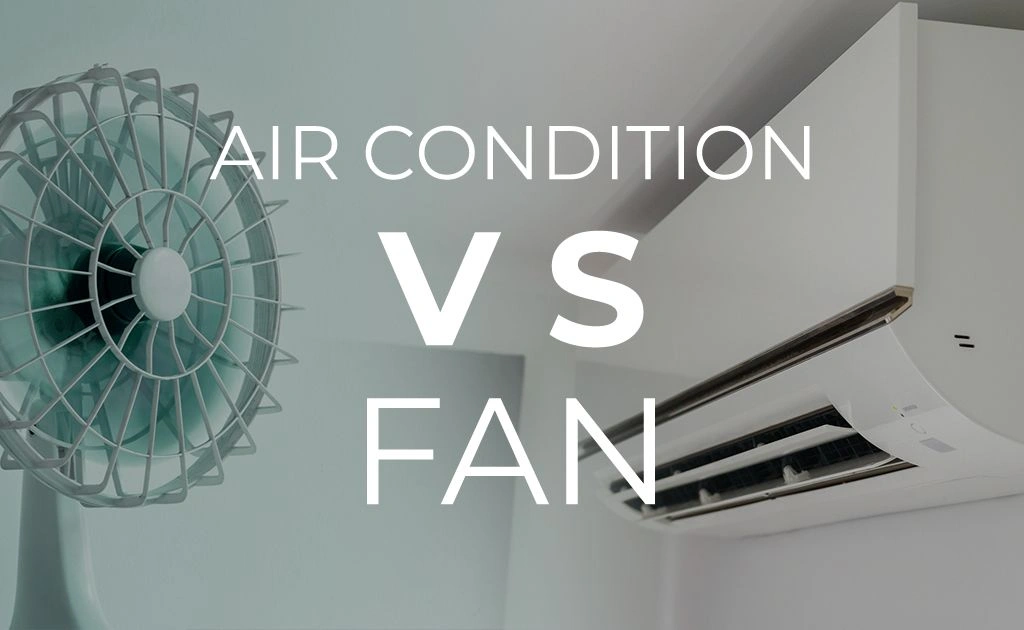
Parts of India are already reaching 40–45 degrees Celsius in the summer of 2026, making it hard to sleep comfortably and costing a lot of money. It’s no longer just “kahan zyada thand lagta hai?” but also “kis se bill ka zyada zor padega?” AC, cooler, or fan—each one has a different balance of comfort and cost. We figure out the running cost per hour, plan for 90 nights of use, and choose the optimal appliance for your city, budget, and humidity using accurate power consumption numbers and 2026-style electricity rates.
Cost per hour: Fan (₹0.50), Cooler (₹2), AC (₹8–₹12)
To keep things realistic, let’s say that the average power rate for a household in India in 2026 is ₹8 per unit (kWh), which is in the middle to high range for most cities.
The Ceiling Fan is the King of Budget
A regular ceiling fan uses between 40 and 75 watts, but new BLDC models can use as little as 25 to 35 watts.
Take a 60-W fan running at a medium speed to do the math.
Hourly use:
0.06 kW times 1 hour equals 0.06 units.
The cost per hour is between ₹0.48 and ₹0.50 at ₹8 per unit.
Fan: About ₹0.50 an hour.
Fans are the cheapest alternative when it comes to electricity costs. They are generally four times cheaper than a cooler and 16 to 24 times cheaper than an AC on an hourly basis.
The Dry-Heat Specialist: Desert / Evaporative Cooler
A normal desert cooler with a capacity of 70 liters uses 150 to 200 watts. Using 180 W as a middle value gives a good point of reference.
Usage per hour:
0.18 kW × 1 hour = 0.18 units.
Price per hour:
0.18 times 8 equals ₹1.44.
Many practical instructions round this up to ₹2 per hour when you take into account pumping, occasional higher-speed use, and long-run inefficiencies.
Cost of cooler: about ₹2 per hour.
Coolers are in the middle: they cost a lot more than fans but a lot less than air conditioners for most Indians.
Split/Window AC: The Comfort Powerhouse
A 1-ton inverter AC usually uses 1.0–1.2 units of electricity per hour when it’s not too busy, but a 1.5-ton inverter can use 1.5–2.0 units of electricity per hour when it’s heated.
That means it costs between ₹8 and ₹16 per hour.
A lot of cost-per-hour calculators from 2026 utilize a smaller range of ₹8–₹12 per hour for inverter ACs operated at night. This is a better way to show how they are actually used than peak theoretical demand.
AC: between ₹8 to ₹12 an hour.
Put together:
Fan: ₹0.50 an hour
Cooler: ₹2 per hour
AC: ₹8–₹12 an hour
A fan is the clear victor when it comes to running costs per hour. An AC unit, on the other hand, is the most expensive but also the best at keeping the temperature steady.
How well each device cools down at different temperatures
The price isn’t the only thing that matters; the real test is whether the equipment can make the room comfortable.
Fan: Comfort, Not a Drop in Temperature
Ceiling fans don’t make the room cooler; they just make it feel cooler by blowing air over the skin.
A fan can make the body feel 2–3°C cooler when the temperature is between 35 and 38°C and the humidity is moderate. This is enough for light sleep or casual relaxation.
The fan only helps a little when the temperature is above 40°C, especially in big rooms or when it’s hottest during the day.
Fans work well in places with mild to moderate weather, like summers in Bangalore, or as background circulation in areas with air conditioning.
Desert Cooler: Only Works When It’s Dry
Desert coolers use evaporative cooling, which means that dry, hot air travels through wet pads and the water evaporates, which cools the air.
A decent cooler can lower the temperature of a room by 10 to 15 degrees Celsius, bringing it into a comfortable range of 25 to 30 degrees Celsius when the climate is hot and dry (40 to 45 degrees Celsius, humidity less than 40%).
When the humidity is high (around 60–70%), the cooling effect diminishes to 2–3°C, and the room feels sticky and damp instead of chilly.
So, coolers work best in northwestern and central India (Delhi, Jaipur, Ahmedabad, Nagpur, Lucknow) from April to June. However, they don’t work very well in coastal or monsoon circumstances.
Air Conditioning: Works in Any Weather and Any Humidity
Depending on the insulation, room size, and load, a 1–1.5 ton inverter AC may normally lower the temperature inside by 15–25°C compared to the outside.
An air conditioner can cool the bedroom down to 22–24°C when it’s 45°C and 30% humidity, but a cooler might only be able to cool it down to 30–33°C.
In humid coastal cities like Mumbai, Chennai, and Kolkata, an AC also removes moisture from the air, making it less sticky and less likely to make you feel like you’re “sweating on the bed.” Fans and coolers can’t do this.
When it’s really hot and humid, AC is pretty much the only way to get actual comfort.
Cost in the Real World for 90 Days at 8 Hours a Night
To make the statistics feel real, think about a real-life situation: keeping a bedroom cool for 8 hours at night for 90 summer days (around 3 months of the hottest weather).
What we think:
Cost of electricity: ₹8 per unit.
Fan: 60 watts
180 W for the cooler
AC: 1.5 units per hour (the average inverter AC in the summer).
Fan (90 nights, 8 hours a night)
Consumption per hour: 0.06 kWh
Every day:
0.06 × 8 = 0.48 kWh
Total for 90 nights:
0.48 × 90 = 43.2 kWh
Price:
43.2 times 8 equals ₹345.60.
The total cost for 90 nights of fans is about ₹350.
Cooler (same 8 hours a night for 90 nights)
0.18 kWh per hour
Every day:
0.18 times 8 equals 1.44 kWh.
The total for 90 nights is:
1.44 times 90 equals 129.6 kWh.
Price:
129.6 times 8 equals ₹1,036.80.
The total cost of the cooler for 90 nights is about ₹1,040.
AC (8 hours a night for 90 nights)
Assumed draw: 1.5 kilowatt hours per hour
Every day:
1.5 × 8 = 12 kWh 1.5 × 8 = 12 kWh
The total for 90 nights is:
1,080 kWh = 12 × 90.
Price:
1,080 times 8 equals ₹8,640.
Total cost of the AC for 90 nights is about ₹8,600 to ₹9,000.
Looking at these:
Fan: 350 rupees
Cooler: ₹1,040
AC: ₹8,600+
An air conditioner can cost more than eight times as much as a cooler and twenty-five times as much as a fan in electricity alone over a single 90-day summer. This doesn’t include installation, EMI, or maintenance costs.
City, Budget, and Humidity Verdict
You can make a basic “choice matrix” for different parts of India using these hourly and 90-night numbers.
Delhi, Jaipur, Ahmedabad, Nagpur, and Lucknow are hot and dry cities from April to June.
Desert cooler is the best first choice.
Why:
Temperatures are usually between 40 and 45 degrees Celsius, and the humidity is usually below 40%, which is perfect for evaporative cooling.
A decent cooler can lower the temperature in a room by 10 to 15 degrees Celsius, making it feel almost as comfortable as air conditioning at a quarter of the expense.
Another option is to use a 1–1.5 ton inverter AC during the monsoon months (July to September), when the humidity is high and coolers don’t work as well.
Plan:
Get a 3–5 star inverter AC (₹28,000–₹35,000) and a nice cooler (₹8,000–₹15,000).
Use the cooler for six months and the air conditioner for three months. This arrangement can cut the expense of running the air conditioner alone by about 40–50% each year.
Mumbai, Chennai, Kolkata, Goa, and Kerala are hot and humid coastal cities.
The best choice is an inverter AC with a ceiling fan.
Why:
The humidity is usually above 70–80%, and coolers don’t do much to lower the temperature and add moisture, which makes the space feel stickier.
Fans move air around, but they don’t do a good job of controlling temperature or humidity.
Smart way to use:
At night, set the air conditioning to 26°C and turn on a ceiling fan. This will feel like 23–24°C and will save you 25–30% on your electricity bill.
Plan:
Put a 5-star inverter AC with a 1.5 ton capacity in the main bedroom.
During the day, use ceiling fans in the living room.
In coastal areas, don’t use desert coolers at all.
Cities with a moderate climate are Bangalore, Pune, sections of Hyderabad, and Dehradun.
Ceiling fan (preferably BLDC) is the best first choice.
Why:
Most of the year, summer temperatures stay between 28 and 35 degrees Celsius.
For 10 to 11 months of good sleep, fans and cross-ventilation are all you need.
Use the air conditioner only as a “top-up” during the hottest months of the year.
Plan:
Buy BLDC fans that use 25–35 W instead of 75 W. Each fan costs ₹3,000–₹5,000. This will cut your electricity bill even further.
If you need to, only get one air conditioner for the main bedroom. Don’t air-condition the whole house all the time.
The Best Inverter ACs Under ₹35,000 in 2026
There are now many inverter and 5-star models available from manufacturers like LG, Godrej, Blue Star, Voltas, Whirlpool, and Panasonic for readers who still require an AC but want to keep the upfront cost around ₹35,000.
In this price range, typical 2026 products include:
1-ton, 5-star inverter ACs are good for small bedrooms (100–120 sq. ft.).
1.5-ton 3-star inverter air conditioners that cool well but use a little more energy than earlier non-inverter machines.
Things to look for (2026 standards):
BEE 5-star rating means you can save the most money on power.
Compressor that is inverter-grade for quieter running and less load spikes.
Dehumidification modes and sleep timers help you use less energy at night and feel more comfortable.
Also, look at the service network in your location when you make your choice. If replacement parts are hard to find or there aren’t many technicians, inverter ACs can be expensive to fix.
Which is cheaper to run in 2026: an air conditioner, a cooler, or a fan? A cost breakdown for every Indian city based on data