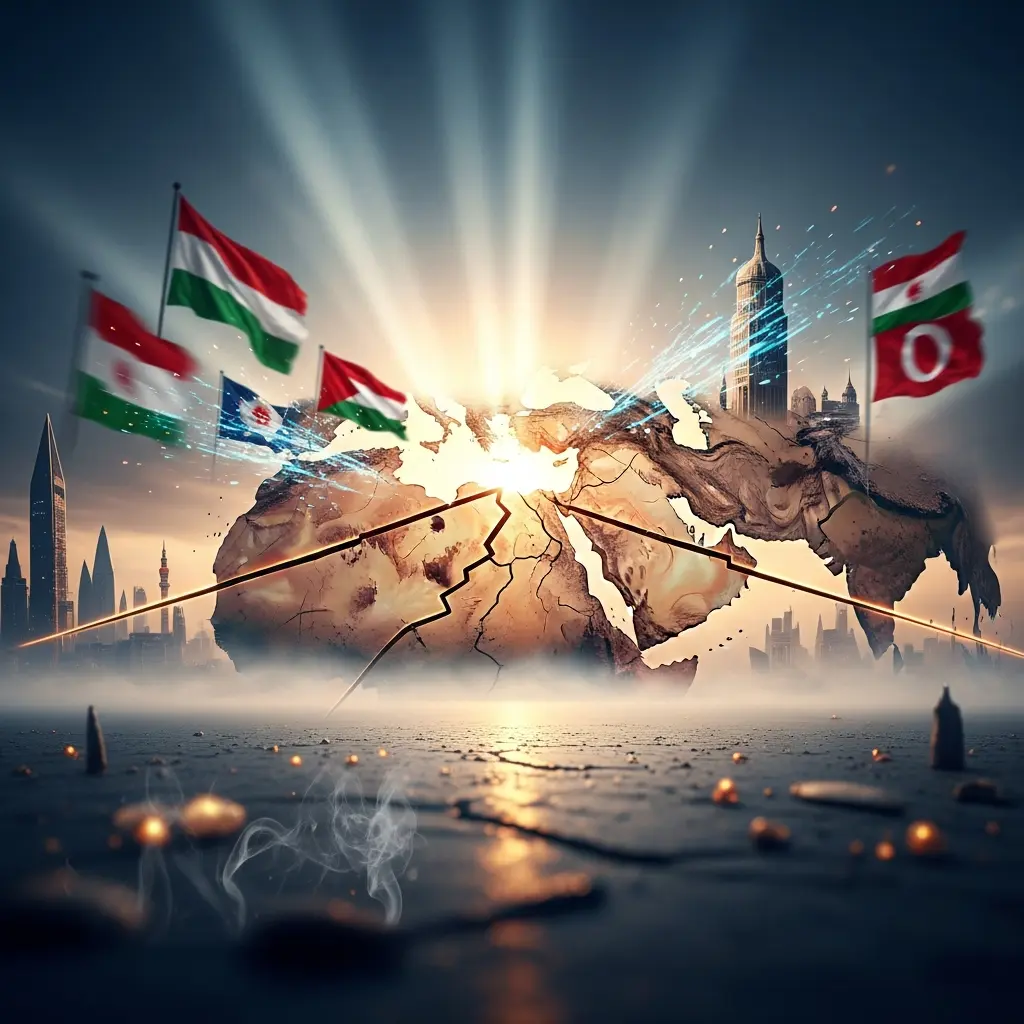
From missile strikes to oil route disruptions, the widening conflict is no longer just a regional story — it is a crisis the entire world is watching with growing unease.
through rhetoric, through miscalculations that compound on each other until the point of no return is somewhere in the rearview mirror. The Middle East conflict that has been intensifying over recent weeks carries all the hallmarks of that slow, terrible escalation. What began as a contained exchange of fire between regional powers has grown into something more complex, more dangerous, and far more consequential — not just for those living in the region, but for a world that depends on its stability in more ways than most people pause to consider.
How the conflict has evolved
The current crisis has its roots in longstanding tensions that have periodically flared for decades. But what makes this moment feel different is the pace and intensity of the military responses. Iran-linked groups have significantly increased their missile strikes, targeting both military and strategic infrastructure. Israel, in turn, has conducted a series of air operations aimed at degrading those capabilities. Each round of attacks has invited a counter-response, and the cycle shows little sign of breaking. What was once described by analysts as a “shadow war” has now moved firmly into the open, with real consequences playing out in real time.
“When regional powers stop signaling and start striking with this kind of frequency, the risk of a miscalculation pulling in a third actor becomes very real, very fast.”
The specter of a broader regional war looms large.
Right now, the most pressing worry echoing through diplomatic channels is the potential for a spillover effect. The Middle East has a long history of conflicts that don’t respect national boundaries. Countries in the vicinity, some already teetering on the brink, others hosting substantial foreign military forces, are closely monitoring the situation, their reactions a blend of apprehension and strategic maneuvering.
A conflict that draws in Lebanon, Syria, Iraq, or Yemen in a more direct capacity could transform what is currently a serious but bounded crisis into something far harder to manage. Global leaders have been vocal in urging restraint, but words carry limited weight when missiles are in the air.
Oil routes, markets, and the global economy
For much of the world, the Middle East conflict registers not through the news of airstrikes but through something more immediate: the price of fuel and the tremors moving through financial markets. The region sits astride some of the most critical oil supply routes on the planet. A sustained blockage of the Strait of Hormuz, or nearby shipping routes, would likely cause more than just a hiccup in trade for the planet’s largest economies. It could trigger a surge in energy prices, possibly throwing already unstable global markets into disarray. Oil prices, which are already prone to fluctuation, have been responding to the escalating tensions, and traders are preparing for a downward trend. For nations reliant on imports from the Gulf, this situation isn’t just a matter of diplomacy; it’s a direct hit to the budgets of their citizens.
Diplomacy is happening behind the scenes.
While public calls for calm are being made, there’s a lot of quiet diplomatic maneuvering going on. Mediators from various countries, along with representatives from international organizations, are reportedly talking to key players on all sides. But the difference between what each side wants and what they’re willing to give up is still significant.
Trust, once eroded by this level of direct military exchange, is extraordinarily difficult to rebuild quickly. The absence of any major diplomatic breakthrough is not a sign that efforts have been abandoned — it is a reflection of just how entrenched positions have become, and how high the stakes feel to those at the center of the conflict.
What the world is watching for
In the days and weeks ahead, several flashpoints will determine whether the Middle East conflict intensifies further or finds a path toward de-escalation. The actions of the world’s major powers, especially the U.S., Russia, and China, will dictate the diplomatic landscape. Iran-affiliated groups’ activities, specifically the continuation or cessation of their attacks, will offer clues about the effectiveness of any secret negotiations. Finally, the well-being of regional civilian populations, already suffering greatly, will provide the clearest, most human perspective on the crisis’s trajectory.
The global community is not short of concern — what it needs urgently is coordination, and the courage of leadership to translate words into meaningful action before the window for it narrows further.