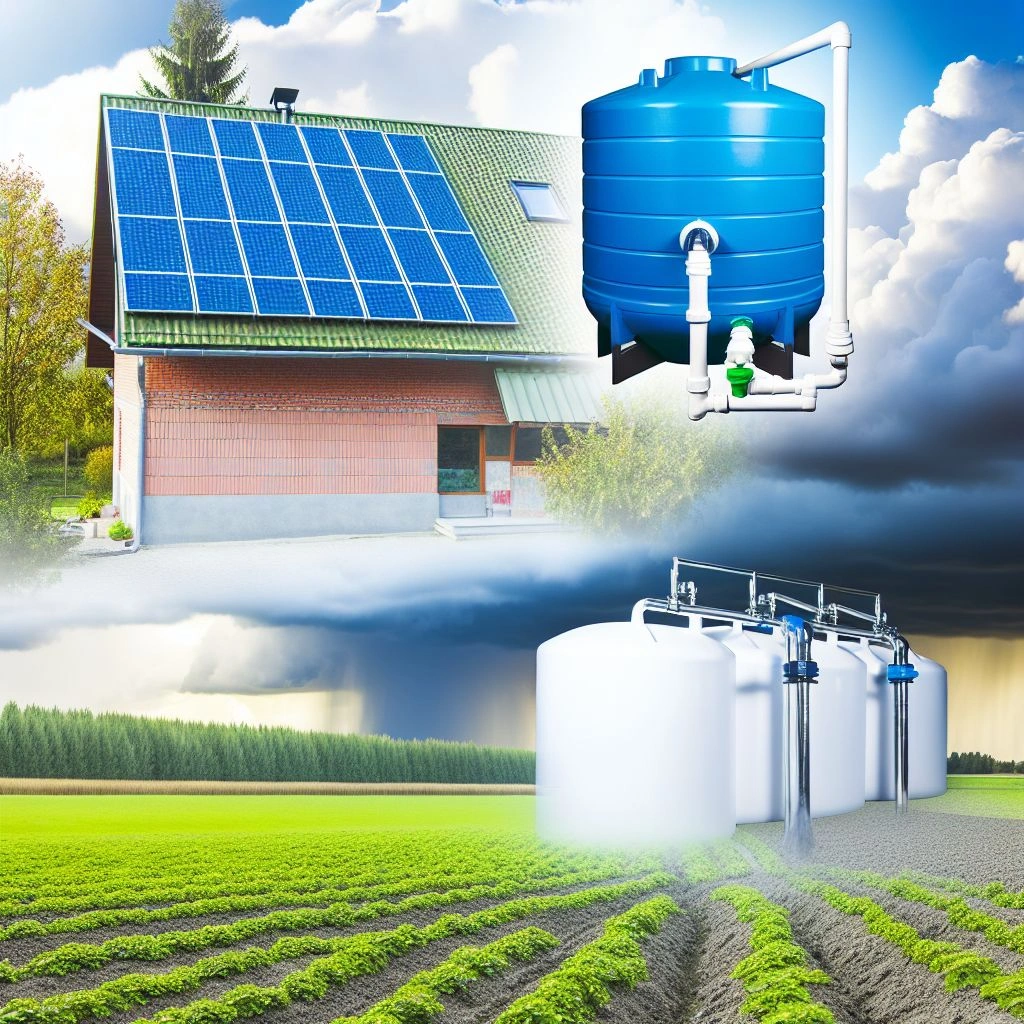
Collecting rainwater at home is becoming more popular as a simple but effective approach to deal with India’s growing water crisis, especially as the monsoons end and the summer droughts get worse. Imagine if a single huge rain shower on your roof could give you up to 10,000 gallons of clean water. That will last a family of four for months.Pune, Mumbai, and Delhi are running out of water quickly, so collecting rainwater at home is a quick answer that saves money and benefits the environment. This article tells you how to do it today, including how much it will cost to seek support from the government. This way, households can make sure they have enough water before the next dry spell.
The Math Behind Your Rooftop Goldmine: How Much Rain Can You Really Catch?
There is a chance that every roof could be a reservoir. The first thing you need to do to collect rainwater at home is to find out how much you can gather. You may calculate this by doing a basic math problem that looks at how much rain falls, how big your roof is, and how well it drains.
The usual approach to find out how much rainwater you can gather is
Water Collected (liters) = Rainfall (mm) times Roof Area (sq m) times 1 times Runoff Coefficient: Rainfall (mm) × Roof Area (sq m) × 1 × Runoff Coefficient = Collected Water (liters)
You may transform cubic meters into liters by remembering that 1 mm of rain over 1 sq m makes 1 liter. The runoff coefficient, which is normally between 0.8 and 0.9 for sloped concrete or tile roofs, takes into account losses and evaporation.
An Example Calculation for a Normal Indian Home:
For example, the roof is only 100 square meters, which is normal for bungalows or apartments in Pune or Bengaluru.
During the monsoon, it rains a lot: 100 mm (around 10 cm, which is average for one Pune downpour in July).
0.85 is the runoff coefficient.
8,500 liters is equal to 100×100×0.85 liters.
A 200 square meter roof can hold more than 25,000 liters of water during a 150 mm rain event if you build it bigger. That would fill a 10,000-liter tank twice. In places that get a lot of rain, like Mumbai’s Konkan district (2,500 mm per year on average), one season might bring in more than 100,000 liters of water for each home.
These data indicate how crucial it is to collect rainwater from roofs. The National Water Policy says that India’s average yearly rainfall is more than 1,100 mm, yet 80% of it falls into the seas since it isn’t effectively absorbed. A number of city rooftops might capture 20–30% of the city’s water needs.
A Rs 5,000 do-it-yourself system for setting up your basic rooftop harvesting system
You don’t need to be an engineer to collect rainwater at home. You can set up a modest DIY system in a weekend for roughly Rs 5,000. This is a step-by-step approach that uses things that are easy to find:
PVC pipes (50 meters for Rs 1,000) along the edges of the roof to guide water into the gutters and downspouts. To let gravity flow, make them slope 1:500.
First Flush Device: A simple PVC diverter (Rs 500) that gets rid of the first dirty water that comes off the roof.
Filter Chamber: A trench that is 1×1 meter wide and has layers of gravel, sand, and charcoal in it that purify the water.
Storage Tank: Connect to a tank that can hold between 5,000 and 10,000 liters (more on options below).
Overflow Pipe: Move surplus water to a garden or a recharge pit.
If you do it yourself, it would cost you between Rs 4,000 and 5,000, while hiring a pro will cost you Rs 20,000 or more. What tools do you need? You need a drill, some sealant, and some basic plumbing knowledge. Part of maintenance is cleaning the filters and making the screens safe from mosquitoes.
This device captures 70 to 90 percent of clean water, which may be utilized for gardening, flushing, and even drinking after it has been treated. It makes sure there is a supply all year long by turning “wasted” rain into a resource during Pune’s unpredictable monsoons.
The good and bad things about underground tanks and surface tanks, as well as their costs
The most significant aspect of systems for collecting rainwater is storage. Depending on your needs, budget, and space, you can pick between tanks that are buried underground or tanks that are above ground. Since they have to be dug up, underground solutions cost between Rs 50,000 and Rs 80,000. However, they conserve space, keep water colder to inhibit algae from forming, and are better at withstanding earthquakes. Some of the downsides are that digging costs a lot (more than Rs 20,000 in rocky areas) and inspections are harder. They operate well in cities or places where the water table is high, like Chennai.
It costs between Rs 20,000 and 40,000 to install and maintain surface tanks made of plastic or ferrocement. People in Pune or Bengaluru who desire to build their own homes on a budget will love them. What are the bad things? They take up space in the yard, grow heated in the summer and evaporate, and only last 15 to 25 years, which is shorter than the 20 to 30 years that underground lasts. Companies like Sintex sell a 5,000 L HDPE type for Rs 15,000.
Begin with a surface tank and then improve it utilizing a hybrid technique. To make the water safe to drink, both need UV filters that cost Rs 2,000. BIS asserts that these filters are safe because they get rid of 99% of germs.
Government subsidies: A boost for your rainwater collection project in every state
India is encouraging people to collect rainwater at home by offering huge rewards to make it happen. The Jal Shakti Ministry’s Jal Jeevan Mission gives out money, and states contribute back 30% to 75% of that money. It has been necessary in Tamil Nadu since 2003, and it is now expanding to other parts of the country.
Highlights of State-Wise Subsidies (Updates for 2026):
Maharashtra (Pune Region): Up to 50% (Rs 25,000 max) through Maharashtra Jeevan Pradhikaran. You can apply at mahajeewanpradhikaran.maharashtra.gov.in. Tamil Nadu: 75% (Rs 40,000 for 10,000 L) under the Rainwater Harvesting Scheme, with Chennai getting first dibs.
Karnataka (Bengaluru): 40% (Rs 20,000 limit) through BWSSB.org.
Gujarat: 50% (Rs 30,000) from the Gujarat Water Supply Board.
DJB charges 30–50% (Rs 15,000–30,000) in Delhi/NCR.
For homes beside the sea in Kerala and Goa, 60% of the time.
In dry areas of Rajasthan and Haryana, 50–70% (up to Rs 50,000) of the cost.
The National AMRUT 2.0 gives you an extra Rs 10,000 to 20,000. In 2025, 2 billion gallons of water went to 5 lakh residences. It can take anything from 15 to 30 days to secure authorization through portals or city halls.
Quality, upkeep, and real-life success stories about how to solve problems
There are challenges with collecting rainwater at home, but there are also many solutions to fix them. How clean is the water? Check the pH (it should be between 6.5 and 8.5) and add chlorine or RO if you need to. Are roofs made of asbestos cause pollution? Instead, choose safer options.
Things to perform for maintenance:
Clean the gutters before the monsoon.
Every three months, check the filters.
Put covers on tanks to keep them from breeding.
Success stories are inspiring: 200 families in Pune’s Aundh neighborhood cut their costs by 40%. The project in Bengaluru collected 50 million liters of water, which brought lakes back to life. Farmers in Rajasthan got 25% more crops.
Dr. Ligy Philip from IIT Madras and other experts concur that “rooftop capture is vital amid shorter monsoons.”
The Big Picture: Why Collecting Rainwater Is More Important Than Ever
India is in jeopardy because by 2030, demand would be 50% higher than supply (NITI Aayog). Collecting rainwater at home offers several advantages. It conserves energy, lowers costs—potentially saving you between Rs 2,000 and Rs 5,000 annually—and mitigates flooding, reducing it by 20% to 30%.
In short, take action to safeguard your water supply before the monsoon concludes.
Rainwater harvesting transforms rooftops into vital resources: 10,000 liters of water per rainfall for Rs 5,000, coupled with state subsidies, such as Maharashtra’s 50% assistance, and efficient storage solutions. Act now to prepare for the end of the monsoon season.
Rainwater Harvesting at Home: Collect 10,000 Liters of Water from One Rain Shower on Your Roof and Help Solve the Water Crisis