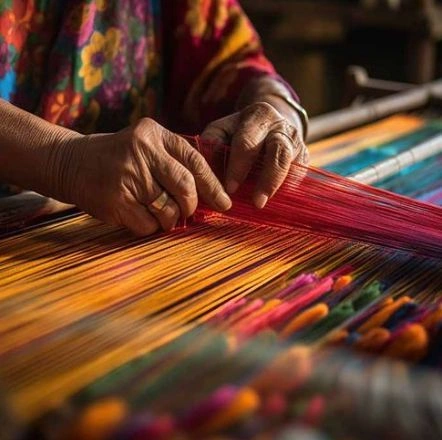
Fast fashion is literally making the world hotter. Aur India ke paas sabse achhe sustainable alternatives hain. As summers increase hotter because of climate change, Indian textiles like khadi and handlooms are the ideal summer fashion choices. They let air in, are good for the environment, and are a big part of cultural pride.
The Khadi Comeback: The Best Weather Fabric That Science and Story Can Find
Khadi is a hand-spun and hand-woven cotton fabric that became popular during India’s war for independence. It is making a great comeback as the best choice for summer garments that are good for the environment. According to reports, Mahatma Gandhi said that khadi was a sign of liberation. Today, it’s coming back because anecdotes and research that have stood the test of time suggest it’s the best fabric for hot weather.
From a scientific point of view, khadi is better because of its unique qualities. The hand-spinning approach makes yarns that aren’t perfectly round, which allows air flow through them easier and helps them dry up. This is great for summers in India, when the temperature might reach 40°C or more. In 2023, the Indian Institute of Technology (IIT) Delhi completed a study that showed that khadi fabrics can make your body temperature drop by 2–3°C compared to synthetic blends. This is because khadi fabrics don’t keep heat in well and let it out rapidly. Khadi breaks down completely and doesn’t need much water to make—about 70% less than regular cotton. When you wash polyester, it takes in heat and generates small plastic particles.
Khadi is a more appealing sustainable product because of its past. It has come back to life thanks to the Khadi and Village Industries Commission (KVIC) and other government schemes. Since 2020, production has gone grown by 30% every year, and it now employs more than 1.5 million rural crafters, most of whom are women. Brands like Fabindia and Khadi Gramodyog are blending old and new by using natural indigo and madder roots to dye khadi in bright summer colors. This comeback fits with the global trend toward eco-friendly fashion. People want “slow fashion” instead of fast fashion stores like Zara and H&M, which are responsible for 10% of the world’s carbon emissions.
Khadi is more than simply a piece of cloth; it’s a choice that helps craftspeople make money and keeps the person and the world cool.
Handloom Fabrics Region Guide: Beautiful, light fabrics manufactured in the middle of India
We have a lot of summer garments that are excellent for the environment because India has a long tradition of handloom weaving. Everything made in each area is pleasant, lasts a long time, and is good for the environment. These fabrics were made on traditional looms that didn’t need power. They are “wear Indian, wear cool” because they keep you cool in the heat.
Chanderi is from the state of Madhya Pradesh: This silk-cotton blend comes from the historic town of Chanderi and is known for being very thin and light. Chanderi sarees and kurtas keep you cool even when it’s really hot outside because they have a thread count that lets air flow through. Artisans use silver threads to construct zari patterns, which means they don’t need as many chemical colors. Production is still small-scale, using methods that have been around for 500 years and creating jobs in the area.
Maheshwari from Maharashtra: Maheshwari cotton-silk sarees are made along the Narmada River in Maheshwar. They feature beautiful patterns and fancy edges. The National Institute of Fashion Technology (NIFT) says that their open structure makes them 20% more breathable than factory-made cotton. This is because it helps the sweat dry up. Growing organic cotton is one way to help the environment. It cuts down on the demand for insecticides by 90%.
This cotton-silk fabric from Kota town in Rajasthan is made in a geometric pattern. It keeps you cool in the desert in the summer. The Central Sheep and Wool Research Institute did tests that showed that the checkered patterns make little air passages that lower the temperature by 4°C. Each Kota Doria saree weighs less than 100 grams and doesn’t need much water to weave. It assists more than 10,000 weavers who are worried that machines will take their jobs.
These regional handlooms not only promote summer fashion that is good for the environment, but they also help biodiversity by using organic materials. According to the Handloom Export Promotion Council’s 2025 report, exports rose by 25% because people living overseas wanted to buy items that were created in a decent way.
Find Hidden Gems While Thrift Shopping for Summer in Indian Cities
In India, eco-friendly summer fashion includes a lot of thrift shopping. It helps people save money by allowing them buy used khadi, Chanderi, and Maheshwari clothes. It also cuts down on waste. Urban charity stores support the idea of a circular economy since fast fashion makes 92 million tons of textile waste every year, and most of it ends up in landfills.
You may find a number of antique handlooms for less than ₹500 at the weekend flea markets in Koregaon Park or the Sarbatana Thrift Store in Pune. There are pop-up charity stores on Bandra Linking Road in Mumbai that sell 1990s summer kurtas with air conditioning for 70% cheaper than new. People from other countries don’t want stuff like real Kota Doria dupattas for ₹200 at the Sarojini Nagar and Janpath markets in Delhi. Environmental enthusiasts with a knack for tech are scouring secondhand shops on Commercial Street in Bengaluru, hunting for Chanderi blouses.
To maximize your chances:
Arrive early to beat the rush and snag the best deals.
Check the labels for the words “natural fiber.” Washing it by hand will make it last longer.
Facebook Marketplace and OLX are two apps that show real stores where you can buy things. Pune’s shops are embracing “zero-waste swaps.”
A 2026 Nielsen survey showed that Generation Z is particularly drawn to this approach, with a 40% preference for second-hand items, largely because of the stories they represent.
The Instagram trend #ThriftedSustainable is helping to popularize this aesthetic, which aligns with the “look Indian, wear trendy” ethos.
Cost-Per-Wear: Handloom vs. Fast Fashion
The cost-per-wear (CPW) calculation truly illuminates the financial implications of choosing sustainable summer apparel.
It’s calculated by taking the total price and dividing it by the number of times you actually wear the item before discarding it.
Fast fashion sells t-shirts for ₹300, but khadi and other handlooms are a better deal. If you wear a polyester kurta 20 times, it will only last that long. That implies it costs ₹25 for each wear. A khadi kurta, on the other hand, costs ₹1,200 and may be worn more than 150 times for just ₹8 each time. A new Chanderi saree costs ₹3,000 and lasts for more than 200 times, or ₹15 CPW. A ₹300 Maheshwari dupatta (₹3 CPW) or a ₹150 Kota Doria scarf (₹1.9 CPW) that you acquired at a thrift store is superior than the others.
The 2025 Textile Sustainability Index claims that handlooms endure 5 to 7 times longer since their weaves are strong and don’t fade or pill. When you consider about upkeep—handlooms need less care but more replacements—the savings add up. For five summers, a ₹1,200 khadi outfit costs ₹40 every season, whereas a fast fashion piece costs ₹1,500. It decreases emissions by 80%, which shows that summer garments that are good for the environment are inexpensive in the long term.
Support Indian Artisan Brands: Helping Small Heroes Grow
Buying from independent brands helps the growth of eco-friendly summer fashion that combines old and new ideas. First, these companies make things that are good for people, pay their workers fairly, and don’t waste materials.
No Nasties (Ahemdabad): They sell vegan khadi kurtas with block patterns. Their summer line starts at ₹1,500 and is made from repurposed garbage.
Tantri (Kolkata): Maheshwari and Chanderi fusion garments; it assists 200 weavers and lets you make your own summer attire.
The Loom (Bengaluru): Kota Doria loungewear that is GOTS-certified organic and presents stories about slow fashion.
Raw Mango (Mumbai): They manufacture high-end handlooms with intricate cutting, and their khadi lines show great motifs from the area.
Okhai (Gujarat): An artisan co-op that sells clothes like those you find in thrift stores. Self-help groups make summer garments for people of all races that are cheap.
How Khadi and Handlooms Are Changing Eco-Friendly Style: Wear Indian, Wear Cool