This is a crucial strategy, especially considering how easily global supply chains can fracture under the strain of geopolitical tensions.
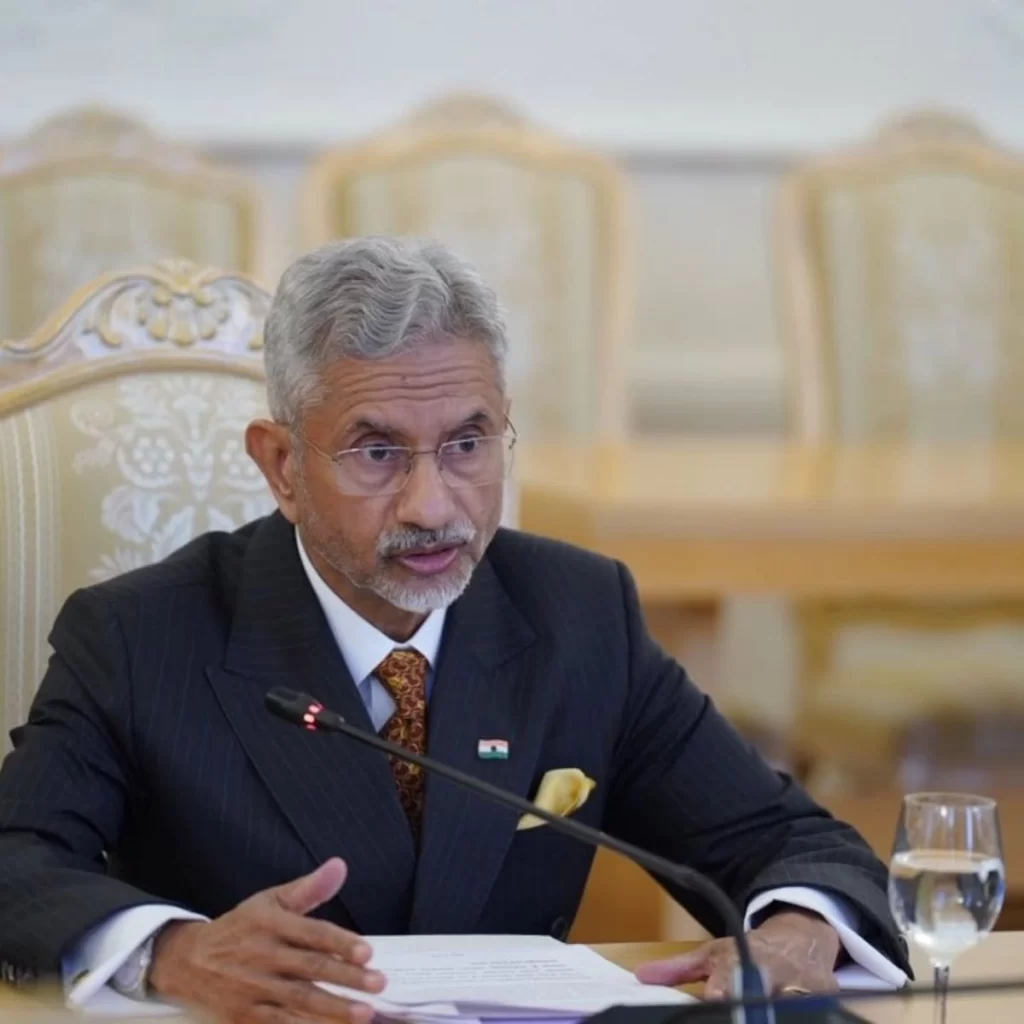
Jaishankar spoke at a recent meeting about how India can’t rely too much on any one country for trade, energy, or important supplies.
Jaishankar’s words carry weight.
They’re a direct reaction to a world that’s breaking apart along lines of conflict and competition. India used to be happy with not being affiliated with any one country, but now it sees a world with many poles where putting all your eggs in one basket can lead to problems. People in Delhi are starting to use the phrase “hedge, de-risk, diversify” more and more. It affects everything from buying semiconductors to importing oil. But can India do it without making important friends angry?
The Wake-Up Call: Why Being Dependent Became Risky
Imagine this: in 2020, factories all around the world stop working because China, the world’s manufacturing center, goes into lockdown. India was hit hard; exports of drugs and car parts stopped, while the price of electronics and APIs (active pharmaceutical ingredients) went through the roof. In 2022, Russia invades Ukraine, which sends energy costs through the roof. India has to rush to get LNG from Qatar and the U.S. just to keep the lights on.
Jaishankar has said this over and over again. In a speech last month, he talked about how India’s oil imports from Russia went from less than 2% before the war to more than 40% by the middle of 2023. This was a risky move that saved billions but raised questions in the West. He remarked bluntly, “We can’t put all our eggs in one basket.” It’s not about breaking relationships; Russia is still a reliable defense partner. It’s about distributing risks.
Tensions around the world make the situation more urgent. Houthi rebels have attacked ships in the Red Sea, which has raised shipping prices on important routes by 30 to 50 percent. This has hurt India’s $1.2 trillion commercial trade. Flare-ups in the Taiwan Strait put chip supplies at risk, which is bad news for India’s burgeoning IT sector. And closer to home, fights with China along the border remind everyone that strategic autonomy is not an option.
The stakes are really high for India. With 1.4 billion people and a burgeoning middle class that wants gadgets, fuel, and food, any one thing going wrong—like relying too much on Chinese rare earths for batteries—could stop progress. Jaishankar’s plan calls for a balanced ledger: to be strong, you need to diversify.
Trade Diversification: Getting Out of the China Shadow
The story of India’s trade is one of boom and bust. China is responsible for 15% of India’s trade. It sends everything from solar panels to parts for smartphones. But that’s a double-edged blade; last year, deficits grew to $100 billion. The drive to diversify is here.
They aim to increase trade by $100 billion by the year 2030. Exports to the United States hit a record $78 billion in 2024–25, driven by demand for jewels, pharmaceuticals, and IT services. Vietnam and Indonesia, both part of the ASEAN bloc, are gaining ground in electronics assembly, challenging China’s previous lead.
The Production Linked Incentive (PLI) program represents a significant shift. It allocates $26 billion across 14 industries, encompassing steel and mobile phones. By 2025, Apple had shifted 10% of its iPhone production to India, employing 50,000 people in Tamil Nadu and Karnataka.
Foxconn and Tata are getting ready to make “Make in India” a reality.
But there are still problems. What happens when a partner like the U.S. puts tariffs on goods, such in the recent steel fight? Or when red tape in the country slows down PLI payments? Quick victories thus far include mobile manufacturing going from 1% of the global market in 2014 to 15% presently, with exports up 300%; textiles moving to Bangladesh and Ethiopia for raw materials, which cuts prices by 20%; and important minerals partnerships with Argentina for lithium and Australia for cobalt, which are important for electric vehicles.
This isn’t magic that happens overnight. Jaishankar says it will take time, but the goal is clear: no one country should have more than 10–15% of any important import basket.
Energy Security: From Oil from Russia to Green Goals
The most important thing to diversify is energy. India used to get 85% of its crude oil from the Middle East, making it the third-largest oil importer in the world. After Ukraine, Russia filled the vacuum cheaply, with imports costing an average of $70 per barrel instead of the global average of $90. This saved $5 to $7 billion a year. Jaishankar, on the other hand, warns against being too comfortable: sanctions could hurt, and making long-term bets on any one source is unwise.
There are many sides to the pivot. Guyana and Namibia are becoming African suppliers, and ONGC has signed partnerships to explore them. In 2025, the U.S. imported 10 million tons of LNG, which was twice as much as before. At home, renewable energy is growing quickly: solar capacity went over 100 GW last year, wind capacity went over 50 GW, and the goal is to reach 500 GW of non-fossil energy by 2030.
Nuclear power also gets a boost from tiny modular reactors from the U.S. and France and thorium technology that uses India’s beach sands. Sugarcane trash makes biofuels that now power 5% of blending demands. The share of Russian oil grew from 2% in 2022 to 40% in 2025, but it wants to be less than 25% by 2030. The proportion of oil from the Middle East has dropped from 85% to 50%, with a target of 40%. Meanwhile, renewables have increased their share from 20% to 35%, aiming for 50%.
The share of LNG went from 5% to 12%, and it wants to be 20%.
Diversifying isn’t cheap; green hydrogen pilots cost billions, but it protects against changes. This plan stops the dread of blackouts during a heat wave because we depend too much on imported coal.
Supply Chains: Bringing Back the Basics
Supply chains are the most important part, and India is changing the plan. What are semiconductors? The $10 billion India Semiconductor Mission approved three factories to be built by 2025: Tata in Gujarat and Micron in Odisha. The goal is to have 5% of the world’s capacity by the end of the decade. We don’t need to rely on Taiwan for 90% of our needs anymore.
Pharma is already doing well, sending out $25 billion worth of generics every year. However, APIs from China (60% share) are the weak link. India established three huge parks in Gujarat and Andhra Pradesh because of COVID, which cut its dependency on imports by 40%.
The most important thing is to diversify your defense. Indigenous content rose from 70% in 2014 to 75% by 2025, thanks to Tejas planes, BrahMos missiles, and Akash systems. Imports currently favor France and Israel more than Russia alone.
Wins in the real world? India’s indigenous fabs kept making cars during the 2024 chip crisis, but other fabs fell behind. But there are questions: Can India grow quickly enough to compete with China’s subsidies? How to get talented people without losing them?
Global Tensions: Walking a Tightrope
No plan works in a vacuum. India is being pushed to respond, with trade tensions between the US and China, energy crises in Europe, and instability in the Middle East. Jaishankar’s “Vishwa Mitra” approach, which emphasizes friendship, is commendable. The G20 presidency in 2023 fostered unity, while the QUAD is strengthening ties between India and the Pacific region.
India isn’t taking sides. It buys energy from Russia, takes in refugees from Ukraine, and signs defense agreements with the U.S. This hedging worked out: FDI inflows reached more than $85 billion in 2024, with the UAE and Singapore leading the way.
It’s becoming clear. Gujarat and Maharashtra, for instance, have lured companies with readily available industrial parks. However, some observers are concerned that diversifying operations could increase costs, potentially impacting customer satisfaction.
Or encourage cronyism in PLIs?
Voices from the Ground: Real Effects
If you talk to an exporter in Mumbai, you’ll hear relief. Rajesh Patel, who works for a textile company, adds, “We used to worry about delays in China.” “Now, the fabrics from Vietnam come on time and the prices stay the same.” Experts like Arvind Subramanian in Delhi’s think tanks agree: “It’s textbook risk management for a rising power.”
But farmers in Punjab are unhappy because soy prices went up when Indonesia started sending more types of edible oil. People who work in Bengaluru are happy about chip plants that promise jobs. The momentum is building, even though it’s not always steady.
India’s External Affairs Minister S. Jaishankar has laid out a clear path: hedge, de-risk, and diversify.