India’s economy has been doing great, with GDP growing by more than 7% last year. A brewing storm lurks, though, fueled by escalating energy expenses. As the world’s third-largest oil importer, the nation keeps a vigilant eye on fluctuations in global crude prices. Currently, heightened Middle Eastern tensions are rippling through energy markets, potentially increasing import costs, fueling inflation, and jeopardizing the economic gains achieved.
Oil prices are already on a rollercoaster ride, and the situation is heating up from the Red Sea to the Strait of Hormuz. Indian households and businesses are bracing themselves for the impact. What if these price surges persist? Could they derail the Modi government’s ambitious economic plans?
The Oil Dependency Problem
India’s daily thirst for crude oil is roughly 5.5 million barrels, and over 85% of that is sourced from abroad.
This dependence on external sources is a considerable weakness. Domestic production, like that from Mumbai High, accounts for only a small portion of the overall demand, necessitating imports from Saudi Arabia, Iraq, and the UAE.
Following the outbreak of war in Ukraine, Russia increased its oil supply, offering discounted barrels that contributed to lower prices throughout the previous year.
The Middle East still provides more than half of India’s requirements, even if it has become increasingly diverse.
Imagine a tanker full of crude oil slowly moving across the Strait of Hormuz, a tiny waterway that carries 20% of the world’s oil. Prices go up when there is a blockage or attack. We have seen this before. Brent crude prices shot up 15% in one day after drone raids on Saudi installations in 2019. Houthi militants in Yemen, with help from Iran, are going for ships in the Red Sea. Shipping routes are changed to go around Africa, which costs millions of dollars and takes weeks. Every dollar increase in oil prices costs India an extra $10–12 billion a year in imports.
Energy expenses aren’t just numbers in a book. They get into ordinary life. Gas prices at stations in Mumbai and Delhi go up, transporters pass on the extra costs to customers, and factory owners see their profits fall. India’s oil import bill was more than $220 billion last fiscal year. If disputes get worse, a steady rise to $90 a barrel might add another $30–40 billion. That’s money that won’t be used for jobs or infrastructure.
Middle East Flashpoints: A Price Tinderbox
The Middle East isn’t going to ease down for a while. Israel’s battle in Gaza has spread to Lebanon, where Hezbollah is fighting and Iranian agents are causing problems. Iran, which has a lot of resources, is a big player. Sanctions have limited its exports, but a direct conflict, like one between Israel and Iran, may cut world supplies by 2–3 million barrels a day. Yes, OPEC+ has extra capacity, but it takes time to flood the market.
Look at the recent attacks by the Houthis. More than 50 ships have been hit since late 2023, forcing them to change their routes, which raises shipping costs by 30–50%. Indian Oil Corp and other state-run refiners in India are paying up. In March 2026, the price of fuel in Nashik reached ₹95 a liter, an 8% increase from January. Brent crude oil was at $82 around the world, but experts say it might reach $100 if there are problems in the Strait.
India feels this very strongly. India’s refineries are set up to handle heavy crudes from the Middle East, unlike the US, which is going through a shale boom, or Europe, which is switching to LNG. Changing providers in the middle of a crisis? Not simple. And natural gas, another lifeline, is also having problems. This winter, LNG spot prices went up 20% because of cold spells in Asia.
What if a full-blown crisis breaks out? Here’s a quick look into what might happen:
In the short term (1 to 3 months), oil will cost $95 to $110 a barrel and inflation will rise by 1% to 2%.
In the medium term (6–12 months), the rupee falls to ₹88/USD, and the budget deficit grows.
Key events: attacks on Iranian oil facilities and a halt to shipping in the Gulf.
These aren’t just crazy assumptions. The International Energy Agency’s simulations predict that a 5% drop in supply may push prices over $120.
Inflation’s Sneaky Comeback and Economic Drag
When energy prices go up, they don’t just stay in one place; they spread out. India’s old enemy, inflation, is coming back quickly. As transportation costs go up, so do food prices. Fertilizers, which are made from natural gas, also get more expensive, which hurts farmers. This quarter, the RBI has been trying to keep CPI inflation at 4.5%, but oil shocks could change that. According to the government, a $10/barrel spike adds 0.3–0.4% to the headline inflation rate.
Do you remember 2022? The invasion of Russia caused oil prices to rise to $120, inflation to rise to 7.8%, and growth to stagnate to 6.8%. People cut back on things like going to restaurants and buying cars. Businesses? Costs went up 15% for steelmakers like Tata Steel. Exports also suffer; a weaker currency helps, but rising expenses of production make the country less competitive.
It’s personal for India’s 1.4 billion citizens. Nashik is in Maharashtra, where there are vineyards and factories. Diesel prices are going up, which makes grapes more expensive to sell. Urban middle-class families are already struggling to get back on their feet after the pandemic, and now they have to deal with rising fuel costs on top of their EMIs. What about rural areas? Subsidized LPG cylinders are helpful, but not enough when prices go up for everything else.
The economy suffers the most. The IMF estimated that India’s GDP would expand by 6.8% in 2026. Energy shocks might cut 0.5% to 1% off. Capex cycles stop—why develop a new facility if the cost of power goes up? The government’s PLI programs for EVs and solar are meant to reduce dependence on oil, but they won’t be able to do it for years. Only 2% of automobile sales are electric vehicles, whereas solar energy meets 10% of our demands.
The government’s playbook: buffers and big moves
New Delhi is not sleeping at the wheel. Strategic reserves have enough imports for 5 to 6 months to absorb shocks. Last year, windfall taxes on refiners brought in ₹30,000 crore, which helped keep pump prices reasonably constant. Ethanol blending made up 12% of gasoline, which saved $2 billion in oil imports.
Renewables and biofuels are the long-term solution. India wants to reach 500 GW of non-fossil fuel energy by 2030. This includes a huge push for solar energy, with Adani and Reliance buying up projects. Green hydrogen pilots in Gujarat promise cleaner fuel for industry. But what about scaling? There are a lot of problems. There is a lot of demand for battery minerals like lithium, which makes them expensive.
It also helps to be diplomatic. PM Modi’s trips to Russia got him cheap oil, and deals with the UAE strengthened connections in refining. But with US elections coming up and Trump 2.0 talking about tariffs, the pressure on global trade is growing.
There are still questions, though. Can India reach a 20% ethanol blend by 2025 without taking land away from food crops? How quickly can nuclear power increase? The new reactors at Kudankulam are behind schedule.
Voices from the Ground: Families and Businesses Speak
If you talk to a cab driver in Delhi, they’ll be angry. “Fuel’s eating my profits,” says Rajesh, who has cut out on rides to save money on diesel. Owners of mills in Mumbai, like those at Bharat Forge, say they will have to lay off workers if costs stay high. “Margins are quite thin,” one executive says.
Experts also give their opinions. Oil Minister Hardeep Puri recently declared that India is “well-prepared,” and he gave a lot of different reasons for this. Economists like Shamika Ravi say that the rupee is stable because of the country’s foreign exchange reserves, which are worth more than $650 billion. But some people, like former RBI deputy governor Viral Acharya, say that budgetary buffers are getting thinner.
Everyday Effects: From the Kitchen to the Highway
Everything is affected by energy costs. Jet fuel prices going up 10% means airline tickets going up. As coal imports becoming more expensive (India is the biggest buyer), power prices go up. Thermal plants still make 70% of the electricity. Companies that make air conditioners, like Voltas, see demand drop in the summer heat.
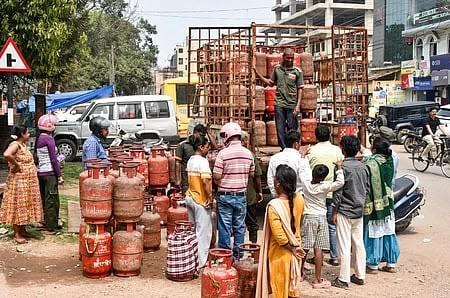
Local cafes in cities like Nashik pass on costs, which means coffee prices go up by 5%. Farmers in sugarcane belts are wary of ethanol mandates since moving crops could lead to shortages. Women who run houses have to keep track of LPG refills, which currently cost ₹900 per cylinder.
It’s a pain that everyone feels. After the war in Ukraine, Europe limited gas use, but the US drilled more. India? It turns to efficiency—LED bulbs saved 40 billion kWh, and electric buses are becoming more common in public fleets.
Planning the Way Forward
So, what does India do next? In the short run, rely on reserves and subsidies. In the long run, it’s either diversification or failure. Speed up renewables—wind-solar hybrids in Rajasthan might add 50 GW by 2028. Push EVs harder; Tata’s Nexon sells well, but the charging infrastructure isn’t keeping up.
Nuclear and hydrogen have potential. Small modular reactors might come out shortly, which would make the country less reliant on imports. International ties are important. The Quad partners want to work together on energy security.
The risks are real. A long battle in the Middle East might be like the oil crises of the 1970s, when India had to deal with 20% inflation. But today’s India is stronger, with a 5.1% fiscal deficit and strong taxation. Still, policymakers need to be quick.
What would it take for India to stop relying on oil? Investing big today could protect growth in the future. One thing is evident as tensions rise: energy security isn’t just a policy; it’s a matter of life and death. India can turn this current weakness into a strength by using smart strategies, which would help the country grow steadily, without being too affected by economic ups and downs.
India’s Energy Crisis: How Tensions in the Middle East Could Raise Prices and Slow Growth