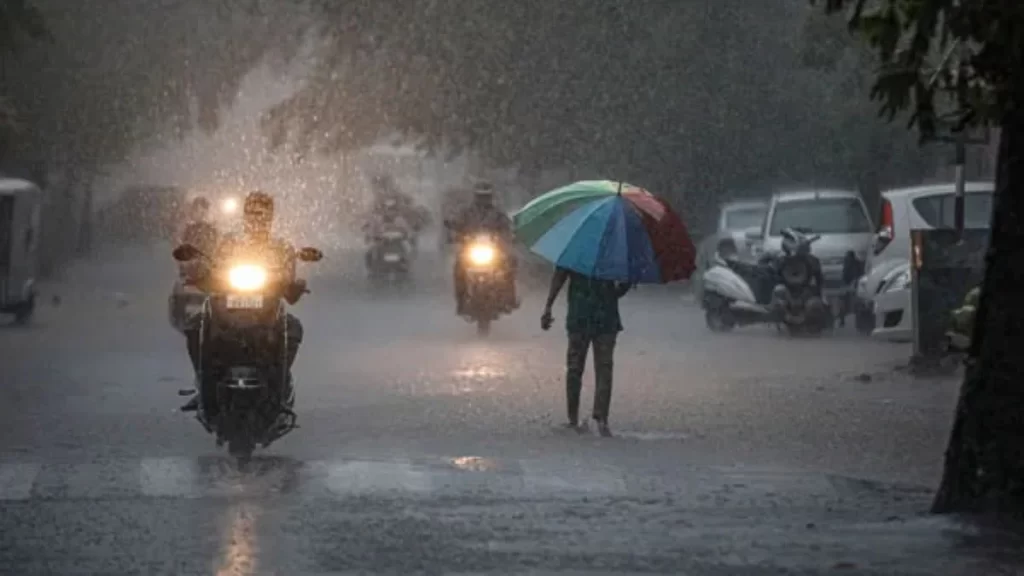
The India Meteorological Department (IMD) sent out widespread warnings for thunderstorms, lightning, and strong winds as heavy rains fell in portions of northern India today. These western disturbances are shaking things up from the hills of Himachal Pradesh to the plains of Uttar Pradesh, just as the country gets ready for more unpredictable weather. Why now, when farmers are looking at their crops and towns are dealing with flooding? It reminds us how easily nature may change our plans.
The alerts couldn’t have come at a worse moment. This unexpected change has surprised many people, especially because summer heat is already gathering in certain areas. IMD has warned at least nine states to be careful because daily life, transport, and farming could be affected. The government says that as on April 6, 2026, there will be a lot of bad weather all week because of several western disturbances coming in from the Mediterranean.
What do you mean by “western disturbances”?
Western disturbances are storms that start over the Mediterranean Sea or the Caspian region and move toward the tropics. They move east, taking up moisture, and hit the Indian subcontinent in the winter and early spring. Think of them as uninvited guests from far away: cold air masses that collide with warmer Indian air, causing rain, snow, and even those stunning thunderstorms.
India has seen this before. These systems bring important winter rain to the northwest, which helps the wheat fields in Punjab and Haryana grow. But when they hit in April, like today, they cause problems. According to IMD data, there have already been three of these kinds of disturbances this season, which is more than usual for early spring. The current one, called WD-4, came into northwest India on April 4 and is getting stronger.
The patterns of rain tell the story. Shimla got 45 mm of rain in the last 48 hours, and Jammu got 32 mm. Thunderstorms hit Delhi-NCR last night, knocking down trees and cutting off power to certain parts of the capital. Isn’t it weird how a little rain can turn a city upside down?
States on High Alert: A Breakdown by State
IMD has given the threat a “orange” and “yellow” rating for some areas, which means to be ready or do something. This is where the action is at its hottest:
Himachal Pradesh, Jammu & Kashmir, and Uttarakhand in northwest India are the hardest hit. There are orange alerts for heavy rain and thunderstorms till April 8. Landslides are likely to happen in hilly places. Last year, similar weather caused more than 50 slips in Himachal alone.
Punjab, Haryana, and DelhiNCR: Yellow alerts say there may be gusts of wind up to 50–60 km/h with lightning. Farmers in Punjab are worried about wheat that isn’t ripe yet because too much moisture could cause fungal infestations.
Rajasthan and Uttar Pradesh: There may be scattered thunderstorms, and hail may fall in western UP. Hailstones fell in Agra and Mathura yesterday, damaging automobiles and making fruit farmers nervous.
Madhya Pradesh and Bihar: Rain that is lighter but still causes problems. Heavy rains flooded low-lying neighborhoods in Patna, making traffic a mess.
Southern states like Maharashtra and Gujarat may feel the consequences indirectly, as moisture from the storms feeds into local thunderstorms. For example, Pune had light rain today afternoon, which cooled things down but made people in riverine areas worry about flooding.
Picture the map: a low-pressure system that is spinning over Pakistan and sending wet air into India, where it hits the Aravalli hills. Radar photos from the IMD this morning show strong echoes across the Himalayas, which confirms how strong the storm was.
Effects that Spread Through Daily Life
The fallout is real and happens right away. At IGI airport in Delhi, aircraft delays piled up. Last night, more than 20 flights had to be rerouted because visibility dropped below 500 meters. People in Gurugram had to walk through knee-deep water on major roadways, which is something that happens all the time during the monsoon.
Agriculture also suffers. In northern India, rabi crops like wheat and mustard span 30 million hectares. If it keeps raining after April 10, IMD thinks there is a 10–15% chance of a lower yield. The wheat buying season in Punjab will start soon. Wet fields will delay the harvest and raise food prices. Do you remember 2023? Similar problems caused wheat production to drop by 2–3%, which raised prices.
Cities in India aren’t safe either. According to the National Crime Records Bureau, lightning kills between 2,000 and 3,000 people in India every year. IMD’s warnings stress that you should stay inside during storms and keep away from open areas and metal constructions. Power grids are having trouble with the load, and some sections of UP lost power, leaving people in the dark.
Then there’s the human side. Tourists in Manali had to cut their visits short when snow unexpectedly covered higher areas. “We were fully booked for spring break, but suddenly rooms are emptying fast,” said a local hotelier. Travel applications are full with warnings about NH-44 and other highways that are likely to close.
Why is the weather getting crazier?
Climate change is always there. Scientists say that more severe western disturbances are caused by warmer waters and changing jet streams. A research by IIT Delhi in 2025 discovered that these systems are 20% wetter than they were 20 years before because moisture builds up faster. The Arabian Sea is like a fuel tank because it is 1°C warmer on average.
India’s topography makes everything worse. The Western Ghats and Himalayas channel the chaos, making mild systems become monsters. The IMD’s monsoon mission got 85% of the predictions right last year, so monsoon forecasting has gotten better. But spring storms are still hard to predict.
Connections around the world? Europe’s mild winter moved more problems to the east. NASA’s satellite data shows that the polar vortex is weakening and delivering waves to Asia.
Have you noticed how these showers ruin your plans for the weekend? “Just wanted a dry Holi, now it’s storm season early,” wrote one person from Delhi on social media.
IMD’s Plan for the Game and Safety Tips
IMD sends out hourly updates through its app and website. Doppler radars in Delhi, Jaipur, and Lucknow send real-time data and can predict rain cells up to 30 minutes in advance. Since 2022, the department’s early warning system, which is supported by the 2024 National Framework for Early Warnings, has lowered mortality connected to weather by 15%.
A lot of useful advice is available:
Stay inside during thunderstorms. If you have to go outside, kneel down to lower your risk of getting struck by lightning.
Farmers should check their crops every day and use tarps to cover standing water.
Drive slowly; hydroplaning spikes on wet roads.
Power up backups—UPS for important things during outages.
Authorities also get involved. NDRF teams are preparing in Himachal and Uttarakhand, and UP is practicing how to deal with urban floods.
Voices from the Ground: Tales in the Storm
Farmer Rajesh Kumar looks over his mustard fields in the Kangra Valley. “Rain is OK, but hail? “It flattened half of my crop,” he says. Officials in Haryana, across the border, are keeping a watch on buffer stocks as procurement yards get ready for wet wheat.
Dr. Priya Sharma, a meteorologist at IMD’s Delhi office, said, “This disturbance is stronger than last week’s.” Tomorrow will be peak times. Her team goes over models and makes changes to forecasts when new data comes in.
People who live in cities adapt. The tech people from Mumbai who live in Pune exchange monsoon tips early, such how to get higher parking spots and emergency supplies. Selfies and memes about the “April monsoon” storm are all over social media, mixing anger and amusement.
Looking Ahead: Will the skies be clear or will there be more drama?
The major disturbance should start to fade on April 9, bringing dry weather. But according to IMD’s extended range forecast, another storm is brewing behind it. Northwest India might get some reprieve, but the east could pick up the slack with cyclones over the Bay of Bengal.
In the long run, this shows how important it is to have strong infrastructure. India is working on crops that can handle climate change. For example, trials of drought-resistant wheat in Punjab are showing promise. Planning for cities? Cities that act like sponges, like Chennai’s renovation after 2015, are good examples.
These western disturbances remind us that the weather doesn’t follow calendars. They irrigate our fields, put our towns to the test, and make us adapt. As India moves toward net-zero by 2070, being able to understand these trends would provide us an edge.
What does this mean for your area? Keep an eye on IMD notifications, and you might want to rethink your plans to go outside.
IMD Sounds Alarm: Western Disturbances Bring Rain, Thunderstorms, and Lightning to All of India