
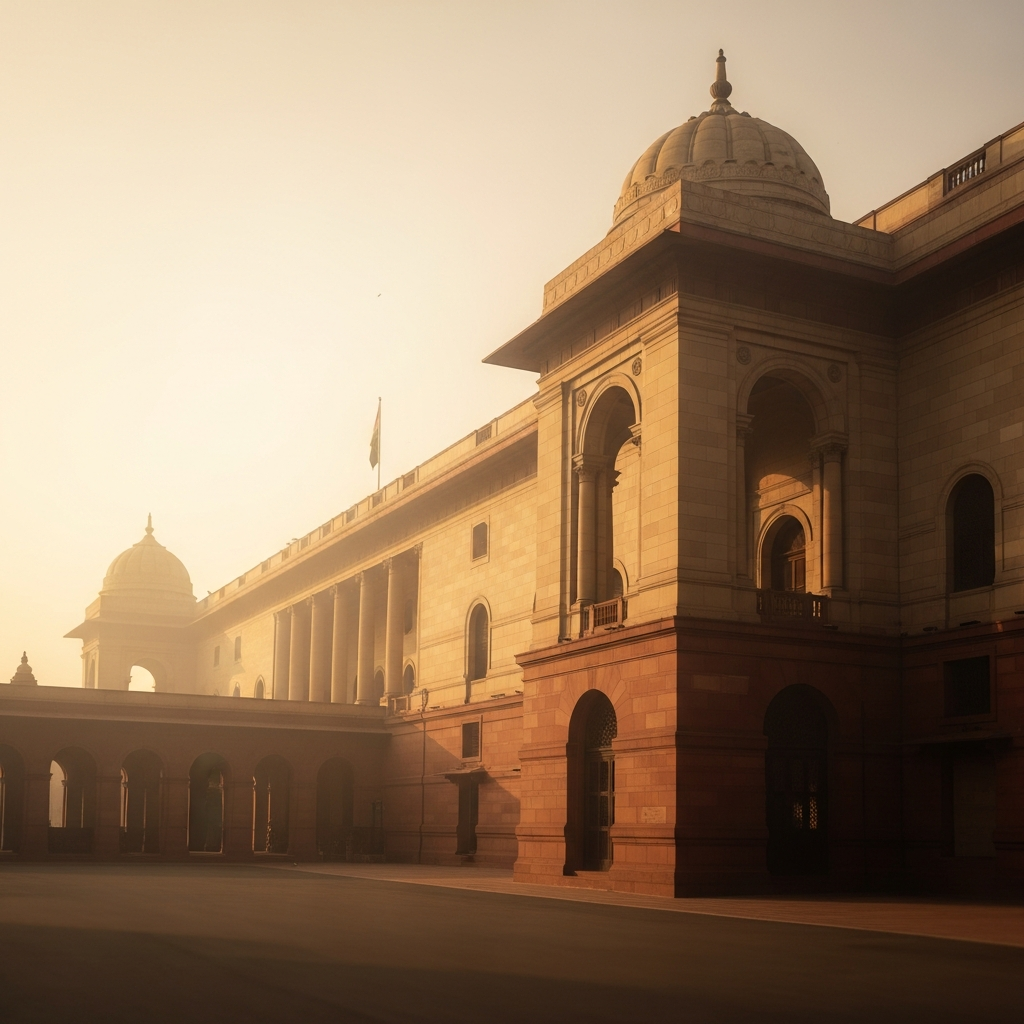
Seeing a car drive past security checkpoints at a building in Delhi that is so politically important showed more than just a mistake in procedure. It also raised serious concerns about the safety of India’s democratic institutions.
It is very worrying that there was a security breach at a place that stands for the strength of democratic government.
Recently, a car was able to get past security at the Delhi Assembly, which is where the elected representatives of millions of people work. Security personnel were able to stop the car. What happened next was the kind of mess that no authority wants to be in: a fear, a suspicious object, and a whole city’s worth of questions.
Reports say that the driver went into the building, left something behind, and was then stopped by officials. Authorities were quick to say that the situation was under control, but the damage—at least to public trust—had already been done. The India security alert that came next wasn’t just a matter of following the rules; it was a sign that the layers of protection that were supposed to stop this kind of thing from happening had failed.When there is a security breach in a legislative building, it is not just a failure of the police; it is a failure of the whole system that is supposed to protect democratic spaces.
To get why this is so important, you need to look at the bigger picture. The Delhi Assembly is more than just a place to do business. It’s a place where politics, public faith, and the government all come together. Even if you fix something quickly, the effects can be huge when something goes wrong.
It tells people that the walls that are supposed to keep their representatives safe aren’t always reliable. It lets bad people know that there is a gap. And it tells the police that the current system needs to be looked at again honestly.
Leaders from all political parties quickly responded, calling for stricter surveillance systems and holding people accountable. Some people said the incident showed a serious failure in government safety procedures, while others said it showed a pattern of ignoring security infrastructure in and around the capital’s most important legislative buildings. But not many people could disagree with the main point: if this building isn’t safe, which ones are?
When security experts talk about security alerts in India like this one, they often point to a pattern that is frustratingly familiar. After incidents, high-profile buildings get security upgrades on a regular basis. However, as time goes on and pressure fades, people become less vigilant. They say that India needs proactive, intelligence-led political security that can see threats coming before they happen, not reactive security that reacts after a car breaks through a barrier.
We should think about the time of this event. The security breach happened during a time of increased political activity in the capital, when there was a lot of movement of politicians, their aides, and the general public. As a result, the security infrastructure has to work harder, and the risk is higher. Overworked staff, more foot traffic, and the natural distractions that come with a politically active time can all lead to a security lapse.
There is an investigation going on to find out why the driver did what they did and to see if the suspicious item found at the scene was really dangerous. But the Delhi Assembly security breach calls for more than just immediate investigative work. It needs a structural conversation. What are the problems with the current barrier system? Is the technology being used out of date? Are employees trained often enough to deal with situations like this? Are there areas that surveillance cameras can’t see that have never been fixed?
In the long run, the answers to these questions will be much more important than the outcome of this one case. This situation seems to have been handled, but the next one might not be. The safety of India’s most important government buildings can’t be put on the back burner and only dealt with when the news calls for it.
There is also the issue of how to talk to the public. People in Delhi should get clear, factual information about what happened, how it was handled, and what is being done to make sure it doesn’t happen again in the hours and days after a breach. When things like this happen, vague promises don’t do much to rebuild trust. For the safety of the people, India must be open and honest about political security.
The Delhi Assembly incident is a harsh reminder. When a security system’s weakest point is made public, the only thing that can be done is to patch the hole and move on. It has to be to ask tough questions, admit things that make you uncomfortable, and promise to keep investing in safety in a way that stops the next breach from ever making headlines.

